



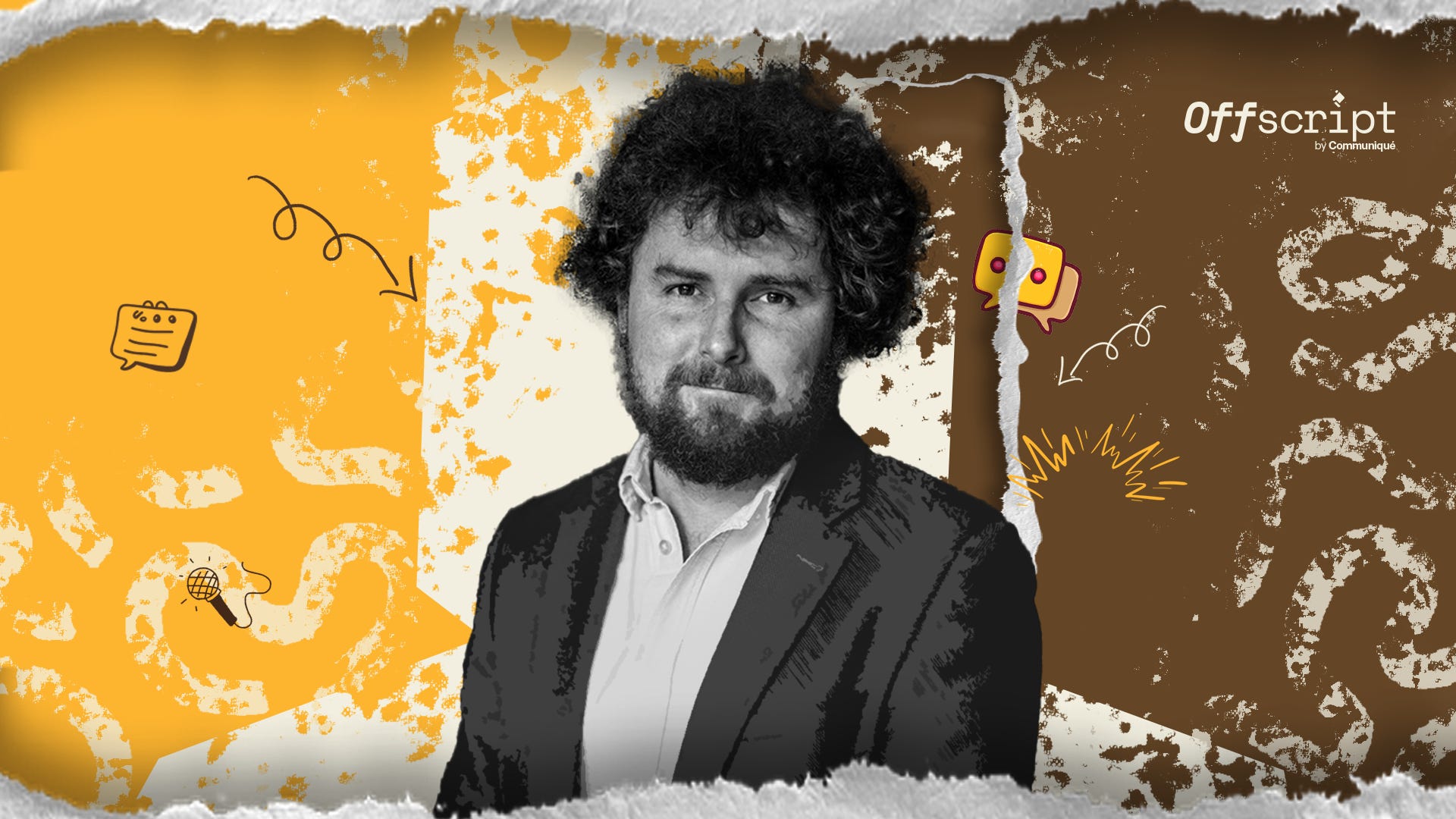
“We didn’t have running water. There was one tap in the whole village. You get a very real sense at the very base level of what people live with, like food, agriculture, water, and the inequalities that come with that.”
Sipho Kings is talking about his childhood in rural Botswana. But he might just as well be talking about the logic behind one of the most unusual media experiments on the continent today — a newspaper that does not live on a website, does not chase clicks, and does not bargain with algorithms for attention. Instead, it moves the way news once moved in villages: from person to person, carried along by trust and usefulness, shared because someone thought the next person should see it too.
Long before Kings ever sat in a newsroom, he learned that information was something you encountered together. In the villages where he grew up, there was no electricity, no television. There was a radio that connected the community to the wider world. And when the weekly newspaper arrived, it became a shared object to be read, discussed, and passed along.
Those early years planted an idea that would take decades to fully surface: that news works best when it behaves less like a product and more like a public resource.
Born in Swaziland to British and Irish parents who worked as volunteers in development, especially in water, sanitation, and community projects across Southern Africa, Kings spent his formative years immersed in communal life. His family moved to Botswana when he was young, and for nearly a decade, he lived in villages where daily life revolved around shared resources and collective problem-solving.
It was also where he began to notice the sharp lines of inequality. “People in the cities have things, and people in villages don’t,” he says. “And then a company has nice things and is destroying the farmland. So it’s very intense differences between people that you notice.”
Those observations did not turn him into a journalist. Not at first.
“As a kid, I just wanted to be the things kids want to be,” Kings says. “Like a lawyer or, I don’t know, a fireman. All the usual things. Just the fun things.” What stayed with him, though, was a steady curiosity about how other people saw the world, and why societies were arranged the way they were. That curiosity led him to university, where he studied history alongside journalism. He was drawn less to the thrill of breaking news than to the slow work of understanding systems: how power moves, how decisions are made, and who is left out when they are.
After graduating, he found his way to South Africa’s Mail & Guardian, one of the country’s most respected newspapers. It was there that he began his career, reporting on the same themes that had surrounded his childhood: land, water, development, climate, and the long reach of political and economic power into ordinary lives.
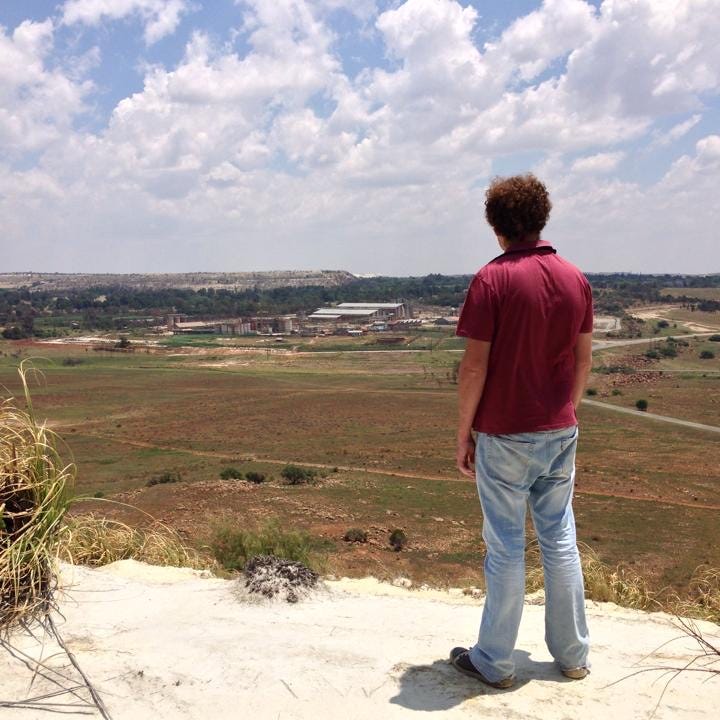
He joined the newsroom full-time in 2011, at a moment when the ground beneath journalism was already shifting. The global financial crisis had weakened advertising markets. Social media platforms were beginning to reshape how people found and consumed news. The old business models were starting to strain.
Inside the Mail & Guardian, Kings saw the effects up close. He did not only sit in editorial meetings. He joined the staff union and later served on its management committee, where he was pulled into conversations about budgets, restructuring, and retrenchments. He sat across from colleagues facing job losses. It gave him a view of journalism from the inside out. Not just how stories were made, but how newsrooms were held together, and how easily they could come apart.
After seven years, he reached a breaking point. “The organisation wasn’t fit for purpose, and I didn’t want to work there.” He applied for a Nieman Fellowship and won. The year in the United States took him out of the daily grind of the newsroom and into a global conversation about the future of journalism. “I spent a lot of time talking to really smart people from newsrooms about their jobs,” he says. “A lot of them were in management or had started newsrooms. And before that, I’d never thought about being in a leadership position in a newsroom or starting something new.”
He returned to South Africa in 2018 and took on the role of news editor at the Mail & Guardian. Around the same time, he began a long-running conversation with Simon Allison, a fellow journalist who shared his unease about where the industry was headed.
Their discussions circled a growing frustration. African stories, they felt, were increasingly being filtered through outside lenses. Newsrooms were tying their survival to platforms they did not control. Websites were becoming crowded, noisy spaces where journalism competed with everything from celebrity gossip to conspiracy theories.
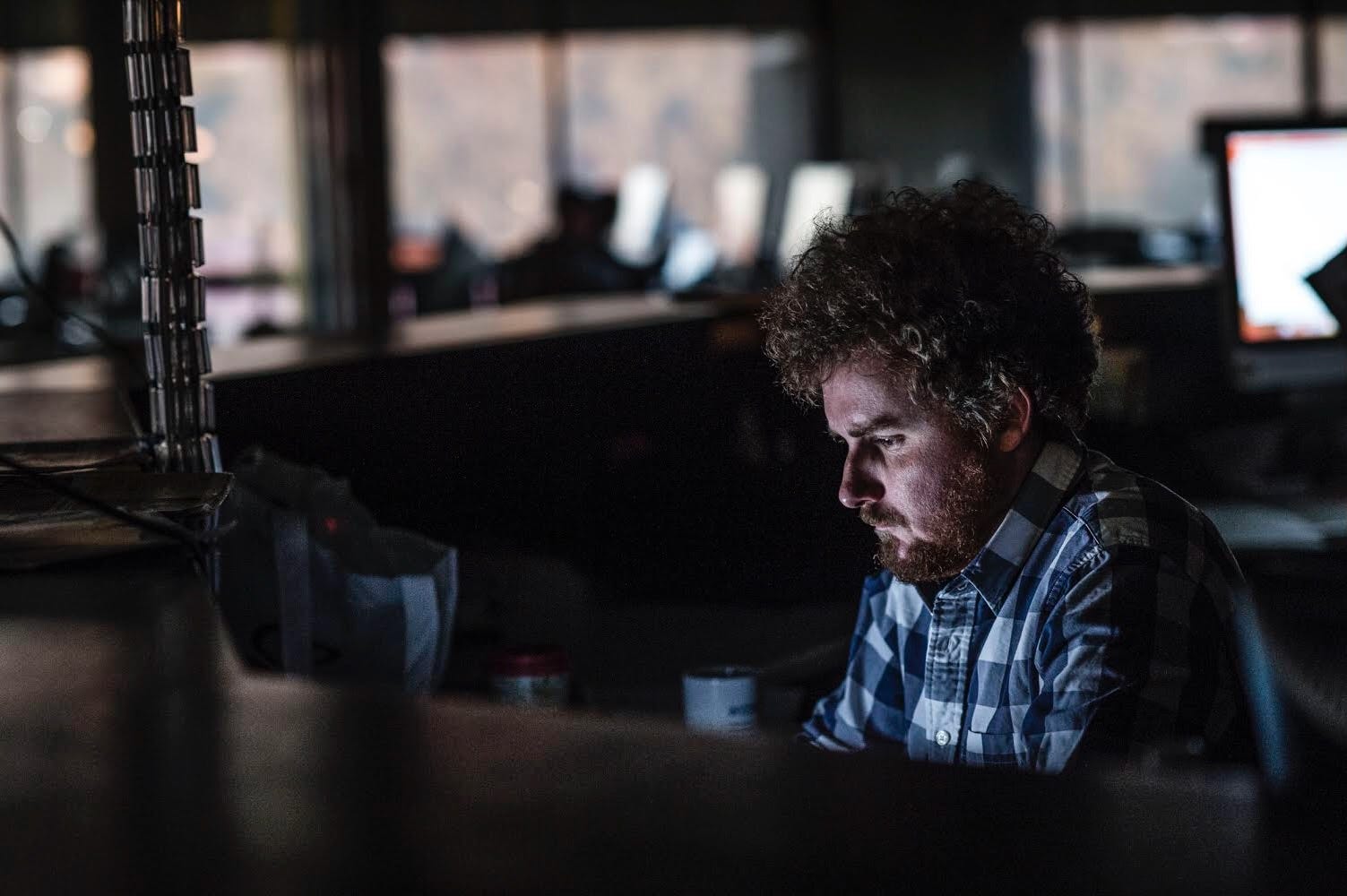
People hate the journalism we have on websites,” Kings says bluntly. “It’s a terrible user experience. There’s a reason people don’t trust us anymore; it’s a crap product.”
They kept coming back to the same question: if this was not working, what would? Then the pandemic hit.
In 2020, COVID-19 disrupted newsrooms worldwide. At the Mail & Guardian, it coincided with a leadership vacuum. Both the editor-in-chief and deputy editor left, leaving the paper without clear leadership during one of the most uncertain periods in recent memory.
Kings found an unusual solution. He suggested that the staff vote for the next editor, arguing that whoever took on the role would need a clear mandate to lead through the crisis. The newsroom agreed. He was elected and stepped into the position for a year.
At the same time, the idea he and Allison had been circling began to take shape. The pandemic had exposed how fragile the media ecosystem had become. Advertising dried up. Social platforms became flooded with misinformation. News websites struggled to cut through the noise.
They decided to go in the opposite direction of the industry’s dominant logic.
Instead of building a website and chasing traffic, they would create a newspaper. Not a print one, but a simple, carefully designed digital that could be read on a mobile phone. And instead of building an audience through Facebook or Google, they would distribute it on WhatsApp, the one platform almost everyone across the continent already uses to talk to friends and family.
They launched The Continent under the Mail & Guardian’s non-profit arm, while Kings was serving as editor-in-chief. For a year, he did both jobs. When funding came through in The Continent’s second year, he made a clean break. He left M&G to focus full-time on the new project. “In the beginning, it was merely responding to a crisis,” Kings says. “We were just trying to make something that worked.”
Two or three years in, they realised they had built more than a workaround. They had built a different kind of relationship with readers. Reader surveys started using words like “fun,” “love,” and “trust” to describe a newspaper. For Kings, it was surprising. “Those aren’t words people usually use for journalism.”
Today, The Continent is a free, weekly newspaper distributed across Africa through WhatsApp. It is a non-profit owned by its employees. Its subscriber base runs into the millions, grown almost entirely through word of mouth.
For Kings, the connection to his childhood is not abstract. “I think that because we lived in villages and communities, there is a very strong sense of community,” he says. “That goes all the way through to The Continent. A subscriber base is a giant community. There’s a lot of focus on that.”
When asked about the future, he shrugs, half-joking. “For now, I’m here. This is the most interesting job in journalism,” he says. “Who knows, in five, ten, twenty years’ time, maybe I will die here. Or maybe Zuckerberg says, I’ll give you a billion dollars to retire. That would be quite boring. But you know, a billion dollars is a billion dollars.”
Behind the joke is a quieter, more serious idea: that journalism does not have to be built around platforms, or profit, or even institutions. It can be built the same way villages are built, on trust, usefulness, and the simple act of passing something along because you think the next person should see it too.
The future of media isn't built on websites or clicks. It’s built on trust, shared value, and community.
Sipho Kings is redefining journalism with a newspaper that’s truly for the people. :)