


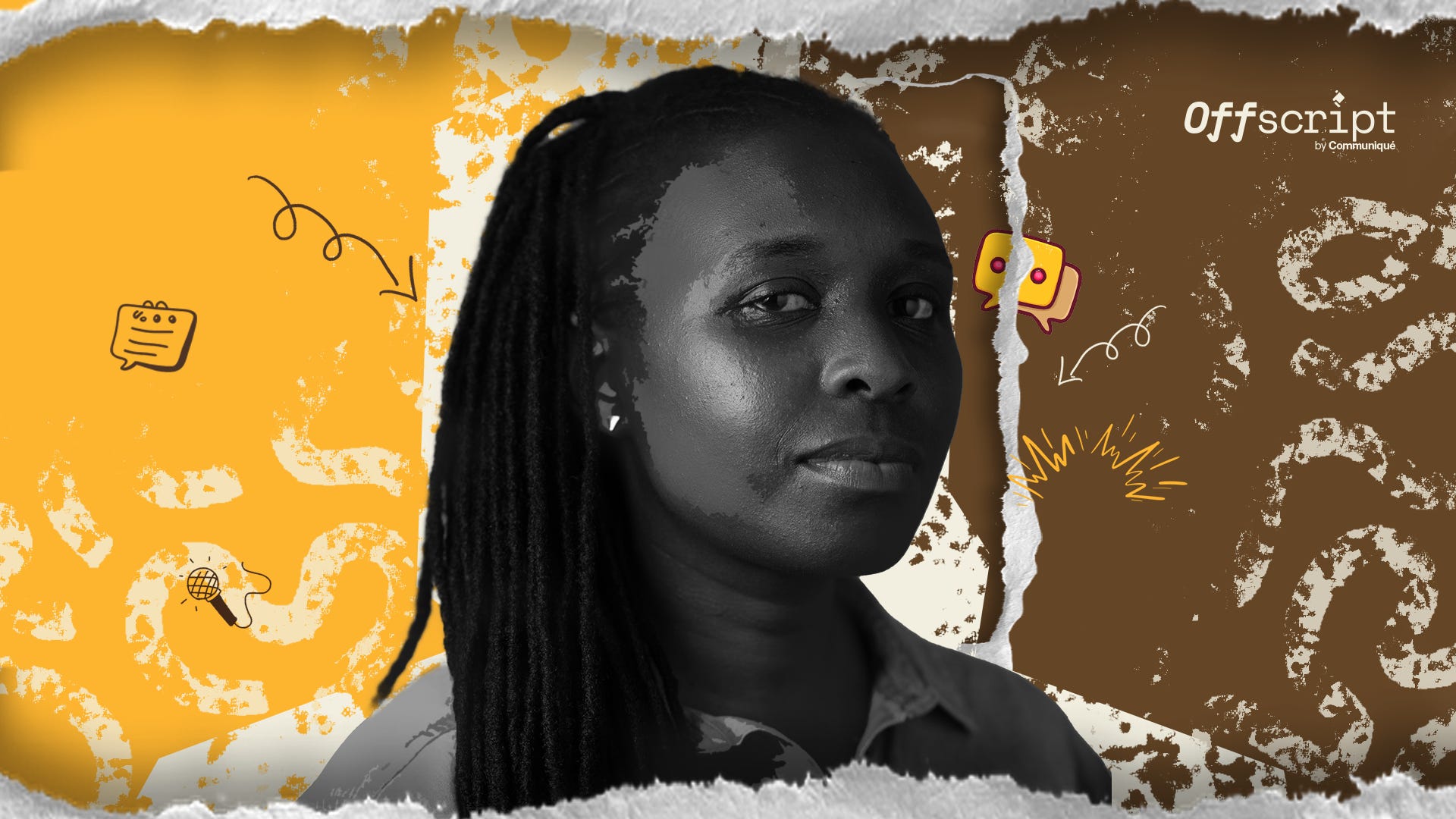
“All those books that I read in my childhood, it’s all paying off. A day finally came when someone asked me questions about the things that I knew.”
Christine Mungai was in her third year studying biomedical science when a lecturer encouraged her to try out for her university’s team on the Celtel Africa Challenge, a televised general knowledge quiz for African university students. She made the team. They topped the Kenyan qualifiers, then competed against 155 teams from Kenya, Uganda, Tanzania, Zambia and Malawi, and won.
That victory kickstarted Mungai’s path into journalism. In July 2026, she became editor-in-chief of The Continent, the weekly newspaper she joined as news editor in April 2025. Along the way, she has reported for The East African and Mail & Guardian Africa, spent a year as a Nieman Fellow, edited essays at The Elephant, and helped build Baraza Media Lab and the Africa Media Festival in Nairobi.
In her early years, she wanted to teach because she admired her teachers, but she was encouraged to pursue a better-paying profession. Science came easily, so she decided to become a doctor. She missed the university cutoff for medicine by one point and enrolled in biomedical science instead. She enjoyed it until her third year, when she had to undertake an industrial attachment training at a leading malaria research laboratory in Nairobi. Yet she struggled to get out of bed each morning. “I couldn’t understand why. I was supposed to be happy.”
You’re reading Communiqué because someone in the Inner Circle paid for it. Pay it forward. Your contribution funds: Original reporting, data licensing, and a small editorial team that actually answers your replies. No ads, no paywalls.
Around that time, Kwani, a Kenyan literary organisation, was holding a festival. Mungai loved its journals because they carried stories about the Nairobi she knew. She bought a student ticket, took a week off from the laboratory, and attended. At a beginner’s workshop, she listened as writers explained character, plot, structure, and suspense. She had written short stories before; one even appeared in the Daily Nation while she waited to enter university. But the festival made writing seem like something she could pursue seriously. That same year, the quiz show came. Together, the two experiences introduced her to possibilities beyond the career she had been preparing for.
A week after her final exam, the quiz-show producer invited the winning team to record promotional videos and asked about Mungai’s plans af. She didn’t have one. The producer offered her a job writing questions for the next season. Mungai turned up without quite realising she had accepted a full-time position. “I was being paid to be on Google and Wikipedia. What a dream.” She stayed for about 18 months, until 2010, when the programme ended after its sponsor, Zain, was acquired by Airtel. Once again, she had no clear next step.
A few weeks later, a colleague’s former university classmate, then managing editor of The East African, called her to talk. He had watched her on the quiz show. He told her he had been trying to hire people who knew a lot about many things, and that journalism graduates didn’t always bring the depth of knowledge he wanted. Reporting and sourcing could be taught in six months, he said. The broader knowledge was harder to develop. “Either someone has that depth of knowledge, or they don’t. That’s the part that I can’t teach anyone.” Mungai accepted, at first, because she didn’t want to remain unemployed. But it didn’t take long for her to realise she had found the right work. “When I started working in the newsroom, I was like, yes, okay, I get it. This is it. I felt fulfilled, I felt challenged, I felt satisfied.”
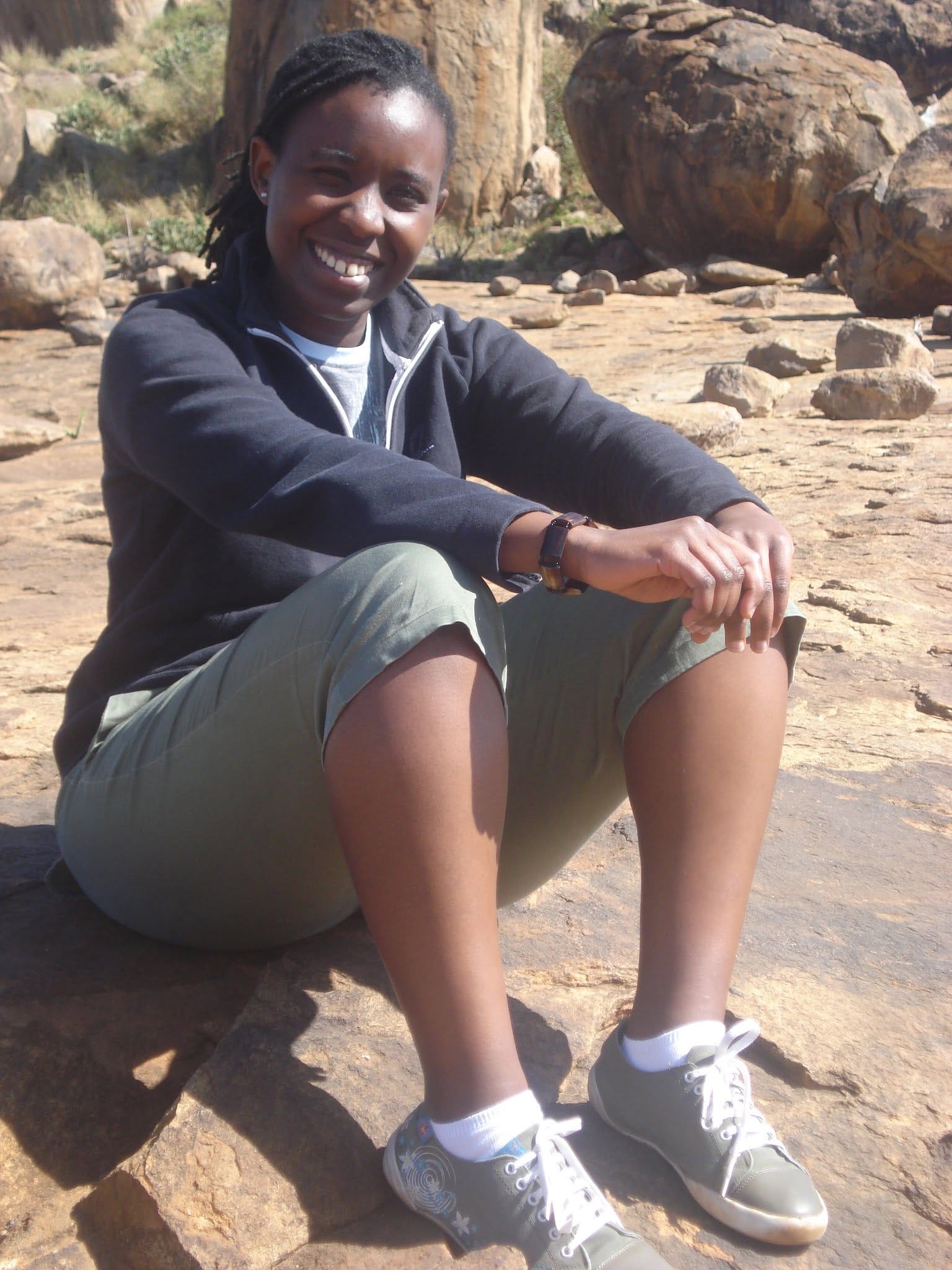
The skills she developed as a science student also proved useful in the newsroom. She could work through lengthy reports quickly and was comfortable with numbers, which made her particularly useful when the newsroom needed to make sense of research. She was initially hired to help the newsroom avoid misreporting science, but she was also interested in concerts, music, and art. Politics, business, and economics followed. She did not want to limit herself to one beat. “Whatever I was curious about, I could actually write about it.”
After almost four years at The East African, she followed Charles Onyango-Obbo, an editor she had worked with on special projects, to Mail & Guardian Africa, the South African paper’s new Nairobi offshoot. Onyango-Obbo sent reporters on trips without a brief and expected them to return with stories. His only rule was that a piece had to be internally consistent. However speculative the argument, the data had to hold up. On one trip to Nigeria, Mungai noticed how many unfinished buildings stood in Abuja and wondered whether restrictions on moving naira out of the country had pushed people to park their capital in property. It shaped the journalist she wanted to be, one who starts with an observation and follows the evidence.
Soon after financial problems forced the Nairobi office to close, Mungai received a Nieman Fellowship at Harvard in 2017. The fellowship gave her time to consider what kind of journalist she wanted to become. She returned to Nairobi in 2018 with a stronger sense of direction and began freelancing. She also edited Reflections, a first-person essay section at The Elephant, where she worked with writers to tell personal stories that connected to larger political and economic questions. “Those were some of the best essays that I have ever published in my life.”
In 2019, her mentor Ory Okolloh, then at the funder Luminate, asked her to help create a media lab in Nairobi. The idea was to create a home for journalists alongside podcasters, filmmakers, cartoonists, and other storytellers, with space, training, and room to collaborate. “It’s what we now call the creative economy,” Mungai says. She had a young family and wanted stability, but she also saw a chance to explore what journalism could become. As founding curator, she helped shape the concept for Baraza Media Lab, which opened in January 2020.
In 2023, Baraza Media Lab launched the Africa Media Festival, which has become one of the continent’s most prominent media conferences. Mungai curated its programme for three editions. By late 2024, however, she wanted to return to a newsroom. She missed writing, editing, and publishing. Building institutions had been rewarding, but she felt she still had more reporting to do. “I had started feeling it inside, feeling like my work is not yet done.”
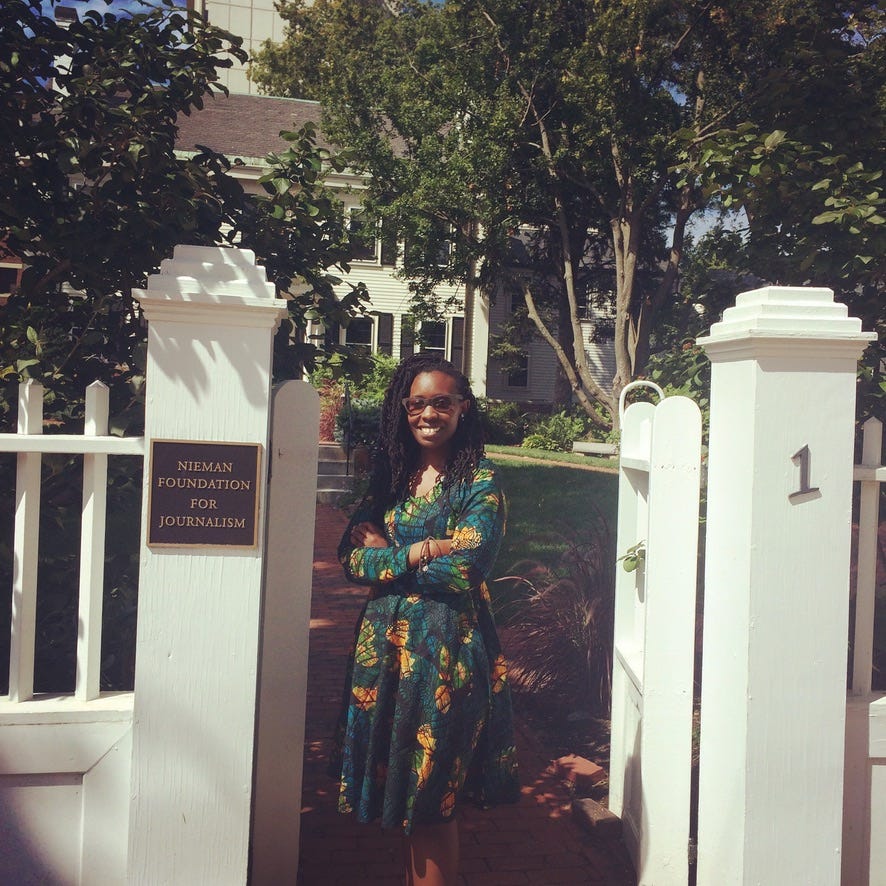
Her opportunity came when The Continent advertised for a news editor. Its co-founder, Sipho Kings, had been her Nieman classmate, and their organisations had crossed paths over the years. Mungai sent him a message the day before applications closed. She joined in April 2025, after curating one final Africa Media Festival.
The newspaper’s weekly production cycle gave her something she had missed while working on longer-term projects: a clear sense of completion. “The work is finite. It has a beginning, and it has an end. That feeling of completion is such an amazing dopamine hit on a Friday. I live for this cover when I see it.” When editor-in-chief Lydia Namubiru prepared to leave, she asked Mungai to succeed her. They worked through a handover, and Mungai took over in July 2026. She has also just turned 40 and says it has taken her years to feel fully like herself. When colleagues at The Continent scored each other in a team exercise, they ranked her highest for being “confident and relaxed.” It surprised her, but it fits where she is now.
$10 covers a reader. $100 covers a story. $1,000 covers a month. Communiqué is built on direct support from people who believe Africa’s creative economy deserves serious coverage.
The Continent was five years old when Mungai joined. She admires the way it has grown while holding on to its editorial commitments. “I really admire spaces that are guided by values and principles, and people who are willing to lose. And by lose, I mean going against the grain of what is popular or what is trending for the sake of what you have seen and what you’re convicted about.”
Now she is responsible for helping the paper move into its next phase. “We’re getting out of the phase of being a startup and being more of an established publication. So there’s some growth work to do there.”
For her, one of the biggest questions is how to balance what already works with the need to try new things. Mungai wants The Continent to do both. “Sometimes it’s like we need to do more with less. We need better systems and processes, and we need to be more efficient. But in some other ways, it’s like we need to not lose sight of the innovation, and be ready to innovate our way, even in a way that could disrupt our own thing.”
Mungai knows what happens to institutions that stop moving. She points to Kodak, which built an early digital camera and then shelved it because it threatened the film business. “I don’t want us to be in a Kodak moment.” Beyond survival, she wants The Continent to become Africa’s paper of record. Getting there means growing subscribers, strengthening the team, getting editorial priorities right, and building a business that can pay for all of it.
“I don’t feel like I’m starting this role to just do more of the same, like my job is just to tread water and keep us afloat. I feel like we have to level up. And as part of the leadership of this organisation, I am part of that levelling up.”
Asked whether she would change anything about the winding route that brought her here, she says no, except perhaps to have been unapologetic about who she is sooner. Besides, she is more interested in what’s ahead: stories to report, investigations to publish, podcast episodes to record. “For me, that stuff is in the future.”

I love the continent! it's great to read Christine's back story. I've learned that most journalists and storytellers often have an unconventional career path. Excited to see what the future holds for Christine 💜