



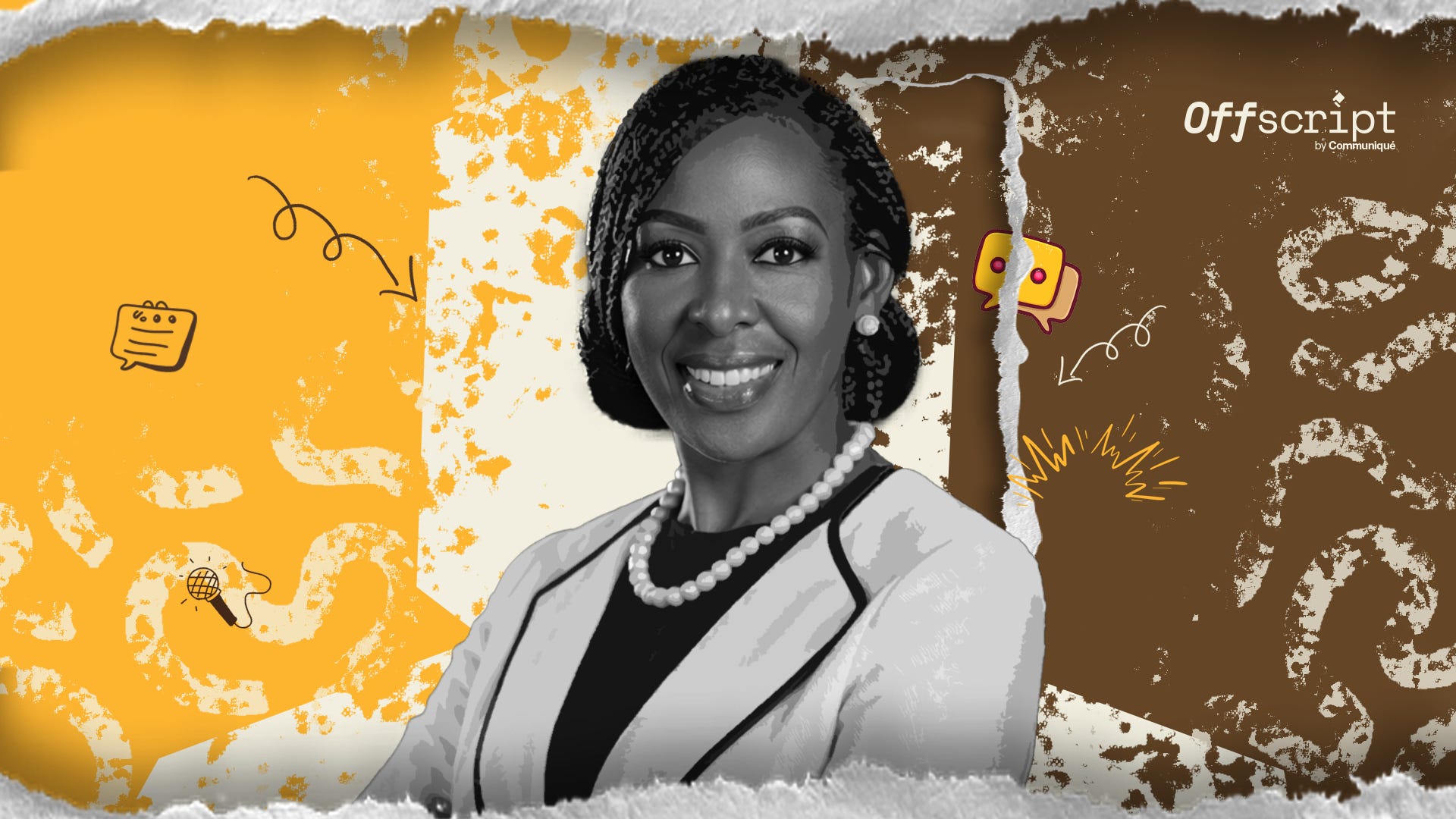
“I kept on asking the pharmacist, ‘What else do we do? And he was like, this is what we do.’”
Biola Alabi remembers the exact moment she knew she was on the wrong path.
She was working as an intern at a pharmacy in the United States, following the familiar script many children of Nigerian immigrants know too well: pick one of the respectable professions, stay focused, build a stable life. Medicine. Pharmacy. Law. Engineering. Those were the acceptable options.
But as she stood behind the counter, watching prescriptions being filled, she felt restless. She wanted more. That restlessness would lead her to drop her pharmacy degree and go in search of something else.
Today, Alabi is one of Africa’s most influential investors working at the intersection of media and technology. She has been involved in more than 40 companies as an investor, board member, or advisor, including Big Cabal Media and Pulse, two of Africa’s biggest digital media companies. She has backed startups, built television networks, structured venture deals, and helped scale creative ecosystems across the continent.
But the seeds of Alabi’s career in media and investing were planted long before she knew what venture capital was. As a child, moving back and forth between Nigeria and the United States due to Nigeria’s political and economic instability in the 80s, young Alabi learned to create opportunity wherever she landed.
During one Christmas in Nigeria, bored by the lack of organised entertainment for children, she organised neighbourhood plays. She formalised the entire operation, complete with ticket sales and structured rehearsals. Even after she left, the model continued to sustain itself. “This became very big in the neighbourhood,” she recalls. “I was told that when we moved back to the US, the kids kept on doing the plays.”
Alabi went to university to study pharmacy, but she soon grew disillusioned. In looking for a new major, her only requirement was that it fit within her four-year school budget. With the help of the school counsellor, she settled on Public Health because she could later return to medical school. It was during the last two years of her stay on campus that she found something she loved. She took marketing classes and completed courses at a film school because the Public Health curriculum required her to learn about different communication methods. “I took these classes, and it just changed my vision of the world and the opportunities ahead.”
After graduating from university, she ended up in Korea, where she worked in youth marketing for Daewoo cars. Around that time, the car manufacturer was expanding to the United States and was focused on first-time buyers. Alabi was tasked with selling the cars to 16-year-old Americans. “I sort of became a youth marketing expert.”
Around this time, the internet and e-commerce were becoming a thing. She got a job at Bigwords.com, an e-commerce platform targeting students. She was employee number 15, part of the heady first wave of the dot-com era. When Amazon offered to buy the company four years after she joined, the young founders refused. “We’re like, Amazon, who are you? We’re gonna be bigger than Amazon.” Then the crash came, and the company folded, and she was back on the job market.
Fortunately, she landed a role as a project manager at Sesame Street for a trilingual release of their programs in English, Spanish, and Mandarin. The job was her first proper introduction to the media industry. “It was fascinating to work in a company I grew up watching,” she says. Her role soon expanded to managing international co-productions across Africa, Asia, and Europe.
At the time, Sesame Street had only one African co-production, in South Africa. Alabi pushed hard to join that project and later spent six months on the ground helping localise it. She led Sesame Street’s ten-country expansion across Africa, running pilots in Nigeria, Tanzania, and Kenya. Her work during this period required her to strike broadcasting deals in each market, and that posed a huge challenge. “We needed a Pan-African broadcast partner. Doing broadcasting deals in each country was too cumbersome. Every country’s broadcasting ecosystem worked differently.” If the problem was not resolved quickly, she felt it could end Sesame Street’s operations on the continent.
She approached DStv’s parent company, Multichoice, about becoming a Pan-African partner for Sesame Street. Multichoice replied with a counteroffer: come run our Pan-African business. They wanted someone with global experience building global brands, someone who understood both creative excellence and commercial viability. Alabi fit perfectly.
What followed were six transformative years as an executive that taught her much of what she needed to know about scaling creative businesses. When she joined, there was one Africa Magic channel broadcasting five hours a day. When she left, there were eight channels, including indigenous language channels in Yoruba, Hausa, and Swahili.
But the real work wasn’t just launching channels; it was building the entire ecosystem to support them. Launching a channel required scanning markets for available content, negotiating with creators, managing technical teams, hiring schedulers and broadcast engineers. The other side of this was ensuring the content met the required standards. “About 50% of the submitted films weren’t even broadcast-quality,” she recalls. “But we’re not going to have any African content on those channels if we do not override the technical requirements.”
The solution required executive vision: massive investment in infrastructure and training. She helped organise training programmes for scriptwriters, cinematographers and filmmakers. “We spent so much of our budget on training at the beginning,” Alabi recalls.
She also launched the Africa Magic Viewers’ Choice Awards and helped transform the Big Brother Africa franchise, expanding it across Francophone and Lusophone countries.


After Multichoice, Alabi joined a telco trying to launch digital platforms and a corporate venture capital arm. The experience was revealing—not for what worked, but for what didn’t. Traditional companies, she learned, struggle with investing in startups. “They’re used to just acquiring…There was always a question like, well, is this an acquisition? Is this an investment?”
But something clicked. “I really got a very strong feeling that there was going to be a big opportunity investing in early-stage technology and media companies,” she says. The question was: could she prove it?
She decided to build a film and TV fund, convincing investors to back a slate of productions to demonstrate the return profile. She produced “Banana Island Ghost,” “Lara and the Beat,” and invested in shows like “Bukas and Joints.” Simultaneously, she began investing in media tech companies. One of those early bets was Big Cabal Media.
“I met the founders on Twitter,” she recalls. “We met at this Africa Tech Summit event where everyone was pitching.” She saw in BCM what she’d seen in Fast Company years earlier in the US—a platform that could become essential infrastructure for a growing ecosystem. “I really thought that this could be our own Fast Company. And I wrote a check and invested.”
But as she worked on the film fund, a painful realisation emerged. The distribution infrastructure didn’t exist to make the films successful on a global scale. More fundamentally, she realised she didn’t want to be a producer. “It did not bring me joy,” she admits. “I enjoyed investing in a production. I did not enjoy being part of a production.”
It was a crucial moment of self-awareness. As global streaming platforms like Netflix and Amazon entered Africa, she could have easily become a first-call producer, making prestigious content and good money. Everyone encouraged it: “You’re so good at this.” But Alabi had learned to ask herself harder questions.
Despite the prestige and impact, she realised she was most energised not by creating content, but by identifying talent, structuring deals, and building the business models that allowed creativity to scale. “I knew I wanted to be on the investing side, I wanted to be spotting talent.”
Today, she has led angel syndicate deals alongside other investors and went on to invest with Acasia Ventures before joining Delta40, where she continues to back African startups. Through Delta40, she invests in climate tech, ad tech, and embedded finance. Meanwhile, in addition to Big Cabal Media, she is also on the board of Pulse Network and Akill TV.
After a career spanning four continents and as many industries, Biola Alabi has found exactly what she likes, and Africa’s creative and technology ecosystems are better for it. In many ways, she has returned to her earliest motivation: to create opportunity wherever she lands. Only now, instead of organising neighbourhood plays, she’s organising capital and networks that allow others to perform on a global stage.
If you like what you just read, consider supporting Communiqué with a donation.
I know I edited this, but I had to leave a comment. I am in awe of this woman’s career.
I meannn, it is a relief for most of us GenZ who are overthinking switching career paths. Here, we are able to see that it is not necessarily about the career path, but giving each role a touch of her excellence and getting results that truly matter.
I enjoyed this read, thank you for sharing!