1. A meeting of great minds
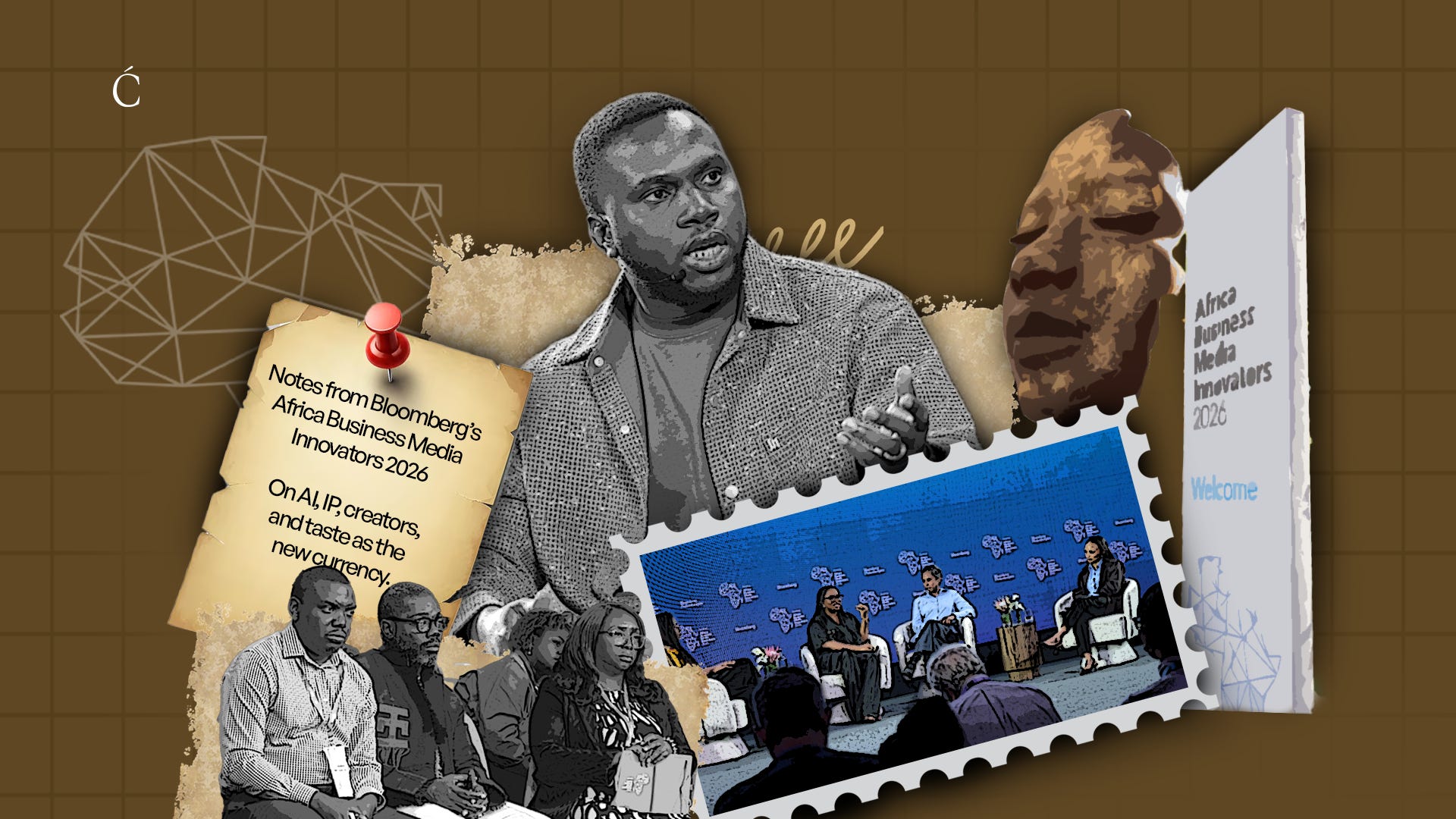
All successful events are alike; each unsuccessful event is unsuccessful in its own way. For Bloomberg’s Africa Business Media Innovators, which has been running for ten years now, success comes from the quality of people and conversations it’s been able to pack in without much of it feeling like a chore. I followed the event as an outsider-slash-observer for a few years. 2026 was the first time I got to attend and experience it in person. It was great: a perfect balance between panels and networking sessions. Not too many, not too few.
My biggest takeaway was the depth of thought and innovation across Africa’s media landscape. For instance, I learned more about the work The Republic is doing with Atlas to protect IP and all kinds of creative work on the continent and globally. I learned about Trevor Struurman’s Manor Africa and how it is providing a multimedia platform for creatives in South Africa (and the continent) to experiment with new concepts, ranging from journals to magazines, events, and a bookstore. I also learned more about how BellaNaija is incorporating artificial intelligence into its work. It brought back Damilola Olatunji as Head of Monetised Content & AI Growth, and now fields an AI avatar that presents content on camera.
These are just a few of the people and projects I came across. It is encouraging to see how innovative the media ecosystem is, a sharp departure from the outlooks of doom and gloom that often overshadow conversations about African media.
This is not to say that there is nothing to worry about (we will get into some of that shortly), but there is so much to be optimistic about, as long as we, the people, continue to push forward with resilience, collaborate more often with one another, and think more deeply and deliberately about the future we want to see.
You’re reading Communiqué because someone in the Inner Circle paid for it. Pay it forward. Your contribution funds: Original reporting, data licensing, and a small editorial team that actually answers your replies. No ads, no paywalls.
2. Lessons to boot
As much as I enjoyed meeting people at ABMI, I also took away some valuable lessons for my publication and the ecosystem at large.
I. AI and distribution
Of course, we will start by talking about AI. It is unavoidable these days.
Two years ago, I would have bet heavily on newsletters as the future of media distribution. We built Communiqué on that bet, and it’s helped us grow quickly and distinctively. But I would be lying if I said the ground isn’t moving under all of us.
AI tools are now answering the questions our journalism and research used to answer, often using our content to do it. The readers get a summary, the AI platform gets the engagement, and we publishers get close to nothing in return. For newsrooms that already depended heavily on search and social for traffic, that is a serious threat.
That said, panic, however tempting, is the wrong response. Instead, we must stop depending on any single route to reach our readers. Present at ABMI were people building their own apps and chatbots trained on their archives, testing more newsletter verticals for specific audiences, hosting more frequent live events, big or small, and creating videos in every format and length their audience actually watches.
For us at Communiqué, the question going forward with every piece of content we put out is: Does it bring us closer to the reader, or does it put another layer between us? The goal is to expand how we reach people without giving up any ground we already hold.
II. AI and monetisation
One of the most compelling arguments I heard, on stage and in one-on-one conversations, was that African publishers need to be far more proactive about protecting their IP from AI crawlers. Yes, we want our work to be discovered. But discovery that only enriches the company doing the discovering is extraction.
When you look at who is pushing back on the big AI companies, you’ll find that almost every major lawsuit and licensing deal involves Western publishers. African publishers hesitate, and understandably so. On its own, a mid-sized newsroom in Lagos or Nairobi can’t just up and go against a trillion-dollar company. But together, players across the continent with decades of archives, a wealth of languages, and original reporting are much harder to ignore. This is where national or regional press and media coalitions can be more impactful: setting standards for what we allow crawlers to take, designing common licensing terms, and pooling legal and technical resources so that no publisher has to face this alone.
The idea that this “AI future” we are heading toward is inevitable is a fiction, sustained by heavy marketing spend. Karen Hao’s book Empire of AI does a good job of surfacing this.
III. The tension between legacy media and creators
For many media companies, creators represent a frightening future. Newsrooms bind themselves to professional ethics and editorial standards; creators answer mostly to their audiences. That doesn’t mean creators have no ethics. Many of the best ones hold themselves to standards some newsrooms should envy. But it explains why the relationship often looks like a tug of war when it really shouldn’t.
Each side has something the other badly needs. Legacy media, old and new, brings decades of professional practice: verification, accountability, and the patient work of building worlds readers can trust. Creators bring speed, irreverence, and an instinct for what audiences want and how they behave that most newsrooms still lack.
The audience does not care about our org charts. They move freely between a newspaper, a podcast, and a creator’s feed. The information ecosystem will be healthier when both sides stop treating each other as rivals and start working out where they can build together.
IV. Humans as taste makers
As AI tools get better at producing content, the value of producing content falls. What rises is judgment: knowing what is worth making, what is true and good, and what is missing. That is taste, and it is quickly becoming the currency of our industry.
Much of the slop we see online isn’t purely a machine problem. It’s what happens when we don’t have enough people with taste at the wheel. The tools take direction from people, and the output can only be as good as the direction it gets. That puts a responsibility on editors and media professionals, and on all of us as humans, to take quality control more seriously and be more honest about our own biases.

3. Looking ahead
ABMI came at the right time for me personally, as I continue to think about what Communiqué will look like in 2027 and, more immediately, how to make our event in New York next week more valuable.
In many ways, ABMI has already shaped how I’m thinking about both. The questions of distribution, ownership, and how legacy media and creators can work together are not abstract for me. They sit at the centre of what we are building at Communiqué, and I look forward to sharing more of that with you in the coming months.
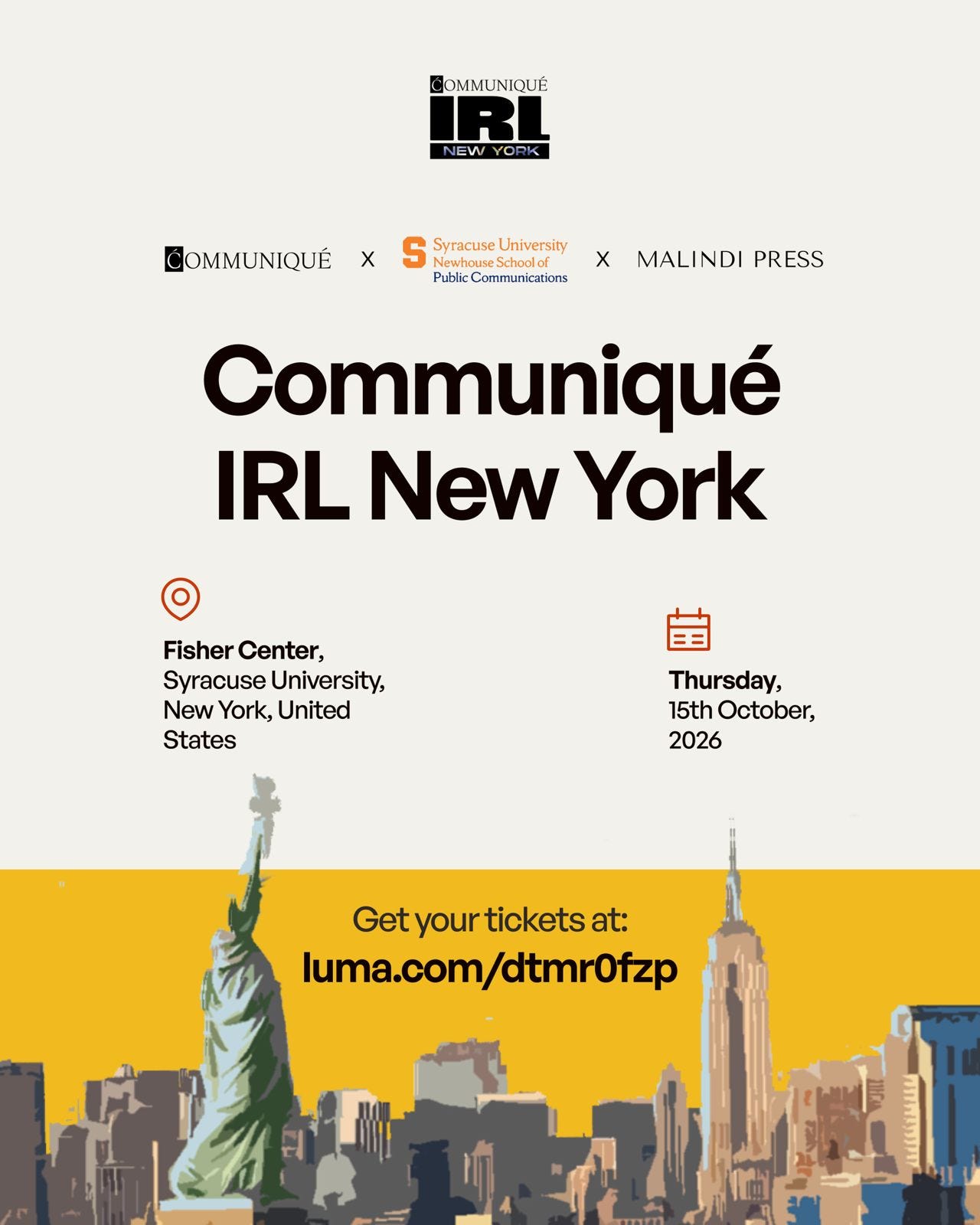
Our New York event on October 15 is where some of these conversations continue. In partnership with Syracuse University, Malindi Press, and Chapter IP, we are hosting a closed-door discussion on the evolution of the media and creator economy. If ABMI taught me anything, it is that the best conversations happen when you get the right people in a room and give them the freedom to speak candidly. That is exactly what we are aiming for. And if it goes well, you can expect another set of notes from me in two weeks.