


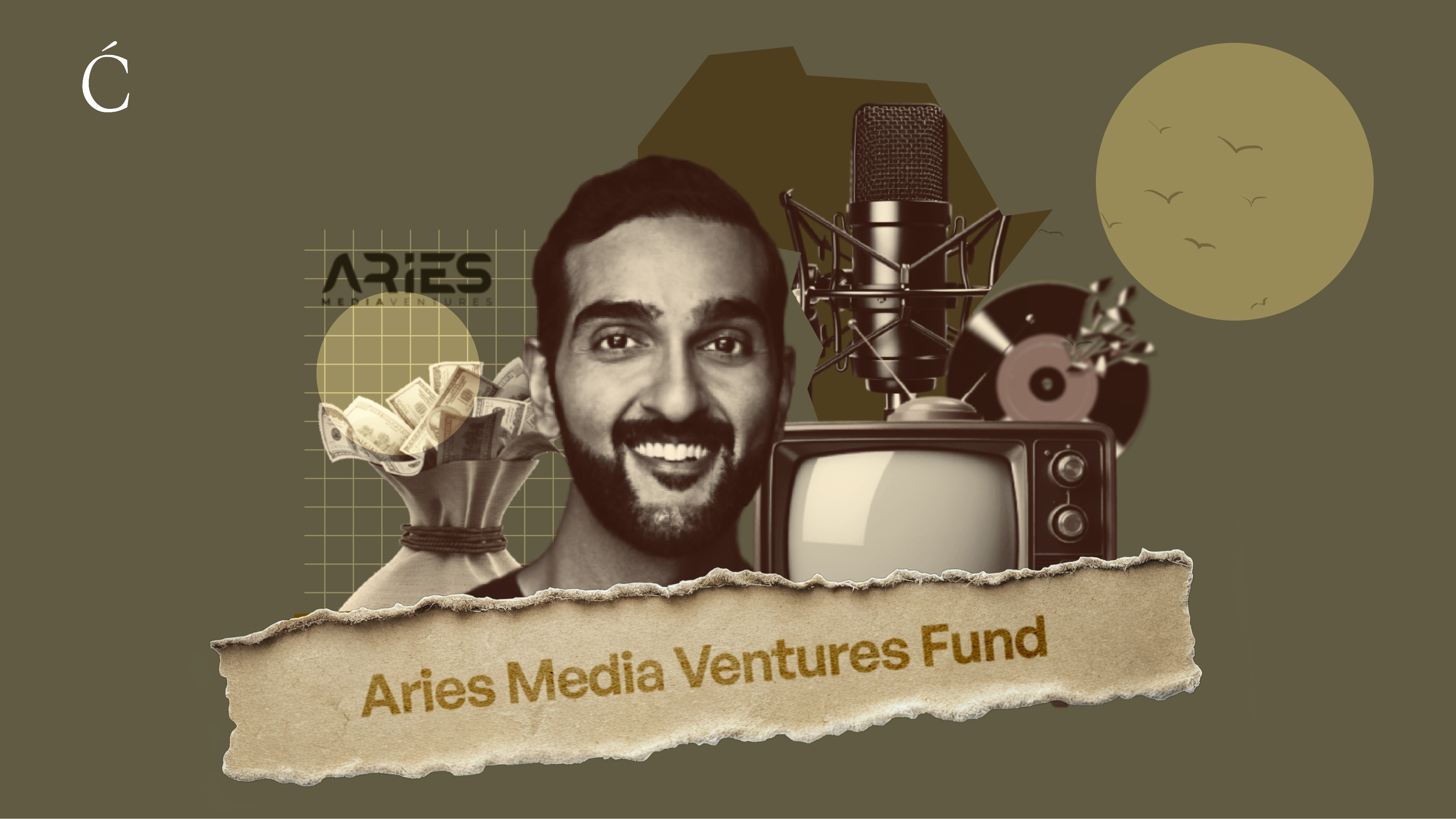
1. Creative tech meets VC
Last week, Aries Media Ventures announced its first venture capital fund to invest in early-stage media technology startups. The fund launched in Africa, where it made its first three investments: Aktivate, a creator marketing platform; HustleSasa, an events commerce platform; and Book Mahali, a venue-booking and hospitality platform. Aries’s focus is on technology supporting industries such as film, music, television, gaming, sports and live entertainment, rather than financing content directly.
For Alykhan Kaba, Aries’s founding general partner, the fund culminates an ambition that began more than two decades ago. Kaba has spent much of his career working at some of the world’s largest entertainment companies, including Live Nation, Activision Blizzard, Entertainment One, and NBCUniversal. During those years, he became increasingly interested in opportunities outside the industry’s established markets, particularly in regions that global entertainment companies had paid little attention to.
With Aries, Kaba bets that his experience in more developed entertainment markets can help emerging market startups access the capital, industry knowledge, and commercial relationships they need to grow. He believes a gap exists between African entrepreneurs building promising media technology businesses and investors who understand how these businesses operate. Aries’s model also depends on global entertainment companies eventually buying the businesses it backs.
You’re reading Communiqué because someone in the Inner Circle paid for it. Pay it forward. Your contribution funds: Original reporting, data licensing, and a small editorial team that actually answers your replies. No ads, no paywalls.
2. The long walk
Growing up, Alykhan Kaba was fascinated by entertainment. He loved watching television shows, movies, and cartoons; playing video games; and reading magazines. He imagined spending his life working in the industry, but struggled to reconcile that ambition with his desire to do something meaningful. Like many children raised in immigrant households, he grew up around the expectation that a successful career meant becoming a doctor, lawyer or engineer. Entertainment, by comparison, seemed frivolous.
His understanding of the industry’s importance began to change after the September 11 attacks in 2001. Kaba was 11 years old and growing up in a Muslim household in the United States. In the years that followed, he noticed how the news portrayed Muslim beliefs and attitudes towards issues such as gender equality and religion, often in ways that differed from his own experiences. It made him realise how much influence the media had over how people understood other cultures and communities, and how those narratives could have even greater consequences in less developed countries.
Kaba became interested in how media could contribute positively to society, particularly in developing countries. He wanted to work at the world’s leading entertainment companies, learn how the industry operated, and eventually apply that knowledge in underserved markets. “I want to spend the rest of my career learning as much as I can about the entertainment industry from the best companies in the world,” he recalled thinking, with the eventual goal of helping “develop the media ecosystem in parts of the world that are undercapitalised and underserved.”
That interest eventually took him to Afghanistan, where he interned at Roshan, a telecommunications company that produced programmes such as Afghan Star, a televised singing competition, and an Afghan adaptation of Sesame Street. For Kaba, the experience demonstrated how entertainment could challenge social conventions, create economic opportunities and contribute to society. After beginning his professional career at McKinsey, Kaba moved into corporate strategy roles at Live Nation, Activision Blizzard, and Entertainment One. Until recently, he served as vice president of content strategy at NBCUniversal, where his team evaluated and planned unscripted television programmes, including Love Island, The Traitors and The Real Housewives franchise.
But while working at these companies, Kaba noticed that their international strategies focused largely on the United States and Western Europe. They often grouped markets outside these regions into a broad category, the rest of the world, with little attention to their individual characteristics and opportunities. He realised the role he had imagined for himself, helping major entertainment companies expand into emerging markets, didn’t exist as he had hoped.
Around 2021, Kaba began using his holidays to travel to countries including India, Tanzania, Kenya, Tajikistan, and Turkey. Before each trip, he contacted entrepreneurs building promising businesses in the creative industries but struggling to attract investment. Local venture capital firms largely prioritised sectors such as fintech, agriculture, and healthcare, while international media investors often lacked the knowledge and relationships needed to invest in emerging markets. In 2023, he launched Aries Media Project, a professional network connecting these entrepreneurs with investors, executives, and industry experts in global entertainment centres such as Los Angeles, New York, and London. Drawing on relationships from his career, he introduced founders to people at major media companies who could advise them on their businesses.* Over three years, the network grew to more than 1,000 entrepreneurs across over 40 countries, roughly half of whom were based in Sub-Saharan Africa.
Over time, Kaba began to see that the relationships he had built through Aries Media Project could serve a larger purpose. Beyond connecting founders with industry experts, he believed his experience and understanding of emerging markets put him in a position to identify and invest in promising businesses himself. “If you are experienced enough in the industry and you are culturally aware enough to know what questions to ask and how to navigate the political and cultural landscape, you can actually make early bets with a relatively high level of conviction,” he told Communiqué.
$10 covers a reader. $100 covers a story. $1,000 covers a month. Communiqué is built on direct support from people who believe Africa’s creative economy deserves serious coverage.
3. Aries’s case for creative tech
Aries is targeting $5 million for its first fund. Kaba has not disclosed how much it has raised, though the fund has already made three investments. It plans to invest in 40 to 50 startups over four years, writing initial cheques of up to $50,000 and up to $150,000 in follow-on investments for companies that show strong growth.
Much of the institutional financing that has entered Africa’s creative industries has gone into IP or creative infrastructure. In Nigeria, MBO Capital has primarily financed film productions, while Volition Capital established its VEMA investment pool to back The Black Book, Netflix’s most-watched Nollywood film. CANEX Creations Inc., Afreximbank’s creative industry investment vehicle, has focused on commercialising African intellectual property while also supporting businesses addressing gaps in the industry’s infrastructure. But Aries is taking a different approach. Rather than investing directly in creative intellectual property or physical infrastructure, Aries focuses on the technology that supports the industry. Kaba believes these businesses are better suited to venture capital outcomes.
It is the right match. Investments in films, music catalogues, and other intellectual property can be profitable, but their returns don’t always meet venture capital investors’ expectations. Those investments often suit private equity or other financing arrangements better. A venture capital fund, by contrast, needs some portfolio companies to grow enough to return 50 or even 100 times the original investment.
For Aries, the numbers are demanding. A $50,000 cheque into a company valued at around $2.5 million buys roughly 2% of it. After two or three more funding rounds, that stake could fall to about 1%. Follow-on investments of up to $150,000 might double it in Aries’s best performers. Even then, a $100 million acquisition would return about $2 million, less than half the fund’s $5 million target.
That puts the weight of the thesis on acquisitions. Kaba points to HustleSasa, the Kenyan events commerce platform, as an example. Having worked at Live Nation, he believes the company’s ticketing and events technology resembles the kinds of businesses the global entertainment giant could acquire as it expands into new markets, and at a price that could give the fund outsized returns.
Beyond providing capital, Aries intends to support its portfolio companies through Kaba’s relationships across the global entertainment industry by connecting founders with executives at international media companies, offering advice on product development and expansion, and helping them understand the commercial opportunities available in larger markets. “I’ll never be the person to write you the biggest cheque,” Kaba told Communiqué, “but I can be a strategic investor in a way that I think other investors may not be able to.”
Kaba spent a decade waiting for the industry’s giants to take the road into markets like Lagos and Nairobi. They didn’t. Aries bets it can support the businesses those giants will one day want to acquire. The thesis is sound, but the arithmetic is brutal. At $50,000 a cheque, Aries needs a handful of its companies to sell for hundreds of millions of dollars in an industry that has produced very few exits of that size. Kaba’s network can open doors at Live Nation and NBCUniversal. But time will tell whether anyone on the other side of those doors is ready to pay for an acquisition worth waiting for.
*Disclosure: Communiqué has previously benefited from introductions made through the Aries Media Project network. Communiqué has no financial relationship with Aries Media Ventures.
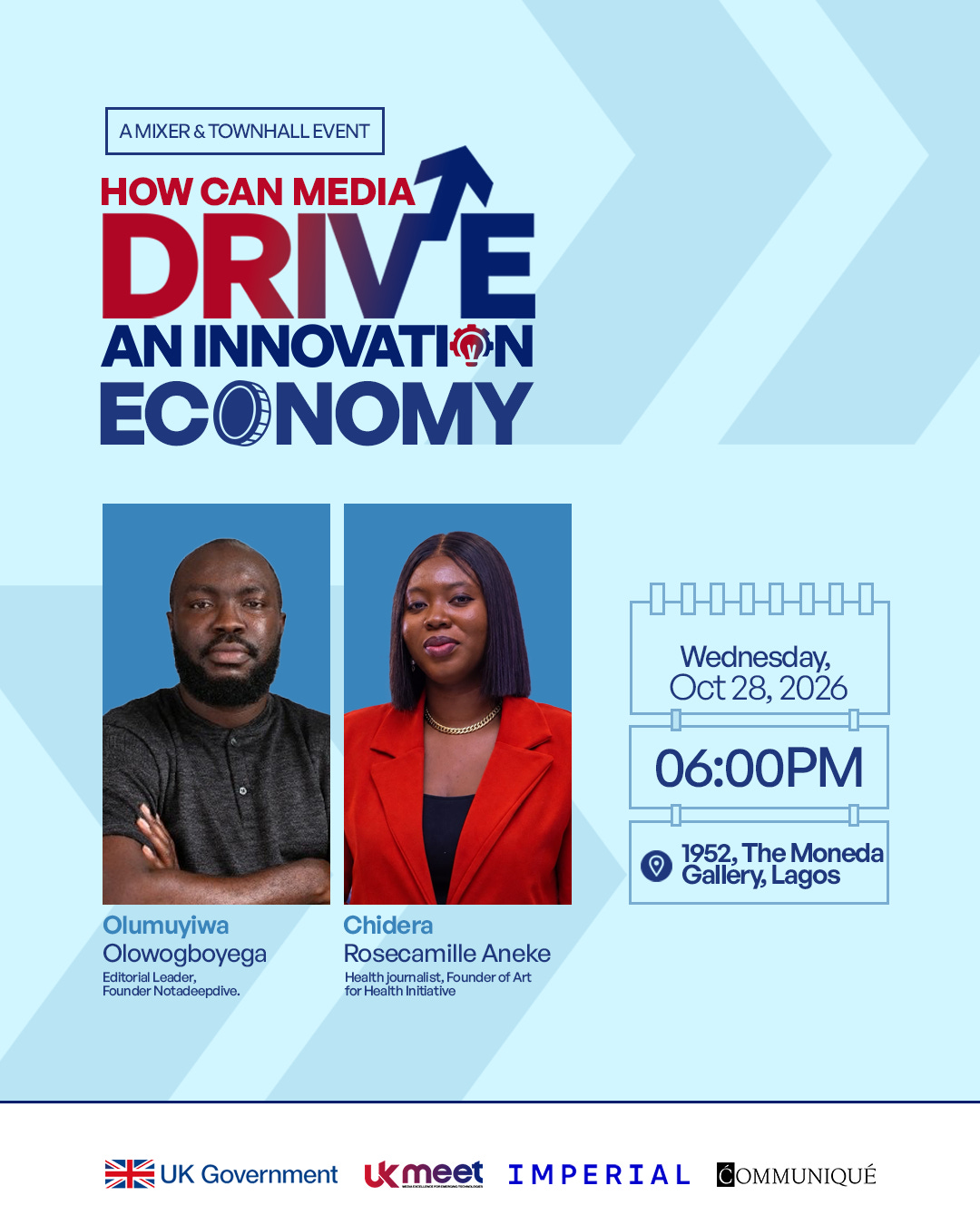
If you’re in Lagos this Wednesday and you care about the role of science, technology and public health journalism in Nigeria’s growth and development, this is for you. Join us for a networking mixer and an evening townhall discussion on how the Nigerian media can cover science, tech, and innovation effectively.