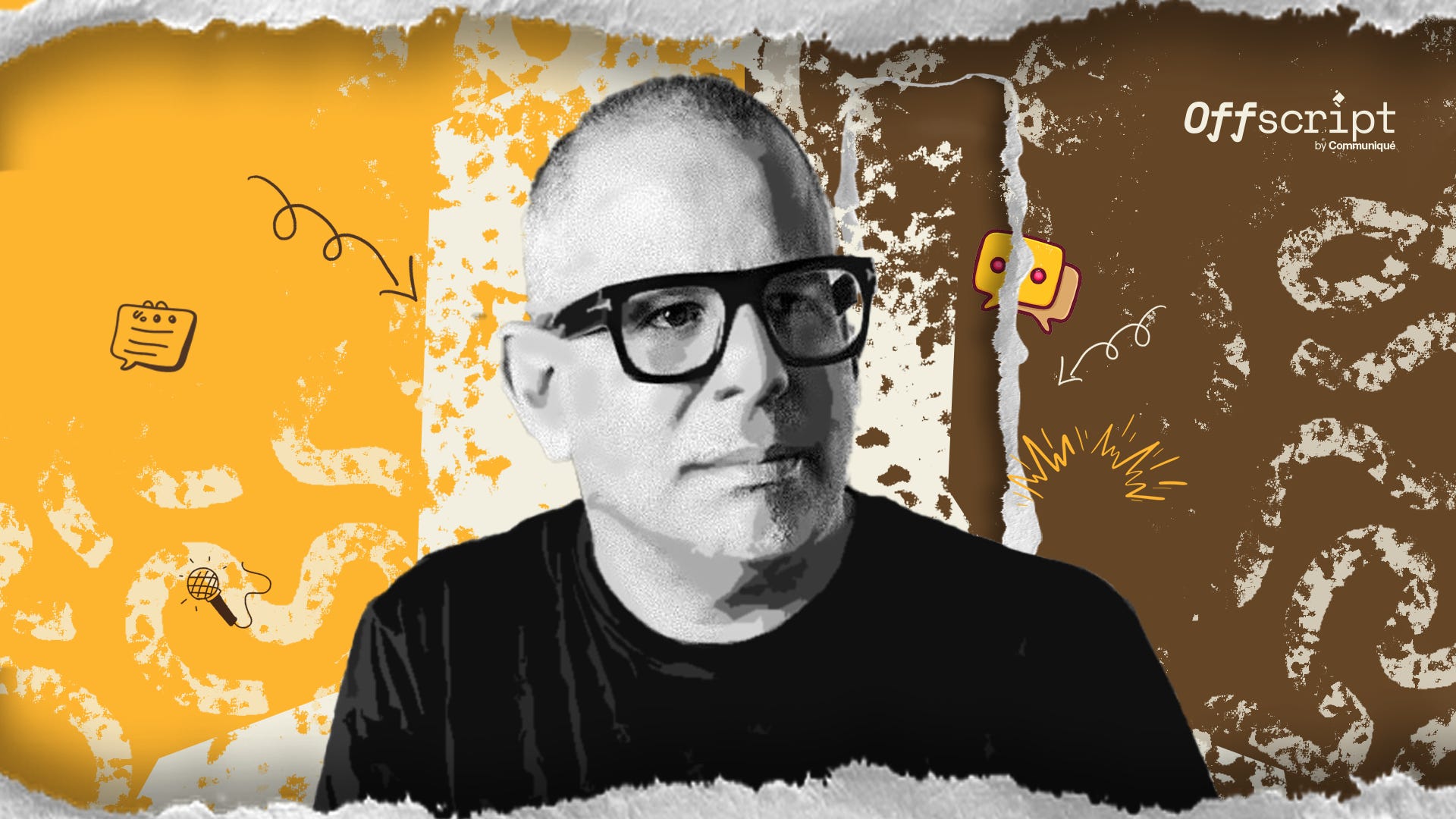
“We thought that by 2016 or 17 the music business would be a billion-dollar business in sub-Saharan Africa. Today, according to IFPI, the business is worth $120 million.”
Yoel Kenan made that projection when he relaunched Africori as a digital music distribution company in 2012. On paper, the ingredients seemed obvious. Africa’s population was growing. Most of it was young. Millions of people were moving into cities. Mobile phones were becoming more important, and digital music was beginning to replace the physical business Kenan had spent much of his career working in.
His timing was very wrong, but the underlying bet was not. Over the next decade, Kenan helped build one of the institutions that paved the way for African music’s global growth. This willingness to take calculated risks is integral to how he approaches life. “I’ve always liked a challenge. I see an opportunity. I say let’s take it. Let’s see what we can do.”
Growing up in the suburbs of Paris in what he calls a sweet and sheltered childhood, Kenan’s first big curiosity was advertising, and he decided early that it was what he wanted to build a career in. At 15, he subscribed to a trade magazine and followed the industry closely. Music and radio were another consuming interest. A local state-owned station called Radio 7 introduced him to jazz, dance, hip hop and funk, and gave him a taste for the medium.
In 1981, France’s new socialist government deregulated the broadcasting industry, allowing private local radio stations to operate. Kenan and two friends quickly got in on the action, purchasing a radio kit from Italy to broadcast funk music around their neighbourhood. They called the station W Funky, borrowing the naming style of the American stations they admired. Young and inexperienced, they could not sustain it, and within months they had to stop. But a local station offered them a slot on Fridays from nine to eleven, which they kept for about a year.
Radio taught him the pleasure of discovery. It also introduced an idea that would follow him throughout his career: finding something interesting and helping it reach people who might otherwise never encounter it. In business school, where he was studying marketing after completing his first degree in economics, that instinct became his first business.
You’re reading Communiqué because someone in the Inner Circle paid for it. Pay it forward. Your contribution funds: Original reporting, data licensing, and a small editorial team that actually answers your replies. No ads, no paywalls.
Kenan befriended students obsessed with British music and began helping them organise concerts in Paris. Their first show attracted about 2,000 people and earned a full-page feature in a national newspaper. Soon, they were bringing three British acts a month into 500-capacity rooms. Organising the concerts let him practise what he was learning in class. He persuaded a big local media company and a retail chain to sponsor them. They also tried to imitate the English pub culture. “The idea was like you get a beer or two and you come to listen to some bands; you might be coming to see one band, and you’ll discover two more bands that you didn’t know about.”
Eight months in, Kenan suggested they start a label: if they were already introducing British artists to French audiences, why not license some of that music themselves? By his final year in business school, the label had five employees.
Eventually, Kenan had to leave to complete France’s compulsory military service. When he returned, he stuck to his original plan to work in marketing, which he had studied, and got an advertising internship in London where he worked for a year. He enjoyed the work but quickly realised something was missing. “As much as I love advertising and marketing, it didn’t give me the same kick that I had working on music.”
Kenan joined BMG France in 1991 and worked in its marketing department, helping promote artists such as Whitney Houston. He moved to MCA soon after and later joined the team that launched Universal France. By the late 1990s, his interest in digital music had taken him into Universal’s international digital operations, where he became head of digital music outside North America. A few years later, French media conglomerate Vivendi, Universal’s parent company, acquired MP3.com, a fledgling digital music company, and asked Kenan to move to San Diego to run it.
The experience was new and challenging. MP3.com was more of a technology company than a music label. Kenan had to manage a company of 300 people, about 200 of whom were engineers. But it was also an educational period. The data MP3.com had on how people consumed music was far ahead of what Kenan had seen inside the traditional industry. For someone attracted to change, it was an ideal place to be.
But the same digital shift that excited him was also destabilising the industry around him. Napster, LimeWire and other file-sharing services were eating into physical music sales. Executives in Europe and America were trying to protect a business in decline.


Then Kenan came to Lagos. Around 2002, while working as a senior executive at BMG Europe, MTN invited him to visit Nigeria, having recently launched in the country. Kenan treated the three-day visit almost like a holiday. He arrived unprepared and left fascinated. “I fell in love with Lagos. I fell in love with the energy.”
Part of it was the confidence he encountered. South African executives visiting Europe would sometimes introduce their music apologetically, he remembers, worrying that it did not meet international standards. In Lagos, entrepreneurs approached him with the opposite attitude. They would tell him their artist was better than Usher or Alicia Keys. “That assurance and drive that they had, I said, well, this is refreshing.”
More importantly, the economics of music in Africa seemed to run opposite to the markets he knew. In Europe and America, music executives were watching revenues decline. In Nigeria and other emerging markets, telecom companies were growing quickly and telling him that customers loved consuming music on their phones. He began to wonder whether the major labels should focus more attention on emerging markets, but faced significant opposition back home. “We were not always able to implement some crazy ideas because it could affect the current business, which was already under attack.”
Convinced that the opportunity was too big to ignore, Kenan resigned to start Keevision in 2005. Keevision became a laboratory for his experiments: ringtones for telecom companies, a licensed alternative to piracy for traders in Lagos’s Alaba market, a Pop Idol-style television concept in Zambia and artist management. Ultimately, Keevision failed to become a successful business.
Eventually, family considerations took him back to London. He joined Jazz FM and helped the radio business look for revenue beyond advertising. The company launched awards, a dating service and, with partners, the festival that became Love Supreme, now one of the UK’s biggest jazz festivals. But Africa kept calling. Friends in Nigeria and South Africa began contacting him about an old idea.
Kenan had first launched Africori in 2009 as a platform for licensing African music for film and television. He wanted to simplify a process in which several middlemen could quote different budgets and commissions for the same song. The platform offered pre-cleared music and automatic pricing, but buyers still preferred to call and negotiate directly. When Kenan returned to the UK, he put the idea aside.

By 2012, a different problem had emerged. African artists and labels were struggling to get their music onto digital platforms or receive meaningful support from international distributors. Kenan saw an opportunity to rebuild Africori around that gap. Instead of licensing music for film and television, the company would help African labels and artists distribute their music digitally.
Africori secured a direct deal with Apple, but the harder problem was convincing the industry to use it. Some labels still relied heavily on physical sales and did not believe streaming would become significant. Others were wary of handing their catalogues to a new distributor. Technology alone would not solve that problem. He had to build trust in person. Kenan spent as many as 20 days a month travelling across Africa, explaining digital distribution. Gradually, individual relationships began changing the company’s position. MI Abaga and Chocolate City came on board in Nigeria. Sauti Sol joined in Kenya, and Gallo Records in South Africa, with one of the continent’s largest catalogues, began to work with Africori. The company also became good at identifying artists early, working with acts including Nasty C and, later, Tyla before their breakthroughs. The first five or six years were difficult. It took even longer for Africori to become properly profitable. But this time Kenan stayed.
By 2020, the competitive landscape had changed. Large international distributors had started investing heavily in Africa. Kenan worried that if a few important clients were attracted away by large advances, years of relationship-building could unravel quickly. Around 70% of Africori’s revenue also came from outside Africa. The company could distribute African music globally, but Kenan felt it did not yet have enough international infrastructure to support a record once it started travelling. Warner offered both.
Africori signed its first deal with Warner in April 2020. Three months later, Master KG’s “Jerusalema” showed the value of the partnership. Open Mic Productions had discovered Master KG and owned the song. Africori distributed the music and reacted quickly as the song gained momentum, investing in digital campaigns and independent promotion across markets. Warner provided the larger international machine to push the song.
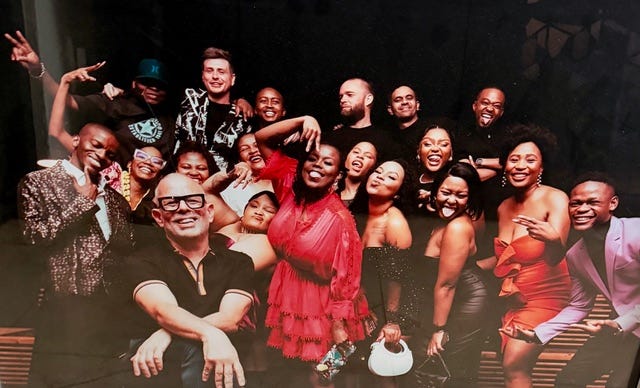
For Kenan, the deal marked a change in what Africori needed to survive. Independence had helped the company grow, but competing with larger international distributors now required more capital and global reach. He does not regret it. “In the position that we were in, that was definitely one of the best options.” But he would not necessarily make the same decision with another company. “If I’m able to avoid having to get an external investor or a major, I would try to avoid it. I still think there’s a lot to gain from being independent.”
In April 2026, Kenan left Africori. His next project is African Music Rights. Kenan originally started the company in 2014 as a joint venture with telecom group Millicom. The idea was to acquire African catalogues and find better ways to generate revenue from them. When Millicom exited the continent, the project went dormant. He is now bringing it back.
African Music Rights already controls music from several African markets, including a South African catalogue of about 11,000 songs. Kenan wants to acquire more rights and use new technology, including AI, to find opportunities for music that might otherwise sit quietly in catalogues. More than a decade after Africori began, the problem has changed. African artists no longer need convincing that digital music matters. African songs travel internationally with increasing regularity. The new question is how much value can be extracted from the intellectual property behind them, and who gets to keep it. It is another market whose eventual size Kenan cannot completely know. But that didn’t stop him before, and it won’t stop him now.