


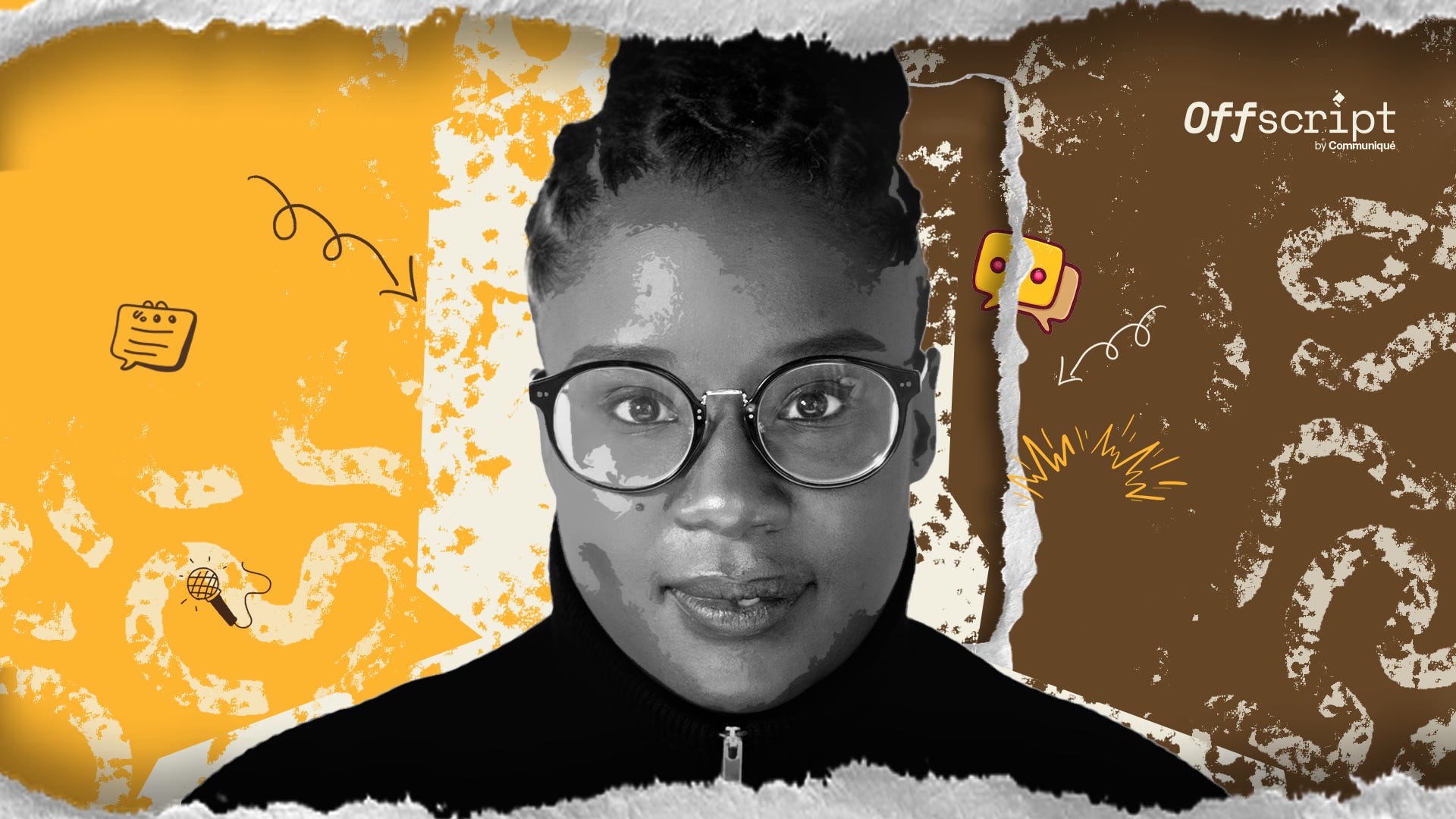
“The first thing that I ever wanted to become was a novelist.”
Selly Thiam first imagined a career as a writer when an author visited her school in Chicago. She was eager to hear about the work and had plenty of questions. By the end of the visit, she knew it was what she wanted to do. Her teachers had already noticed her writing ability and encouraged it through programmes where she read, discussed literature and learnt how stories worked.
Her mother had a question of her own: how would this pay the bills? She was a schoolteacher who encouraged her daughters’ curiosity, took them to arts programmes, and suggested careers in medicine and law. Both went into the arts. Thiam remembers the suggestions as just that; her mother had given them considerable room to imagine other lives.
Making a living from that imagination would occupy Thiam for years. Today, it is the question behind AQ Studios, the company she is developing to invest in African creators and help them build businesses around their work.
Thiam grew up in a politically engaged household. Her Senegalese father and African American mother shared a pan-Africanist outlook and taught their children that Black people’s lives were connected across borders. When Nelson Mandela was released, her mother made Thiam and her younger sister sit through the television coverage. Even buying fruit involved a political choice: the family avoided grapes in solidarity with California farm workers.
Another consequence of this high political awareness was that Thiam also grew up surrounded by people from different parts of the world. Her father’s African community in Chicago included Nigerians, Haitians, Senegalese, and Ghanaians. Jackson Park, home to the University of Chicago, brought professors and families from Europe, Africa, Asia, and Latin America into her orbit. For Thiam, Africa was part of family life long before she began writing stories about the continent.
Though her parents nudged her towards becoming a doctor, it was clear early on that Thiam had a gift for writing and telling stories. She began aspiring to be a writer when she attended a career talk in grade school where a writer spoke. “I was hooked. I had so many questions for her. I decided that this is what I was going to do.”
She began to pursue writing seriously, and it soon got her her first job teaching poetry classes for young children while she studied creative writing at university. Then she got a job in a Chicago public high school. The classroom demanded more than lessons. Some students were hungry; others had parents in prison. After Hurricane Katrina, children displaced from New Orleans arrived carrying experiences their classmates had not shared. Thiam used the arts to help them talk and tried to make the classroom a safe space. She loved the work, but eventually, she got exhausted.
Before she left, however, something outside school began pulling her toward another profession. One day, she stopped at a restaurant near her apartment and picked up the Windy City Times, a local queer newspaper. On its cover was a report about FannyAnn Eddy, a lesbian activist murdered in her office in Sierra Leone. Thiam was shaken not only by the crime but by the silence surrounding it. “There’s also just an absence of stories from this region. Where are the queer people? Where’s the story being documented? What is people’s lived experience? It woke up something in me where I realised I had no idea what was going on.” She wanted to change that.
You’re reading Communiqué because someone in the Inner Circle paid for it. Pay it forward.
Thiam began by interviewing Africans in the diaspora. At a conference in New Orleans, she met a friend of Eddy’s and arranged to interview her in Toronto. A public radio producer lent her recording equipment and showed her how to use it. A fellow teacher lent her a car. That interview reached National Public Radio (NPR). It was Thiam’s first step into audio journalism. It was also the beginning of None on Record.
The name came from an earlier interview with a Nigerian priest seeking asylum in the United States. Thiam had asked whether there was a word for gay or lesbian people in his language. He told her he had “none on record”. The phrase stayed with her. For Thiam, None on Record became a response to the claim that queer people did not exist in Africa, or that queer histories on the continent had no past. “The first step in this is to create an oral history,” she says. “One thing people can’t say is that we didn’t exist because we exist.”
Around the same time, Thiam saw a job ad from StoryCorps in Brooklyn, New York. The organisers were preparing to launch an initiative to document the oral histories of African Americans across the United States and archive them in the Library of Congress. They needed a producer on the project. Thiam got the job and moved to New York.
When her contract at StoryCorps ended, she took a role at PBS, then went to graduate school at New York University for a master’s degree in journalism. While there, she became a Carnegie Fellow and an investigative journalism fellow for ABC News. For her graduate thesis, she made a documentary shot in the UK called Seeking Asylum, in which she followed African asylum seekers through the British asylum system.
After graduate school, Thiam briefly worked at The New York Times. She had the training and connections to keep building a career in New York. But the prospect was becoming less appealing. Thiam speaks warmly of her Times colleagues. Her frustration concerned the wider climate in America and journalism as racial justice protests gathered force. She recalls Black journalists being considered too personally invested to cover stories involving Black people, while white journalists’ objectivity went unquestioned. “I don’t want to lend my genius to this,” she remembers thinking. “I want to go build something and see what happens.”
She moved to Kenya to build None on Record. Activists there had already asked for help establishing an organisation around the work. She had to take responsibility for fundraising, staff, safety assessments and programmes. Keeping stories on record now required keeping an organisation running. In 2018, the team launched AfroQueer, bringing years of documentation into a documentary podcast. Thiam says it attracted hundreds of thousands of listens and earned awards. Invitations followed, and people began asking about the wider possibilities for African podcasting.
The team could use what it had learnt to support other storytellers. AQ Studios took its name from AfroQueer, retaining a connection to the work that had made it possible. One early project was adapting the blog Adventures from the Bedrooms of African Women into a podcast. Production began during the pandemic. For a team accustomed to travelling to collect audio, it meant figuring out how to produce documentary storytelling remotely. But it also taught Thiam something more important: how to build value around intellectual property that wasn’t originally hers.
Your contribution funds: Original reporting, data licensing, and a small editorial team that actually answers your replies. No ads, no paywalls.
The success with AfroQueer attracted interest from production companies looking to adapt the IP into films and television series. So Thiam met with Hollywood executives and filmmakers to discuss what the podcast could become. And naturally, she became curious and wanted to understand the mechanics. “How do I move IP along a value chain? How do I take an audio podcast and turn it into a film? Or how do I take an audio podcast and turn it into a book and then turn it into something else so that the IP can continue to grow and expand?”
She had moved back to the US during the pandemic. So she began meeting with writers and others in the entertainment industry. Then the writers’ strike happened, and for her, it was a blessing and a curse. Though that period stalled much of the work and deals that could have happened, it also gave her access to people who would normally have been too busy to speak with her. “It opened my eyes, really, to thinking about how IP functions as a valuable asset. And how you can take IP and turn it into so many different things.”
Eventually, she got the opportunity to put what she had learned during this period into practice. The Adventures podcast later morphed into a live show held twice in London, with guests like Yvonne Orji, Kelechi Okafor, and Mona Eltahawy. By 2022, however, Thiam felt ready to move beyond None on Record. By then, she had been on the project for over a decade.
At the same time, she could see the media business changing. Raising money had become harder, podcasting was evolving, and resources for creative projects were shrinking. But Thiam saw the problem slightly differently. “I was like, there’s money, but how do we get the money to the people who actually know how to make these really incredible things?” The problem wasn’t simply a shortage of ideas, but building an efficient value-exchange system around them. Creators needed help understanding how to monetise their work, identify audiences, approach streamers, use platforms such as YouTube, build sustainable businesses, and turn audiences into revenue.
This realisation drove Thiam to figure it out. So she, once again, decided she needed to go back to school. She went looking for an MBA for creatives and found the Creative Business Master’s programme at the National Film and Television School in London. By the end of her first year, she had a clearer idea of what AQ Studios needed to become: a venture studio.
This newfound focus became the new mission for a new iteration of her company. It would now invest in African creators regardless of where they were based, providing them with capital and, most importantly, production expertise, networks and business support. It would also take a stake in some of the intellectual property it helps develop, depending on the level of investment.
For Thiam, it represents another evolution in a career built around storytelling. She spent years documenting stories that she believed needed to exist. Now she is trying to build the businesses that allow those stories to survive, grow, and create value.
