


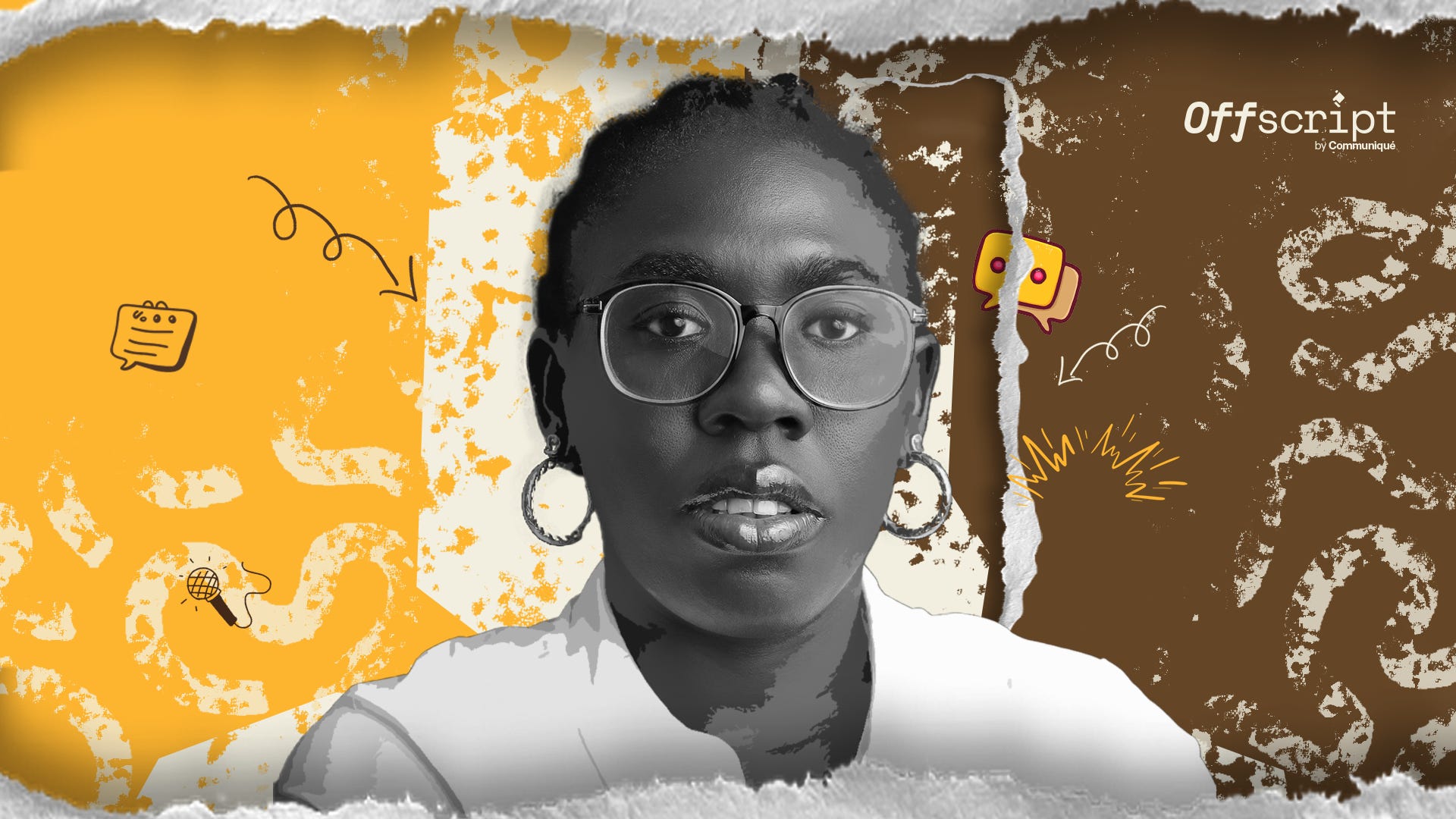
“I’m obsessed with affordability, access, and seamlessness. I don’t think that things should be priced out of people’s reach. This is the foundation for Piggyvest, and it is the same for everything I do.”
Most people know the name Odun Eweniyi through Piggyvest, the savings and investment platform she co-founded in 2016, which now has over 6.7 million active users and, by most accounts, is the app that taught a generation of young Nigerians how to preserve their money. That story has been told many times.
What hasn’t been explored, at least not fully, is Eweniyi’s role as an investor in Nigeria’s creative industries. She is the co-founder of Lagos-based electronic music collective Group Therapy, an executive producer on Editi Effiong’s Netflix film The Black Book, and a backer of Carousel Network, the producers of I Said What I Said (ISWIS) podcast.
The philosophy driving those investments is the same one that built Piggyvest. And if you trace it back, the seeds of that philosophy were planted very early.
Eweniyi grew up an erudite. Her father was a university professor whose interests ran to philosophy and psychology. Her mother, also a professor, lectured in early childhood education and sociology. Between them, they built a home where asking questions wasn’t just tolerated, it was expected. “Expressing yourself was highly encouraged,” she says. “Things were not treated as ‘you must do this.’ I could ask why.”
Her father had a rule about his bookshelf: if you picked up a book, you had to finish it. It worked, perhaps too well. “I’d just pick up books because I felt like reading them, and then I’d finish them,” she recalls. So she read Wole Soyinka. She read Shakespeare. She read non-fiction. When she didn’t understand something, her father would sit with her and explain it.
She and all her siblings were exposed to literature and the arts from an early age. They all turned out creative, artsy, and deeply self-assured. Her younger sister draws. Eweniyi writes — and has written, in one form or another, since she was in primary school, making up stories through secondary school and keeping multiple university blogs, without, it seems, ever thinking of them as anything unusual. “Writing for me felt as natural as breathing,” she says. “There’s no introduction to it. I don’t have a particular point at which I decided to write creatively. It just has always been.”
Eweniyi graduated from Covenant University in 2013 with a degree in Computer Engineering. She came to Lagos for her mandatory National Youth Service Corps year with a clear plan: finish her service, go abroad, pursue a master’s in Computer Science, specifically in Cryptography, and then return to academia as a professor, just like her parents. But during that year, she made a choice that changed everything.
Her friends from school, Somto Ifezue and Joshua Chibueze, were already deep in the startup world, building PushCV, and she had joined them as a social media manager. On the side, she had also begun to write professionally. Her sister had introduced her to Bankole Oluwafemi, founder of TechCabal. Eweniyi wrote to him and was told to write a sample story. Her story was a piece about Gossy Ukanwoke and his then-EdTech venture, Beni American University. Bankole thought it had legs, and she got the job as a junior writer.
When PushCV got into an accelerator programme, she paused her work at TechCabal to focus on the startup. A few months later, tech and media entrepreneur Adewale Yusuf called to say that he was launching TechPoint and wanted her to work with him. She joined for about seven months, writing alongside Muyiwa Matuloko and Daniel Orubo, her longtime friend and now the Editor-in-Chief at Zikoko.
Meanwhile, in December 2015, she and her co-founders decided their next product would be a platform to help young Nigerians save money. They built the app and launched it in April 2016 under the name Piggybank. It would later be rebranded as Piggyvest.
At Piggyvest, Eweniyi found ways to flex her creative muscles. When the platform launched, the division of labour was straightforward: Ifezue wrote the code, Chibueze handled customers, and Eweniyi ran operations. But she also managed the company’s social media. “If you scroll down Piggyvest’s social media, all those posts were by me. The earlier tweets, all the earlier memes on our Instagram page, all of those were by me.”
Her social media work was a critical business function. The company had no funding at the time, so they had to find imaginative ways to attract attention and ask young Nigerians to trust them with their money. Her approach was deceptively simple: don’t talk at people, talk to them. Be, as she explained it, their “best friend that knows a lot about money.” That balance, approachable but authoritative, funny but financially serious, remains one of Piggyvest’s most distinctive features. She knew, even in those early years, that she wanted to eventually build a content team that could scale the voice she had created. For several years, the idea sat in her head while the company lacked the resources. “A big one, for instance, is our savings report. Before we put out the first savings report in 2023, I’d been talking about exploring savings data for maybe four years before that. We just didn’t have the resources.” When the time finally came, she knew exactly who to call: Daniel Orubo, her writing partner from TechPoint and Zikoko, came on board to help establish the team.
If one side of Eweniyi’s work is helping Nigerians save, the other is helping them spend well — on things that improve their lives and expand what they think is possible for them, especially their creative pursuits. “Creative endeavours should be innately democratic or democratised. If you want to do something and you can summon the willpower to try, it shouldn’t be out of your reach. You should be able to make a movie and show it to people who should see it.”
When Editi Effiong came to her about The Black Book, she didn’t need much convincing. Their relationship stretched back nearly a decade, to the early Piggyvest years when Effiong’s production company, Anakle, was a constant presence at the edges of the Lagos tech scene. “We’ve had a great relationship going on ten years,” she says. “So when he said he wanted to do an audacious movie, and the premise is one that’s very dear to my heart, given the role that we played in the EndSARS protests — I thought, why not? Sounds big, sounds huge, sounds like something that pushes the boundaries of what we know as Nigerian media or Nigerian movies.” Netflix picked it up, and it became the most-watched Nigerian film on the platform.
The same instinct drove her to co-found Group Therapy. “I actually enjoy having a social life. I post all on my Instagram about all of my experiences with my friends. I want to enjoy every bit of it, and I don’t want to have to break the bank to do it.” But the Lagos entertainment landscape she came up in had a clear message for people like her: if you can’t buy a table, you can’t come in. “That is insane,” she says. Group Therapy, co-founded with electronic music DJ/producer Aniko, is her answer to that problem — pop-up rave parties built for people who wanted a good time without paying a king’s ransom. Carousel Network, the media network and podcast studio behind I Said What I Said, follows the same logic. Quality creative work, made accessible, distributed widely.
There could have been a life in which Eweniyi became a computer science professor, but she chose something different instead. Now, a decade later, the question isn’t whether she made the right call; it’s where all of it is going. Is there a future where she leaves Piggyvest to focus on her creative industry pursuits full-time? She pushes back on the premise. “Why do I have to leave Piggyvest to do something in the media and creative industries? I don’t believe those things are separate,” she says. To her, the data she sees every day at Piggyvest — what people save for, what they quietly want beyond rent and school fees — is the same raw material that informs every creative bet she makes. The fintech, the film investment, and the rave parties are not parallel lives. They are the same conviction, expressed in different ways.
She can’t yet say exactly where it leads. “All of this work is heading towards something. I won’t lie to you — I don’t know what. But I know I have to keep doing it.”
If Communiqué has shaped how you see the industry, return the favour. One-time or recurring: every contribution keeps us accountable to readers.
Editor’s Note: The essay has been updated to accurately reflect Piggyvest’s active user count, Aniko’s correct qualification, and Eweniyi’s mother’s profession.