


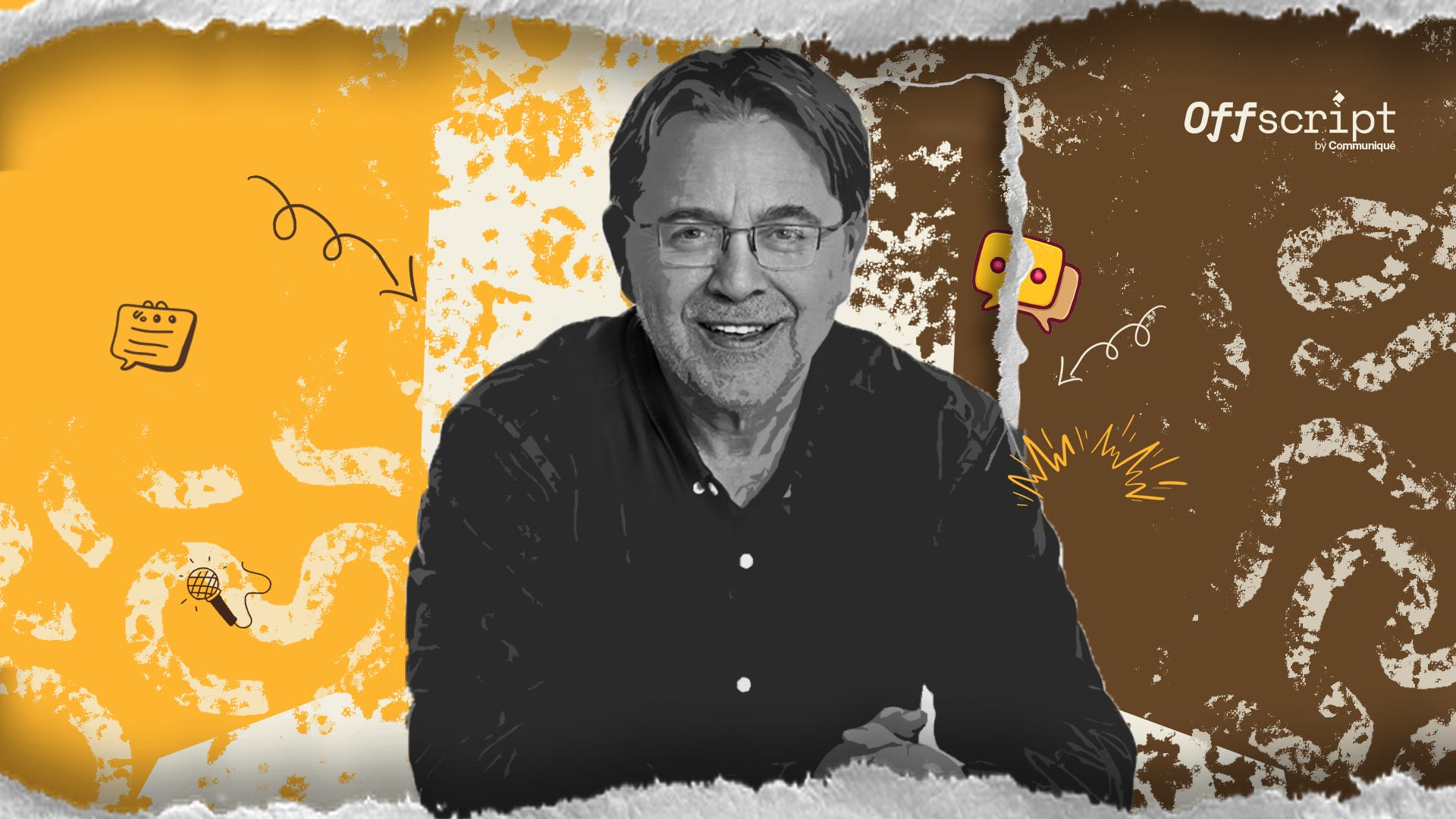
“I’m going to finish my term unless someone says I’ve done something wrong. And can prove it. I’m not resigning.”
It was not a comfortable position to be in. Michael Markovitz was sitting on the shrinking board of the South African Broadcasting Corporation (SABC), watching colleagues resign one by one under political pressure. The board had lost its quorum. The government wanted them gone. And Markovitz refused to move. That stubbornness was not new. It was the same quality that had driven him to help build the very institution he was now trying to save.
Markovitz is one of the most consequential figures in South African media. He helped draft the laws that created an independent broadcast regulator after apartheid. He sat inside that regulator as it reshaped the country’s telecommunications and broadcasting landscape. He spent nearly a decade in the private sector learning the media business. And then, when the SABC — the public broadcaster he had fought to free from government control — fell back into political capture and near-financial collapse, he put his hand up to go back in and fix it.
To understand why he kept returning, you have to go back to Cape Town, where Markovitz grew up during the apartheid era. He was white, which meant he grew up on the side of privilege. But privilege also meant ignorance. The system was built to keep white South Africans from seeing what was being done in their name. “The whole idea was to cut us off from the reality of what was going on. The media was very controlled. The public broadcaster wasn’t a public broadcaster; it was a state broadcaster. And so we grew up in an environment where it was difficult to really find out what was going on.”
It was only in high school, through contact with older students already at university, that Markovitz began to understand the society he was living in. What he learned disturbed him. By the time he finished school, he was politically conscious and determined to avoid conscription into the apartheid military.
You’re reading Communiqué because someone in the Inner Circle paid for it. Pay it forward.
The university offered a way out. He chose journalism, partly because he wanted to write, and partly because it kept him out of the army. He studied at a time when journalism schools were under heavy government surveillance. The security police knew these institutions were breeding grounds for dissent. Professors had been detained. The environment was tense.
After graduating, Markovitz left South Africa for Europe to further avoid conscription, travelling and working before eventually completing a master’s degree at the University of York in the UK. When he returned in 1987, apartheid was beginning to crack. By 1990, Nelson Mandela had been freed, and negotiations for a democratic transition were underway.
With the prospect of democracy suddenly becoming a reality, Markovitz decided to study law. He reasoned that a democratic South Africa would need new media laws and someone would have to write them. “My law degree brought the media and the law together for me. And I started writing about what a future democratic South Africa could look like, focusing on broadcasting rather than anything in those days. How the public broadcaster could be freed up, how new licenses could be issued, and how we could create an independent regulator to issue those licenses.”
He was already a member of the Film and Allied Workers Organisation, a body that represented anti-apartheid filmmakers and video producers. Through that organisation, he began publishing proposals for what a new broadcasting framework could look like. Because almost nobody else was approaching the issue from a legal angle, he quickly became the expert.
The reputation got him nominated to a technical committee at the constitutional negotiations in 1993, tasked with drafting the laws that would govern broadcasting in the new South Africa. He was still finishing his law degree. He was in his late twenties. And he was helping write legislation that would shape the country’s media for decades.
The committee’s work produced the Independent Broadcasting Authority Act. This law created a new independent regulator, established community-controlled broadcast licences as a category, and introduced local content quotas for South African music and film. It also made the governance of the SABC a constitutional issue, arguing that you could not hold free and fair elections if the state broadcaster remained a mouthpiece for the old regime. Cyril Ramaphosa, South Africa’s current president, was among those who supported the push for an independent SABC board at the time. The first public appointment process for that board was broadcast live on television, a genuinely new thing in South African public life.
After the law passed and the Independent Broadcasting Authority (IBA) was established, Markovitz set up a consultancy helping community broadcasters navigate the new licensing system. Then IBA’s chairperson, Mandla Langa, invited him to work with him. So Markovitz moved from consultant to advisor, and eventually became part of the regulator itself, which later merged with the telecommunications regulator to become the Independent Communications Authority of South Africa (ICASA).
He spent six years there. The work included overseeing the partial privatisation of Telkom, licensing mobile operators, and managing the opening up of a telecoms market that had been a monopoly. Langa became a formative influence. “He taught me which battles to fight and which not to fight. I think it was an important lesson because, you know, as a young person, you want to fight everything; you want to die on any hill for your principle.”
When Langa’s term ended in 2005, Markovitz left with him.
After leaving ICASA, he joined Prime Media Group to work on the company’s digital strategy. It was the mid-2000s, and the conversation about convergence — how media infrastructure and content were beginning to merge — was just getting started. He became the head of a new digital outfit at Prime Media, tasked with identifying smaller digital companies to acquire. It was his first real immersion in the media business. He had been a journalist, an activist, a lawyer, and a regulator. He had never had to read a balance sheet.
“I didn’t do an MBA, but it became almost like my MBA on the job.”
He stayed for eight years, becoming an executive and learning the commercial mechanics of media from the inside. When he eventually left around 2014, he tried his hand at a telecoms startup, but that was just a brief interlude. He was soon back in the media.
In 2017, Markovitz joined the SABC board. This time, the work was not to create a new democratic broadcaster but to rescue the SABC, which had been damaged by state capture, political interference, and corrupt contracts under the Zuma administration. A 2017 High Court ruling affirmed the board’s independence from ministerial interference, giving reformers some legal protection. But the financial crisis was severe. Insolvency was looming, and the state treasury pushed the board to cut labour costs before government bailouts could be secured.
For Markovitz and other board members, the contradiction was painful. A public broadcaster exists to serve society, but it also has to survive. Saving the SABC meant making decisions that would hurt workers. When retrenchments moved forward, board members resigned, leaving the board without a quorum for a time. The remaining members held firm until the government filled the vacancies, allowing governance to continue.
The experience reinforced something he had long believed: fixing a broken institution is far harder than building one. And the SABC’s problems were not just about corruption. The funding model — heavily dependent on advertising while carrying expensive public service obligations like broadcasting in indigenous languages — was structurally broken. The licence fee system was widely ignored. A new approach to sustainability was needed.
Your contribution funds: Original reporting, data licensing, and a small editorial team that actually answers your replies. No ads, no paywalls.
After the SABC, Markovitz turned to a different kind of institution-building. He set up a think tank at the Gordon Institute for Business Science (GIBS) in Johannesburg, focused on media sustainability in the Global South. In 2023, the think tank hosted a major conference on Big Tech and journalism, drawing more than 100 participants from 24 countries and producing a set of principles for fair compensation between technology platforms and news publishers. It put the think tank on the map.
From there, Markovitz helped establish the CTRL J conference series: events in São Paulo, Jakarta, and Johannesburg, bringing together media leaders from Latin America, Asia-Pacific, and Africa to share approaches to the sustainability crisis facing journalism globally.
But the initiative he speaks about with the most energy is an executive leadership programme he launched at GIBS for emerging African media leaders. The programme offers access to business school faculty and global media experts, with a strong emphasis on scholarships, because targeting an industry under financial pressure with an expensive programme only works if the money barrier can be removed. The inaugural cohort included strong Nigerian representation, with participants from Communiqué, the SABC, and Big Cabal Media, among others.
Markovitz wants to build a peer network of emerging leaders across the continent. He considers it the most meaningful work of his career. “If we can get 100 alumni of this program and build a proper alumni peer network of emerging African leaders from key countries, that, for me, would be a dream worth fighting for.”
He would not change much about the road that brought him here. Each stage made the next one possible. The one thing he wishes he had picked up earlier was financial literacy, the ability to read a balance sheet, to understand the business side of the industry he spent his life trying to protect. Everything else, he would do again.

Founders Connect Live Show is back! It is happening on July 18, 2026, in Lagos, and this year, the interview is the entire event.
One stage. One host. Honest conversations with some of Africa’s most interesting builders, live and unscripted, with you in the room.