


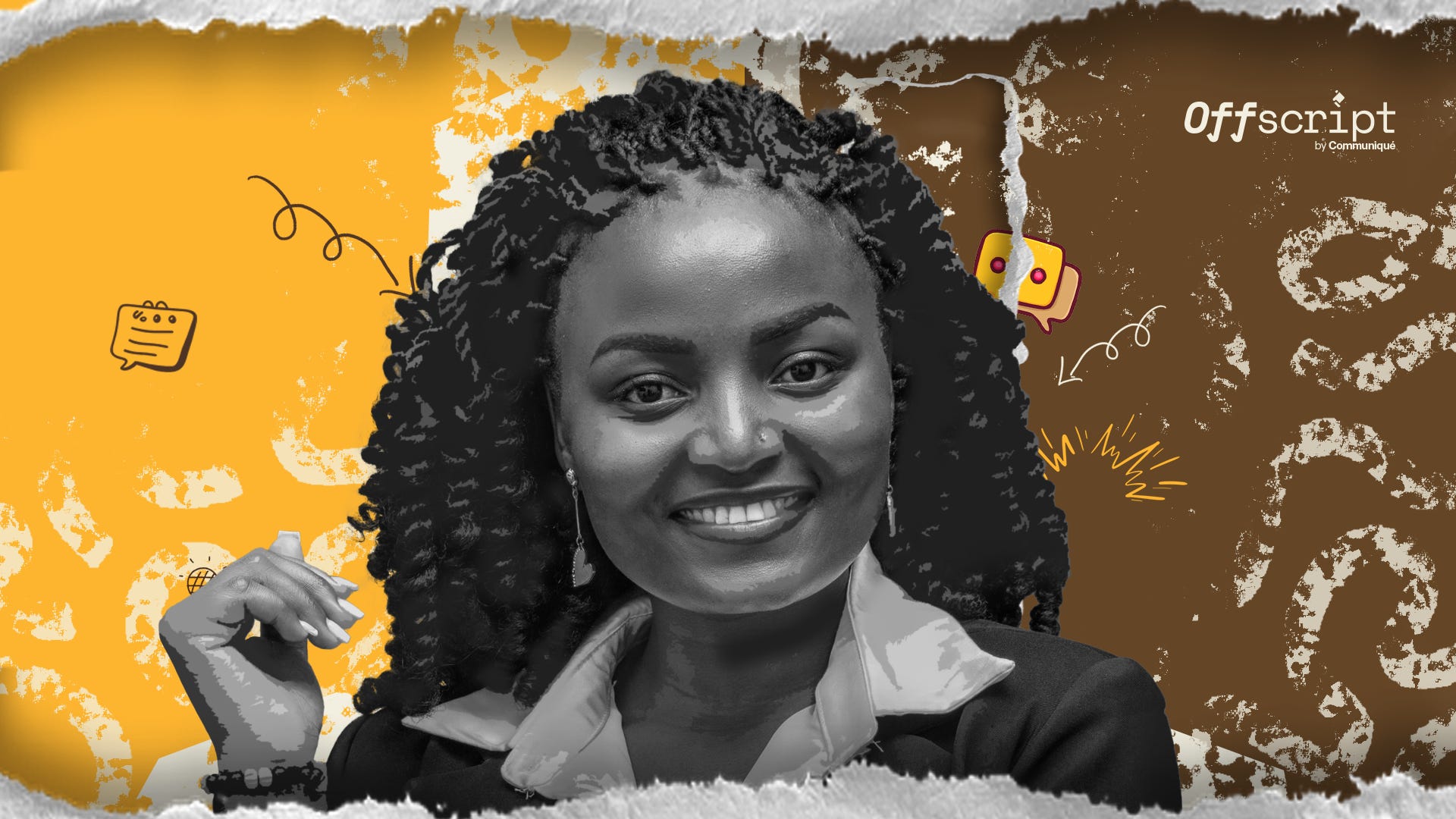
“I almost didn’t go to the school I was supposed to go to, the one that shaped the English I speak and my early relationships with my friends, because of an advert I used to hear on the radio.”
Marion Apio grew up between Tororo in eastern Uganda and Kampala, raised by her grandparents in a home with one radio. One advert on it held her attention. It promoted a private school in Mbale, a city in eastern Uganda, and she decided that was where she would study. When a sponsor offered to pay her fees and asked which school she wanted, she mentioned it. He chose a different one. Later, while studying at the school he picked, Apio visited the one from the advert and found it was nothing like what she had heard. “That’s when my eyes really opened to what media can do,” she said, “and how media influences our everyday actions without us even knowing.”
Apio has spent the past five years working on that problem. She is the co-founder and CEO of Debunk Media Initiative, Uganda’s first fact-checking organisation, which turns five on November 21. Debunk has trained about 3,500 young people at 12 Ugandan universities and raised more than $200,000, almost all of it one project at a time. Its next product goes further than sorting true claims from false ones. In January, Debunk plans to launch the Debunk Verifier, a web platform that helps young people check whether an opportunity is legitimate, what it requires, and whether they qualify before they commit time or money. Five years of fact-checking taught Apio that facts alone do not change much. “It’s not enough to know what is true or false if you can’t use that information to better your life, your community, your family, your friends.”
The family translator
Apio’s habit of explaining information started at home. From about age 6, she helped her grandmother make sense of the newspaper and the radio. She still does. “Even now, for my grandmum, I make sense of information for my family. Even the Bible, the scriptures.”
Her schooling ran on other people’s money and her own persistence. Her first sponsor found her at church, where she had just finished singing. He told her she had a good voice and asked about her circumstances. “He asked me, ‘What’s your story?’ And I told him, ‘I would like to go to a very good school. My name is Marion Apio. My dad is sick. If you take me to school, I’ll do my very best.’ The next thing, he gets my uncle’s number and pays for me to go to a very expensive private school.”
Her family paid for the first four years of secondary school. When her uncle could no longer afford the last two, Apio went to the Forum for African Women Educationalists (FAWE) on her own. She told them she was the second-best girl in her school and that her family had run out of money. FAWE, funded by the African Development Bank, paid for her to finish at Iganga Girls. “I think I’m persuasive naturally,” she said.
University nearly took her somewhere else. A Mastercard Foundation scholarship, which her twin brother told her about, would pay for her degree at Makerere University. She meant to study journalism, but a woman in an office she visited told her she would make a great lawyer. With three weeks left before the law pre-entry exam, Apio paid the fee from her savings and studied day and night. She scored 59%. The pass mark was 60%.
She took it as a sign. She had been outspoken since childhood, sang in church, and looked up to an aunt who worked in the media and to the broadcasters she heard on the radio. “I admired people in the media space, not necessarily because of the camera, but because of the ability to process information and deliver it to other people.”

Five fellows and a pandemic
In 2020, her final year at Makerere, Apio was one of 26 fellows at the Media Challenge Initiative, a Kampala organisation for young journalists. It partnered with Africa Check, the fact-checking organisation that started in South Africa, to train the fellows in fact-checking and media literacy. COVID-19 reached Uganda as they were about to graduate. False claims about it followed.
When the training ended, five fellows wanted to keep going: Apio, Reagan Kiyimba, Rukia Nabbanja, Edgar Matthew Karuhanga, and Bella Twine. Media Challenge gave them a YouTube show to test the idea. It began as The Debunk and became The Debunk Fact Checking Show. Some of the claims were outlandish.
“If you go back to our YouTube channel and watch, I was there trying to tell people, ‘The COVID-19 vaccine does not have the devil’s DNA. Please don’t believe this.’ You might think this is not something vital, but we’re operating in a community, in a country, where people just believe anything they’re told.”
Too many claims for five people
The pilot ran for six months and showed the team how large the problem was. The misinformation was not only about health. It was political, cultural, and aimed at particular communities, and some of it spread offline and never made it to social media. Five people could not keep up. “We would wake up and say, yes, we’re on top of it, and then wake up tomorrow and it’s a different thing,” Apio said. “So we felt incompetent most of the time.”
The team tried other formats: a podcast, fact cards for social media, a possible move to television. Each one depended on someone paying for it. “If you find a partner that believes in that idea, they give you the resources, and then you build together,” she said. “If you don’t find someone backing you and there are no resources, the idea is paused until you’re able to build it.”
The idea that did find a backer changed who did the searching. If five people could not find every false claim, the public could bring the claims to them. Debunk pitched Aga Khan University in Kenya on a WhatsApp number where anyone could send a suspicious message to be checked. Apio was already thinking about automation. “At the time, AI was not really a thing. But for some reason I was thinking: how can we automate this process? How can we think beyond the human resource that we have?”
A second grant paid for a version that collected claims from social media, mainly X (formerly Twitter). The US Mission in Uganda funded Debunk twice, including the launch of its apps. The WhatsApp bot became the starting point for the Debunk Verifier, which Debunk built this year with BBC Media Action, the Mastercard Foundation, and UC Berkeley.
You’re reading Communiqué because someone in the Inner Circle paid for it. Pay it forward. Your contribution funds original reporting, data licensing, and a small editorial team that actually answers your replies. No ads, no paywalls.
Training became the main work
The service that shaped Debunk most was training. Apio and her colleagues had learned fact-checking through Africa Check, and nobody had come to their campus to teach it before that. Most journalism students in Uganda still had no such training, and Apio does not accept that studying journalism is enough. “Because you’re a journalist or you’re a journalism student, the assumption is that you know,” she said. “But that’s not true.”
They started at their own journalism school at Makerere, where the professors welcomed them. Africa Check certified the team as trainers of trainers, and DW Akademie, the media development arm of the German broadcaster Deutsche Welle, certified them to train others in media and information literacy and in reporting on public services. Debunk has since worked with 12 universities in northern, western, eastern, and central Uganda, with partners including Africa Check and the Google News Initiative paying for the sessions. Training is now most of what Debunk does.
None of those universities has signed a formal agreement with Debunk yet. Apio wants memorandums of understanding, and Debunk is testing what one would look like with Makerere. Universities do their best, she said, but with so many students and so many priorities, practical media training is where the gap shows.
Three years in California
Debunk also had to run without its CEO in the country. Apio first went to the US in 2018, one of five Mastercard Foundation scholars chosen from 500 applicants for an internship at Arizona State University. She lost her father in 2019. In 2022, UC Berkeley’s journalism school admitted her without funding, so she deferred, spent another year building Debunk, and went in 2023 on a Mastercard Foundation scholarship. After her master’s degree, she took a media fellowship in Los Angeles covering health, housing, and homelessness.
While she was away, Kiyimba ran Debunk as managing director, with Nabbanja as a director. Twine now works at the BBC and Karuhanga at NBS, one of Uganda’s big media houses. Debunk has grown to about 15 people. Apio, now back in Kampala, thinks the time abroad was preparation. “I’ve been in the US local media space for three years. I can now tell what can work, but also borrow ideas from there.”
Building on project money
Debunk is a non-profit, and almost all the money it has raised was tied to a specific project. Apio could not think of a project it had done without funding, other than this month’s anniversary events. The money has not stretched to salaries. “Debunk cannot really afford to pay me,” she said. “And it’s not just me. Debunk cannot afford to pay us all.”
When she hires, she makes no promises. “This is one of those few jobs you will do and look back and be grateful you took the chance.” What she offers is the plan, and the plan depends on unrestricted funding: money Debunk can spend on running the organisation rather than on one project. She hopes it comes next year. If it doesn’t, the Debunk Verifier will launch as a paid service. Organisations that can afford training already pay for it, and Debunk has brought in a fundraising team.
Charging sits uneasily with a mission built on making information accessible. “People don’t really like to pay for information,” Apio said. Even asking university students for a registration fee feels wrong to her. Not every project has worked, either. “There are some projects that stumbled completely, like we had no idea what to do. But people have been gracious to give us second chances.”
After true or false
Debunk opened its anniversary celebrations with a meeting with refugees in Kampala to learn how misinformation targets them and what tools they need to answer it. The meeting reflects the shift Apio wants for the next five years. The first five taught young people to tell accurate information from false. The next are about what they do with it on an internet full of jobs, scholarships, scams, and privacy risks.
The Debunk Verifier is the centre of that plan. The web platform teaches fact-checking, shows users where information came from so they can check it themselves, and helps them judge whether an opportunity is real and whether it suits them. Alongside it, Debunk wants a media and information literacy curriculum in universities, and it plans to press Uganda’s ministries of education and ICT to take the subject seriously. It aims to reach 10 million Ugandans aged 18 to 35, and Apio does not want to stop at the border.
She is wary of treating technology as the answer. Fact-checkers stay away from predictions, she said, but AI is not going away, and the media should use it without blindly trusting it. “We shouldn’t treat AI as a threat, but as a collaborator. We shouldn’t also treat it as a superhero.” A tool also has to reach the people it is for. “If you’re in a rural community building an AI tool that cannot be accessed by people who have no electricity, who have no phones, then you’re not really serving that community.” Her larger point is about the media itself. “AI is just amplifying what already exists in the media. And if that information is not accurate, it’s about time that we actually corrected it.”
For Apio, the Verifier is also personal. Her own path ran on finding the right opportunities and checking them before she took them. “As someone who has had the privilege to access several opportunities, I must say life changes when you know exactly where to find an opportunity, how to verify it, how to apply for it and whether you qualify for it.”
As a child, she had one radio advert and no way to check it. The tool Debunk launches in January is for the young people who now hear the same kind of promise on WhatsApp.