


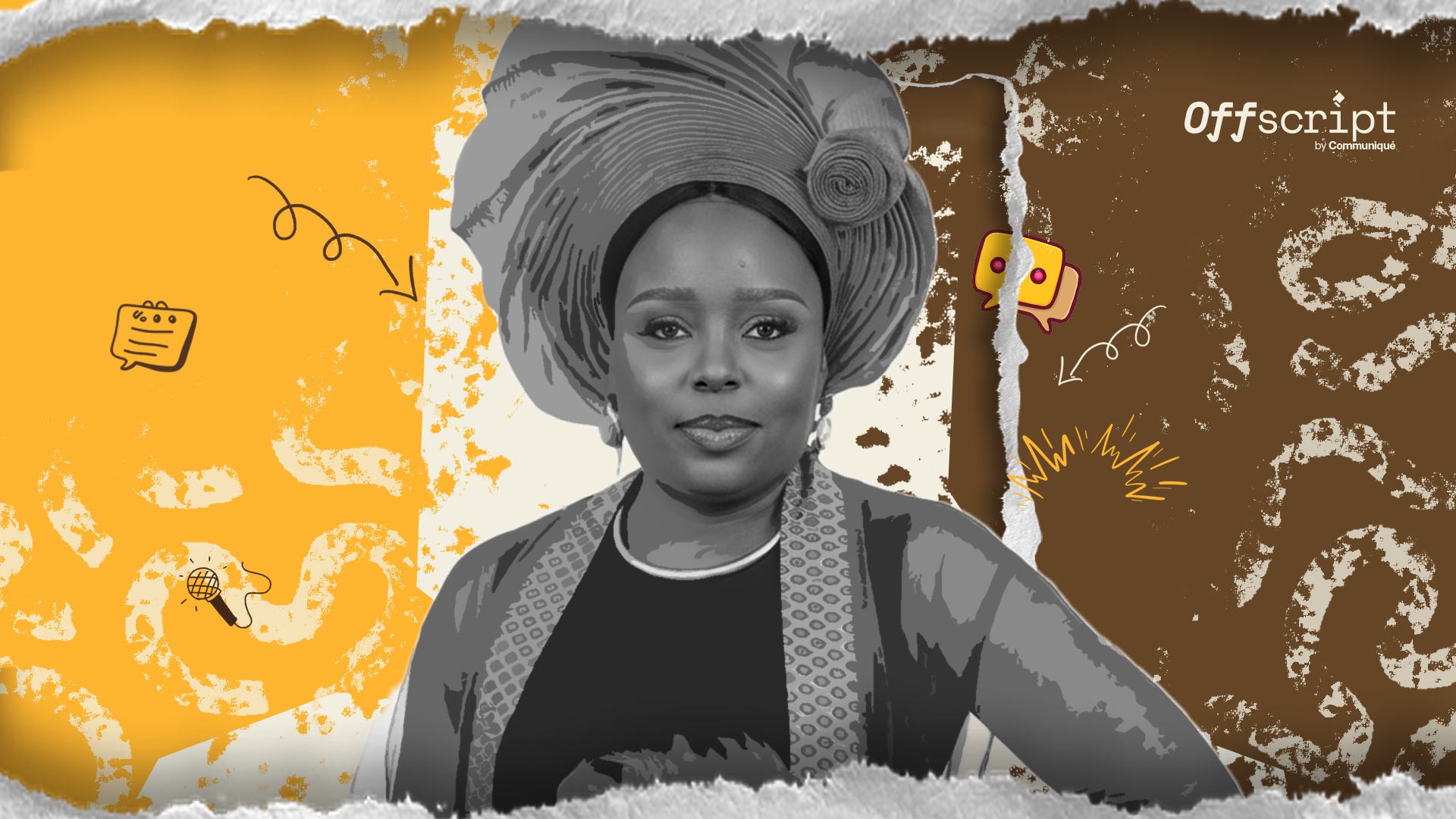
“I didn’t even know what corporate communications was. I just needed to secure the bursary.”
That is how Keagile Makgoba describes the decision that would determine the next 15 years of her career. She had applied to the University of Johannesburg to study marketing, but the course had already filled its assigned quota. An administrator at the university told her that the only spaces left in the system were for a course called corporate communications and asked if she wanted it. Because she was funding this admission on a bursary, she couldn’t take chances. “I said, you know what, it doesn’t matter. Don’t explain. I’ll figure it out.”
She did figure it out. Fifteen years and several roles later, Makgoba runs communications for one of the platforms that define how Africans tell their own stories. But the real story is not only that she stumbled into a career by accident. Her life has been shaped by access: receiving it, fighting for it, and trying to create it for other people.
Makgoba grew up in Soweto, a township in South Africa. Her parents divorced when she was young, so she and her siblings lived with her mother. At one point, her mother worked two jobs, leaving early and returning late, just to keep the family going. Money was often short. There were days when food at home was not guaranteed, and at school, the lack of money could become public. She remembers being singled out because fees had not been paid and missing trips for lack of money.
Still, school became one place where she could push back. From primary school, she was known as a diligent student. Each year, her mother would be called in for some academic, cultural or leadership award. “I think I’ve always just been determined to push through the circumstances,” she says. Eventually, she got a scholarship to complete her high school education. It was one of the first major examples of what she now describes as being “a product of a community.”
In Grade 11, she joined the Youth Leadership and Entrepreneurship Development programme, a year-long initiative sponsored by First National Bank and founded by Dr Steven Zwane. The programme taught soft skills, self-awareness, and entrepreneurship. Makgoba became the marketing manager for her group’s mock business. Soon, those lessons moved from theory into her own life. She began selling sweets, chocolates, and muffins in school, using part of the maintenance money her father sent as small capital.
The same youth leadership programme later nominated some participants for university bursaries. During the bursary interview, Makgoba said she wanted to study industrial psychology. It was not true. She thought a bank-funded programme would be more likely to support something that sounded serious and practical than something creative. One of the panellists saw through it and asked what she really wanted.
“I said, look, I’ve been super keen to go into marketing. I’ve heard a lot about it, but I don’t know the details. The only thing was that, at the time, marketing was all people would talk about. So if you said creative, it was only marketing. I didn’t know that there was something called PR and comms” She got the bursary in full: tuition, a stipend, and three years’ books. And then she had the encounter that led her to stumble into corporate communications.
You’re reading Communiqué because someone in the Inner Circle paid for it. Pay it forward.
The university did not make things easy. In her first year, she once missed a test because she did not have the money for transport to get to campus. So she worked. She handed out pamphlets at traffic lights, worked as a promoter for brands, worked in retail, and later managed social media pages for brands at a time when Facebook was becoming important and the phrase “community management” was not yet common.
“I’m not passionate about starting a business,” she says. “I just have an entrepreneurial mindset.” To Makgoba, entrepreneurship is the ability to gather resources, find people, pitch ideas, and make something work. In her case, that instinct would mostly live inside institutions. After completing her undergraduate degree in corporate communications in 2012, the university offered her a bursary for an honours degree in strategic communications. Around the same time, she got an internship at MultiChoice. She accepted both. The schedule was punishing. She woke up around 4 am, worked through the day, went to evening classes, and did assignments until almost midnight. Some nights, she napped in the university library and waited until morning to catch the first taxi home.
What she got in exchange for that schedule was an education no classroom could have given her. “The true meaning of comms for me shifted when I started working at MultiChoice. It was my lightbulb moment”
There, communications was not just theory. It was press events, employee emails, internal magazines, photo shoots, media gifts, celebrity visits and the everyday work of helping a large company speak clearly to different people. She packed PR materials, helped write short show descriptions for DStv, and worked on the launch of the DStv Explora decoder. She was also part of the company’s communications planning for Nelson Mandela’s death. On the day he died, she was in the building as everyone moved into action. It was a heavy moment, but it showed her the scale of what communications could carry inside a business and in a country.
The internship also gave her room to lead. When a CSR manager fell ill, Makgoba put up her hand and asked to run the campaign. She was still an intern, but she knew the process and wanted the responsibility.
From there, her career reads like a steady accumulation of responsibility that she was trusted with before anyone had fully explained the job to her. A short stint as a tech recruiter at Afrizan led, almost by accident, to a call from Instinctif Partners about a role in investor relations, a field she had never heard of either. “I said, ‘What is investor relations? I don’t even know what that is,’” she remembers telling them. “They said, you know what, come for the interview; we’ll tell you more.”
She took the offer, started in a junior role, and within two years, she was promoted twice and moved departments to handle even bigger projects. She eventually built the firm’s first bursary and internship programme, modelled directly on the one that had funded her own education. Several of those interns now work at Nestlé, FTI, and Investec.
She left Instinctif Partners for TikTok in 2020. She has spent close to five years building the company’s communications function across Africa, in a role that sits at the intersection of technology, culture, government, creators, and public trust.
Your contribution funds: Original reporting, data licensing, and a small editorial team that actually answers your replies. No ads, no paywalls.
For her, TikTok matters because it lowers the barrier. A creator no longer has to wait for a traditional institution to notice them before they can be seen. A musician, comedian, dancer, educator, or storyteller can reach people beyond their city, country, and even continent. Platforms also sit at the centre of difficult conversations about policy, safety, power, and public understanding. But that is partly why Makgoba sees communications as strategic work, because it helps people understand how technology affects their lives.
This is also why she has stayed. She has turned down offers from other companies, including better-paying roles, because she feels there is more to give on the continent. “If we all leave, who’s going to stay behind and build it?” she says. “I’m not learning so that I can disappear. I want to give more to my people.”
That belief has shaped her life outside work too. Seventeen years after joining the Youth Leadership and Entrepreneurship Development programme, she still volunteers with it. She mentors through the International Women’s Forum of South Africa’s Young Leaders Connect programme and advises postgraduate business students at the Gordon Institute of Business Science. She is also considering starting her own Pan-African programme for young people, focused on providing exposure, mentorship, and scholarships.
Her next chapter may take her deeper into policy. Last year, while waiting for a flight, she had a conversation with Chernor Bah, Sierra Leone’s Minister of Civic Education. He asked her about Africa, technology, and the future she imagined for the continent. After that conversation, he nominated her for the Desmond Tutu African Leadership Fellowship. She was selected.
For Makgoba, it confirmed something she had already begun to see: communications belongs in bigger rooms. “For a very long time, the communications function was just seen as a support function,” she says. “But what communications is doing today is shaping policy. It’s shaping the execution of those policies, how those policies are received, and how citizens thrive in communities.”
It is a long way from a university administrator telling a teenager that the marketing class was full, but that there was space in something called corporate communications, and Makgoba understands it. “I guess I fell into my passion by chance, because I didn’t even know what corporate communications was. But I love it now.”

Founders Connect Live Show is back! It is happening on July 18, 2026, in Lagos, and this year, the interview is the entire event.
One stage. One host. Honest conversations with some of Africa’s most interesting builders, live and unscripted, with you in the room.