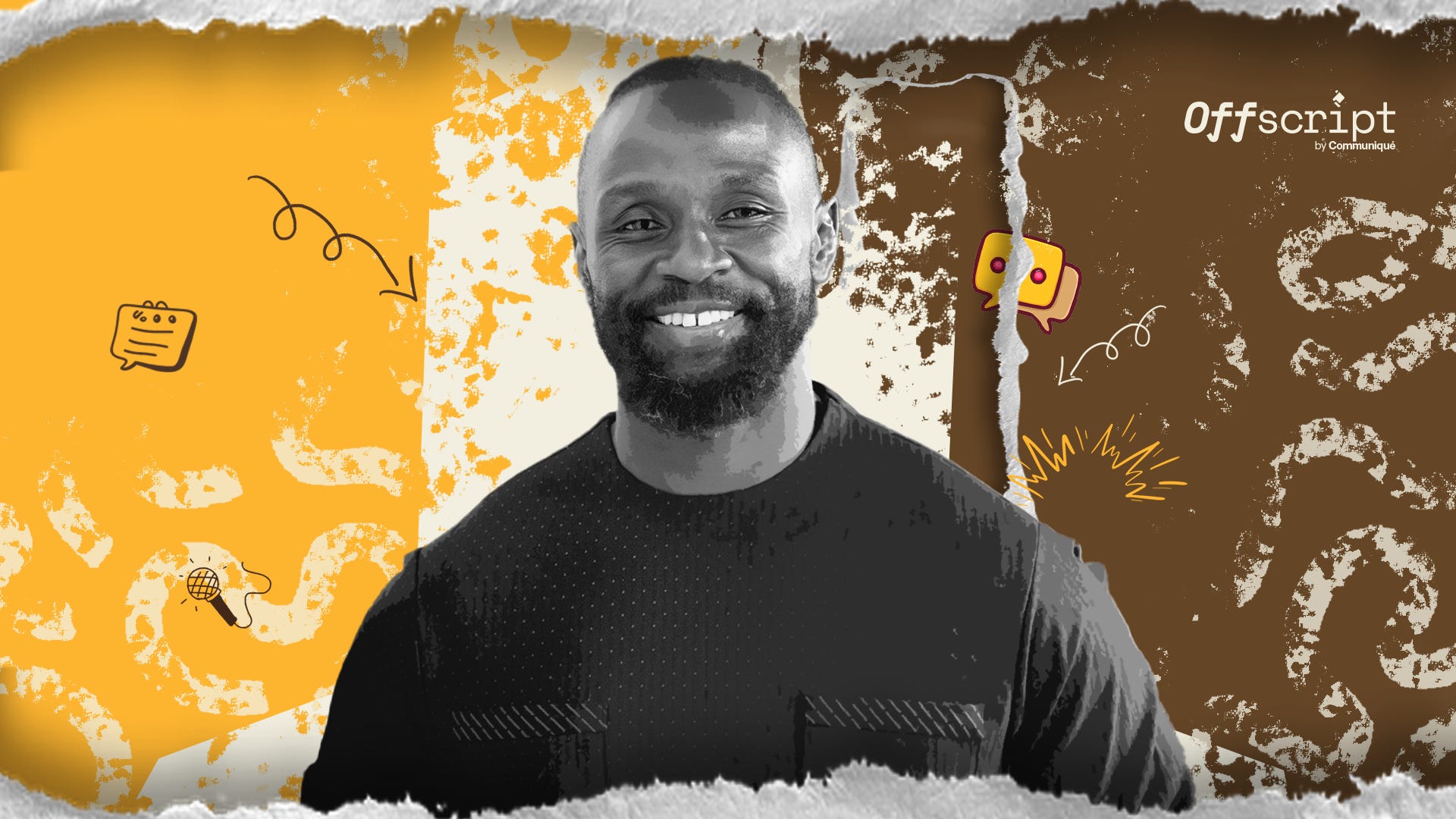
“Why would I want to be damned for the things I publish?”
The phrase made no sense to John-Allan Namu. He was sitting in his first journalism class at the United States International University in Nairobi when veteran Kenyan journalist Joe Kadhi walked in and greeted a room full of students with four words: “Publish and be damned.” Namu remembers thinking it was a strange thing to tell people who were only just learning to become journalists. Why would anyone want to be damned for something they published? Years later, it would feel less like a classroom slogan and more like a job description.
By then, Namu would have spent years investigating corruption, exposing fraud, challenging official narratives, and building one of Africa’s most respected investigative newsrooms. He would reject a five-figure bribe, survive a career-threatening reporting mistake, face pressure from powerful interests, and eventually leave mainstream television to build an independent newsroom of his own. Yet none of it was planned. In fact, if things had gone according to plan, John-Allan Namu would never have become a journalist at all.
Namu grew up in a typical middle-class Kenyan family. His father was a banker, while his mother was a librarian. He was the youngest of four children. For much of his childhood, his parents managed to shield the family from the political and economic turbulence that defined Kenya during the 1980s and 1990s. But eventually the country’s problems reached their doorstep. His father had been brought into a government-owned bank that was already in trouble. By the time he arrived, the institution was struggling to survive. Eventually it collapsed. His father remained behind to help manage the fallout, but afterwards work became difficult to find.
The family survived largely on his mother’s salary and whatever consulting work his father could secure. For the first time, Namu began to understand that life outside his immediate surroundings looked very different. “When you’re living a certain lifestyle, you’re sheltered from some of the actual realities of the country that you grow up in.” His parents responded the only way they knew how. They doubled down on education. “They were heavily invested in a good education because that’s what had transformed their lives.”
Communiqué has an Inner Circle now. It’s the group of readers who decide that independent reporting and analysis of Africa’s creative economy is worth paying for.
Namu attended good schools and eventually found his way into university to study International Relations. Like many politically curious young Kenyans of his generation, he imagined a future in diplomacy or politics. Then journalism got in the way. Part of the attraction was timing. Kenya had recently emerged from the twenty-four-year rule of Daniel arap Moi. A new period of political openness was taking shape. The media was gaining influence. Journalists mattered.
But there was also a more personal reason: a few years earlier, his father had become the subject of intense media scrutiny after being accused of wrongdoing while serving as managing director of one of the country’s largest brokerage firms. Namu often accompanied him to court during the trial and watched, with quiet frustration, as the proceedings were later misrepresented in the papers. He did not think of it as formative then. Only later, connecting dots backwards, did he come to see it as the moment something was planted. “It taught me that if I ever got the opportunity, I would treat people’s stories with the respect that they deserve and be as factual as possible.”
In Kadhi’s class and a few others, he found a frame for that desire. Namu applied himself to journalism; it helped that he had always been drawn to writing and storytelling. Towards the end of his stay on campus, the managing editor of Kenyan Television Network (KTN), a local private free-to-air TV network, came to give a talk at his university; Namu was one of the students selected for a mock news presentation. The editor felt he was quite the talent and invited him to apply for an internship. He joined in December 2005, still a student, and threw himself at the work completely. “After I joined, I did my best to try and learn the ropes as quickly as possible.”
He would stay behind after everyone had to work on the TV channel’s late-night bulletin. “Not many people watched that bulletin; that was where I’d get a chance to file my own stories and practice my voiceover and practice my skills. It was a low-risk but high-reward bulletin for me.” Most nights, he left the office after midnight and was back early the next morning. By the time he was graduating, he already had a job as a staff reporter.
A year in, Namu started drifting toward feature storytelling. He felt that the 90 seconds or 2 minutes allotted to the news bulletin weren’t enough to go in depth and tell nuanced, complex stories. Around this time, he struck up a friendship with Mohammed Ali, a colleague with a stronger interest in investigative reporting.
Together, the pair began working on increasingly ambitious stories. First came stories about gangs and drug abuse, then small undercover operations targeting con artists. Gradually, they built the skills that investigative reporting required.
Then a major story landed. A businessman was charging customers for vehicle tracking devices that often were never installed. After months of work, they gathered enough evidence to confront him. The businessman offered them $10,000 to walk away. “We could either take the bribe and be done with the story, or we could do the right thing.” They published, and the story put them on the map.
Afterwards, they helped revive KTN’s dormant investigative programme, Inside Story. Namu hosted the English version, while Ali launched the Swahili edition, Jicho Pevu. They ran these shows to great acclaim, making a name for themselves in the Kenyan media industry and public space. But after a few years, Namu needed a new challenge; he wanted to know what more he was capable of doing. “While I felt that we had done some really successful things with the Inside Story, I felt that I needed to just figure out who I was as a journalist on my own. I needed to understand whether I’d be able to continue these things as an individual, but also develop my own style.”
So he left for Nation TV (NTV), a rival TV channel to KTN, after long conversations with Ali and his colleagues, as well as with a mentor who recently moved to NTV. The move was worth it. Not only was Namu given more freedom in the kinds of stories he covered, but he also had the opportunity to sit at the feet of veteran journalists at NTV’s parent company, Nation Media Group, the country’s largest and oldest media company. The experiences helped him understand what kind of reporter he was when no one else was defining it for him.
His time at NTV also brought the most difficult experience of his career. At the centre of it was Félicien Kabuga, one of the financiers of the 1994 Rwandan genocide. For years, Kabuga had been one of the world’s most wanted fugitives, and there were persistent rumours that he was hiding in Kenya. Namu followed the trail. He cultivated sources, tracked leads, and gathered evidence suggesting that Kabuga had indeed built business interests in Kenya while receiving protection from powerful individuals. Then everything fell apart. A photograph that formed part of the investigation turned out to be of an innocent man. The image had been vetted through multiple sources and debated extensively in the newsroom before publication. Yet it was wrong. “I thought I was going to be fired.”
Instead, his editors stood by him. The experience left him more cautious and more rigorous. “Not all stories are a positive upward trajectory,” he says. “There are also setbacks that shape who you become.” Not long afterwards, Namu returned to KTN, this time as Special Projects Editor. He had proven to himself that he could stand on his own; now he wanted to influence the direction of long-form journalism and help build the next generation of reporters.
The move reunited him with Mohammed Ali and another close colleague, Kassim Mohammed. Together they expanded investigative and feature storytelling within the newsroom. But the deeper their reporting went, the more pressure they faced.
Your contribution funds: Original reporting, data licensing, and a small editorial team that actually answers your replies. No ads, no paywalls.
Investigations into Kenya’s 2013 election and the Westgate terror attack challenged official narratives and attracted scrutiny from powerful interests. That pressure increasingly found its way into editorial processes. For Namu, it revived an old question.
What would it look like to build an investigative newsroom entirely on one’s own terms?
The idea had first emerged in conversations with Ali and Mohammed years earlier. Now it felt less like a hypothetical and more like a necessity. Africa Uncensored was registered in 2014. Namu left KTN in 2015. The transition was not easy. Investigative journalism is expensive, and independence comes with its own challenges. Like many organisations of its kind, Africa Uncensored relied partly on grants. But Namu always believed sustainability would require something more.
That thinking eventually led to Shahara, a digital platform designed to help creators publish content directly to audiences and earn revenue from them. The idea showed promise but arrived at a difficult moment. YouTube, Instagram and later TikTok were already giving creators ways to monetise their audiences. “We underestimated just how difficult it would be for content creators to move from platforms where their audiences already were.” While Shahara struggled to gain traction, Africa Uncensored continued to grow.
The team broke the infamous story of the fertiliser deception investigation, in which it found a businessman packaging soil and diatomised earth as subsidised farm inputs and selling them to farmers across the country. It led to Senate and National Assembly hearings, the cancellation of government tenders and refunds to farmers nationwide.
Yet when Namu reflects on his career, it is not these investigations that give him the greatest satisfaction. Instead, he talks about the journalists. “The kind of satisfaction I get from seeing people who came into contact with African Uncensored and had better careers as a result, that is more edifying than any of the big stories I’ve done.”
That answer says a lot about how his thinking has evolved. The younger Namu wanted to tell important stories. The older Namu wants to build institutions that help others tell them. At the time of this interview, he was nearing the end of a year-long John S. Knight Journalism Fellowship at Stanford University, thinking deeply about what comes next.
His answer remains surprisingly simple. “Journalism only flourishes if it’s useful to the public.”