


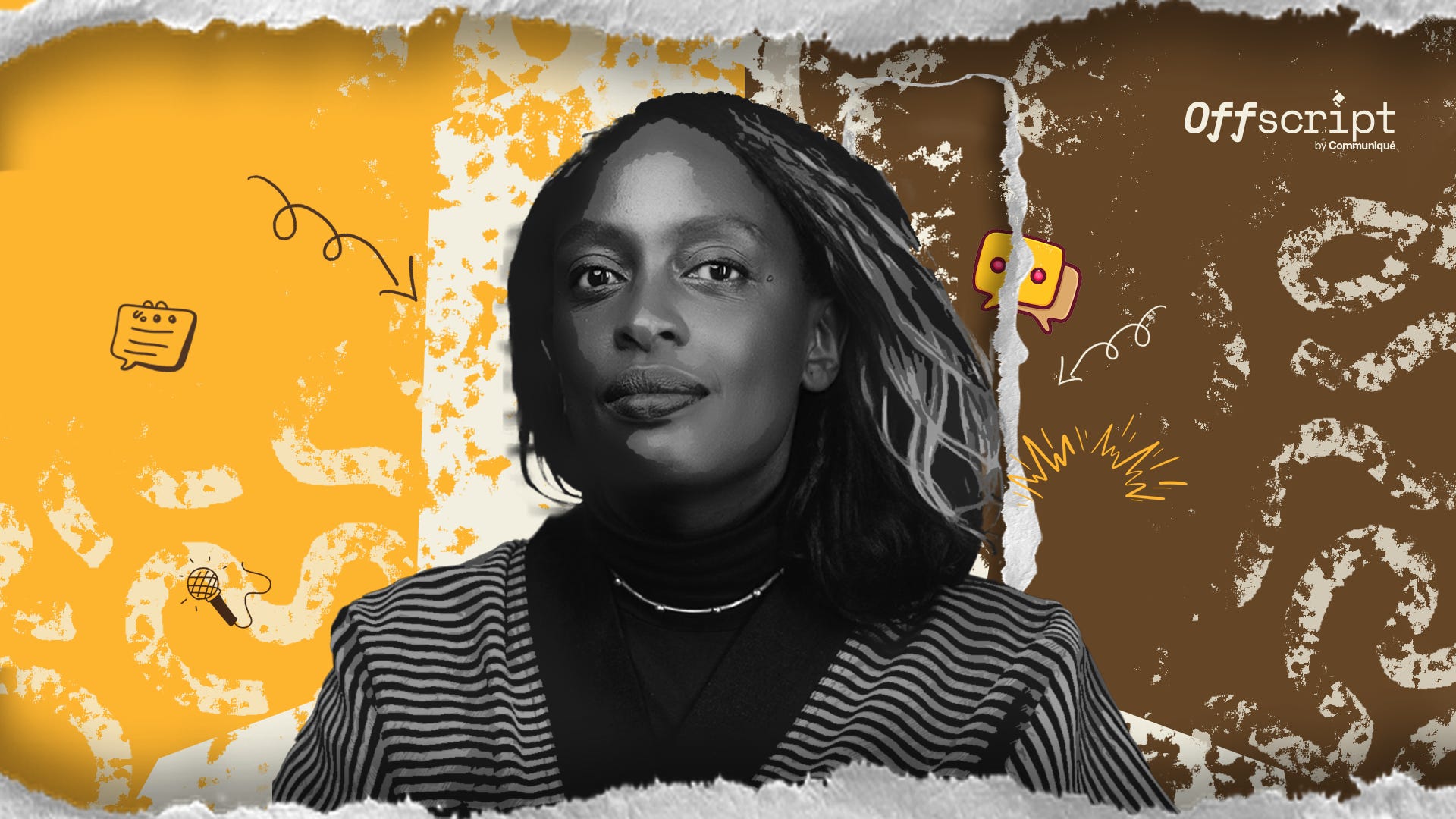
“Two days before the trip I was called and told, ‘Can you be in Nairobi in two days?’”
Jocelyne Muhutu-Remy was 26, a junior reporter at a Paris-based magazine called L’Autre Afrique, when the Office of the United Nations Secretary-General called. Kofi Annan was about to begin his first trip to Africa as Secretary-General, travelling to 10 countries across the continent. Muhutu-Remy had heard about the trip and called his office to ask if she could join the press contingent.
At first, she was dismissed. She was young, unknown, and working for a small publication. But the delegation was about to leave without much African representation in its press corps. Someone remembered the junior reporter who had asked to come. So, with barely any notice, she packed.
That instinct to ask even when the obvious answer is no has shaped much of Muhutu-Remy’s career. Over three decades, she has moved from journalism into media sales, entertainment distribution, global content deals, technology partnerships and music streaming. She has worked at Reuters, Viacom, Disney, and Meta. Today, she is Managing Director, Sub-Saharan Africa for Spotify.
On paper, the moves can look unexpected. In her own telling, they connect to a much older idea: Africa should be able to tell fuller stories about itself.
Muhutu-Remy was born in Ethiopia to a Rwandan mother and Burundian father. Her mother worked at the Organisation of African Unity, now the African Union. The institution was not just her mother’s workplace; it was part of Muhutu-Remy’s childhood.
They lived close to it. Her family doctor was there. She spent time in its corridors and compounds, surrounded by people from across the continent. At school and at home, she met people from different countries, languages, and cultures. She learned to read from the reports her mother brought home: documents on human rights, development projects, and the Pan-African project. But beyond her corner of the world, Ethiopia was living through a brutal communist regime. She also remembers the famine coverage that came to define the country internationally in the 1980s. “The only thing the world could talk about with regard to Ethiopia was the famine, when the picture on the ground was actually much more nuanced.”
You’re reading Communiqué because someone in the Inner Circle paid for it. Pay it forward.
When the time came to choose a career, Muthu-Remy’s options were relatively limited. Diplomacy, journalism, or conference interpreting were the obvious paths, and at first, the latter won. “I wanted to become a conference interpreter. It was a very common job around me. People were either translators or conference interpreters. And that was really the Holy Grail: to become one.” After receiving an OAU scholarship to study in France, she started a programme in French, English, and Spanish literature, preparing for a career in interpretation.
Then she saw what the work would demand. “Conference interpreting was a very lonely job,” she says. “You travel all the time; you go from conference to conference.” Two years in, she decided to switch to journalism. It made more sense; the press had always been around her. As a child, she read magazines like Jeune Afrique and The Economist. She listened to the BBC and Voice of America. She was curious about politics, geopolitics, and the world beyond her immediate environment. Writing came naturally too; she graduated from high school with the top mark in writing.
She applied to journalism school and passed the competitive entrance examination. There, as the only black student, she imagined covering French politics for a major newspaper or broadcaster. Her professors and classmates suggested African publications instead. She recalls their advice: “That’s more suitable for you.” L’Autre Afrique nevertheless offered work she wanted to do. She wanted to cover the continent beyond familiar headlines and stereotypes. There, Muhutu-Remy began to see “narrative change” as more than an abstract idea.
Then came the Kofi Annan trip. For Muhutu-Remy, the most difficult stop was Rwanda, four years after the genocide. Annan’s role at the UN during that period made the visit emotionally charged. The delegation was not warmly received. For a young journalist with personal ties to Rwanda, it was a painful and defining experience.
After France, she and her fiancé, now her husband, decided to move to Nairobi. They worked as freelancers before she joined Reuters.
At Reuters, she first worked on Africa Journal, an English-language television programme adapted for French-speaking audiences. She translated and helped produce stories before becoming a reporter and producer. The role let her work across the continent. Reuters had the resources to send reporters to places many African newsrooms could not easily reach. It also taught her how to manage freelancers and stringers remotely: finding the right people, giving clear instructions, and turning material from different places into a coherent story.
For years, she was happy with her job, but then she began to notice the limits of her experience. She could report on the world while knowing little about the business practices that shaped the media industry. When a colleague working in sales at Reuters resigned, she saw her chance to understand the business of media.
She had never worked in sales. But she understood the product because she had helped make it. She knew the African media landscape through her reporting network. And she spoke French and English, useful in markets across the continent.
The transition was difficult. Suddenly, she was dealing with budgets, revenue targets, quarterly projections, and Excel spreadsheets. But the job gave her a new view of African media. She travelled constantly, meeting broadcasters, newspapers and other media companies.
Your contribution funds: Original reporting, data licensing, and a small editorial team that actually answers your replies. No ads, no paywalls.
By her late thirties, she had a family and a settled life in Nairobi. She began to worry that comfort could become stagnation. “I knew nothing will happen if we stay in Nairobi,” she says. “We will continue doing the same things for another 10 years. Be happy for sure. But we needed discomfort. We needed the unknown.” She and her husband moved to South Africa.
There, she attended the first African Leadership Network conference in 2010 and met Alex Okosi, the current managing director of Google Africa, who was then working at Viacom. Among bankers, investors and consultants, they recognised each other as media people. In May 2011, he called about a distribution role at Viacom. The company needed someone to negotiate distribution agreements for MTV, MTV Base, and Nickelodeon across African markets. Muhutu-Remy knew news content, not entertainment. But the skills travelled.
At Viacom, she learned the entertainment business: licensing, contracts, negotiations, and distribution. The move later prepared her for Disney, where she worked on larger and more complex content deals involving major properties including Marvel, Star Wars, and Pixar. Disney gave her exposure to global entertainment deal-making. It also clarified what she needed from her work. At Reuters and Viacom, she felt African media and entertainment had something to prove. It wasn’t the same feeling at Disney. “I would never again do work where the desire to elevate Africa is not at the centre,” she says.


Facebook offered a route back to that purpose. The company was changing its relationship with news after the Cambridge Analytica scandal and was building a partnerships function. Muhutu-Remy’s experience across news and entertainment made sense for a role supporting African publishers and creators.
Her work included helping media organisations adapt to a changing digital environment. It also included creator partnerships, at a time when many African creators were building audiences but had limited ways to earn from them. In Nigeria, she pushed to make in-stream advertising available to creators. It was one of the most satisfying parts of her time there. “Seeing these people coming from all parts of Africa, but Nigeria in particular, really take on the opportunity,” she says, “that was my biggest satisfaction.”
Then Spotify came calling. The streaming platform had only just launched in Africa. To Muhutu-Remy, Spotify was initially just a global company she admired from afar. She wasn’t even thinking about working for it. The recruitment process lasted through eight or nine interviews. As she spoke about the creative economy and the challenges facing African markets, she began to see the possibility.
The role required breadth. Spotify was building its African operation after the pandemic. There was no office yet, and even the legal structure was still being set up. Muhutu-Remy needed to move between compliance, people management, contracts, marketing, artist support, business targets, and local partnerships. She sees that range as one of her strengths.
At Spotify, her work has centred on two connected goals: helping take African music to the world, and helping build habits of legal music consumption through streaming across the continent. Spotify’s arrival has coincided with a period of extraordinary global growth for African music, especially Afrobeats. The company has also invested in local teams, local payment methods, events and artist programmes. “We are really pushing this startup called Spotify Africa,” she says. “We are building it for ourselves.”
Her thinking now extends beyond music. She is increasingly interested in the infrastructure that supports creative work: royalty systems, regulation, standard recording codes and the systems that help artists track and receive income.
She is also thinking about artificial intelligence.
Her concern is that AI systems may reproduce a narrow view of Africa because so much available information about the continent is framed through development, crisis, or aid. Plenty of information exists about water access, for example. But far less exists about the everyday lives of urban Africans: loneliness, changing family structures, work, leisure, and new social habits. “If you want information about water access in Africa, you’ll find quite a bit,” she says. “But that is because that comes from a development angle.”
For Muhutu-Remy, the next chapter may still be part of the same story. The platforms may change. The industries may change. But the question remains: who gets to define Africa, and with what information?

This was such a refreshing read! Thank you for sharing