



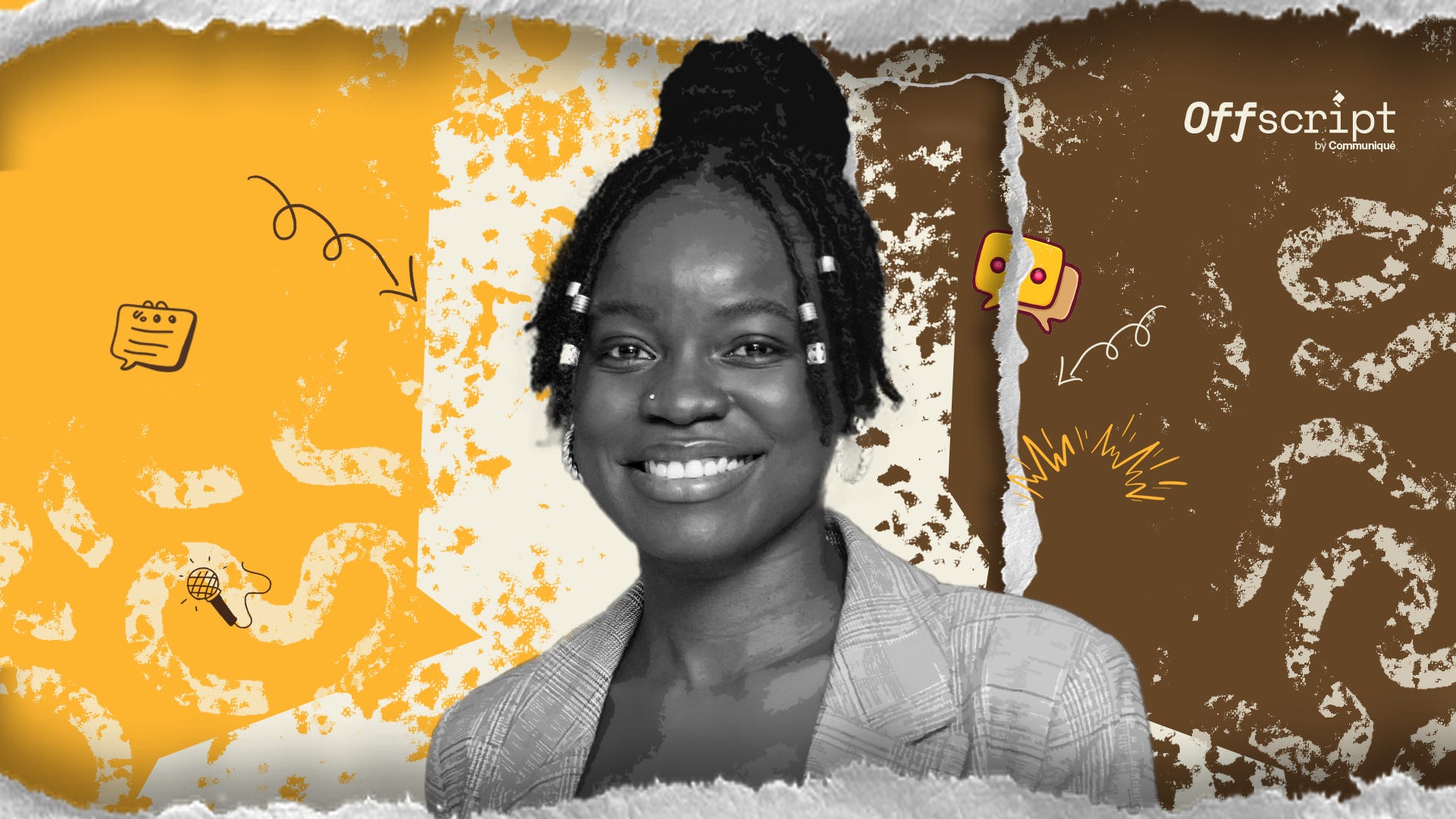
“At some point, I thought I was going to be one of the best African writers.”
Jennifer Ochieng says this without hesitation. It is a memory of a very specific kind of ambition, one that shaped how she saw the world long before she found her place in it. Today, she is one of the East African film industry’s most important figures. With Sinema Focus, she has built something that didn’t exist before. In doing so, she’s quietly become a custodian of African storytelling, shaping how stories are told, received, and remembered across East Africa.
However, this might not have been a possibility without an almost unreasonable appetite for stories since childhood. Growing up, storytelling was a huge part of Ochieng’s life. She took every opportunity to consume them, from books to soap operas. “I was also such a fan of television. In every Kenyan household, you will find kids gathered around, and even for shows that were not allowed to be watched in African households, for example, The Bold and the Beautiful. And I remember just hiding behind a couch to watch it.”
She soon began to write. Thanks to school assignments, she had to write in both English and Swahili, and she really enjoyed doing both. By the time she finished secondary school, she was editing the school’s student magazine.
With an interest already formed, she pursued a degree in Journalism and Communications at the university. While there, she ran the magazine and kept a blog, one she has since made private and insists will never see the light of day again. It was a poetry and television blog. The poetry, she says, is why the blog stays buried, but for the most part, it was a place for her to write reviews of local and international shows she watched. Game of Thrones got a great deal of her attention. So did the wave of Kenyan productions that began appearing on local screens in the late 2010s. In these years, films like Nairobi Half Life and a generation of local TV shows started displacing the steady diet of American and Mexican content that had defined her younger years.
That was when something clicked. “I started to see that you can translate what happens in books to [the] screen,” she says. It changed how she thought about storytelling. It wasn’t just about writing stories to be read. Those stories could be visual. So she started writing scripts. None of them got produced. But that wasn’t the point. What mattered was the instinct behind them; the belief that local stories deserved to be told, and told well. Still, even as that interest grew, she knew one thing clearly. She did not want a newsroom. “I didn’t want to be on TV reading the news,” she says. “I wanted to do something more interesting.” She had studied broadcast journalism mostly as a container for ambitions, but now those ambitions were spilling over.
After university, like many young graduates, she took on different kinds of work. SEO writing. Academic writing. Freelance gigs. Anything that paid. Her first proper job came at a small magazine serving expatriate communities in Nairobi. It was a small operation. She was both the writer and the editor.
Then came MultiChoice. It started as a three-month freelance gig covering for someone on maternity leave. But Ochieng stayed for three years. She worked as a communications specialist in the digital department, managing the DStv and GOtv digital presence across East African markets such as Kenya, Uganda, Tanzania, and Ethiopia, interviewing actors and musicians, and writing stories that brought content on those platforms to life. It was during this time that she worked for Coke Studio Africa.
From MultiChoice, she moved to Showmax, where she focused on publicity. And it was there, managing campaigns for one of the continent’s most ambitious streaming platforms, that her real education began. Her most vivid memory from that period is not a triumph but a trial: The Real Housewives of Nairobi, a show that she describes as “a monster,” a chaos of difficult personalities and relentless scandal management that she would not trade for anything. “It was one thing after another,” she says. “But I usually say it’s my best campaign.”
It was during her time at Showmax that she began to notice something that would change everything. As a publicist, she worked closely with journalists, sending out press releases, pitching stories, and following up. Over time, a pattern became clear. Many journalists would take the press release and publish it almost exactly as it was. “No context, no interrogation.” At the same time, the industry itself was growing. More films. More shows. More talent. But the coverage did not reflect that growth. It was thin, surface-level, and largely missing the bigger picture. “No one was contextualising the industry and providing in-depth, incisive coverage.”
There was another problem, too. Data. “There was no data,” she says. “Filmmakers were moving blind.” No reliable box office numbers. No benchmarks. No way for investors or creators to properly understand the market. From where she sat, the gap was obvious. And she was in a position to do something about it. Ochieng had something few journalists had: access. She was already inside the industry rooms. She knew the actors, the filmmakers, and the deal-makers. Her calls got returned. And she could write. So one day, she opened an Instagram page, an X (formerly Twitter) account, a Facebook page, and started sharing. That was the beginning of Sinema Focus.
The social media pages grew quickly. People were hungry for exactly what Ochieng was offering: informed, insider-adjacent coverage of an industry that had been talked about in broad strokes for too long. This demand grew so big that she knew the social media pages weren’t going to be enough. She needed a website.
“I think at some point along the way, I was like, this can be bigger than what it is. And then I started building the website in the back end. The social pages were still doing their thing. I got someone to help. I started building the website, shaping it the way I wanted to.”
As she was doing this, she also began recruiting writers, building a team to help her do the work she wanted. So while the website was being built, the team was writing stories.
By the time the Sinema Focus website officially went live in October 2023, it already had a body of work behind it. And from the beginning, the mission was clear. “You cannot build an industry by always being nice,” she says. “You have to interrogate it.” Sinema Focus would not just celebrate the industry. It would question it. Challenge it. Hold it accountable. At the same time, it would also do the other half of the work: spotlighting filmmakers, telling their stories properly, and giving them the depth of coverage they deserved.
As Sinema Focus grew, so did its ambition. In December 2024, Sinema Focus became part of something larger. Ochieng helped launch the African Film Press, an alliance of three film journalism platforms spanning the continent. Together with Nigerian-focused What Kept Me Up and pan-African-leaning Akoroko, the alliance is a coordinated, continent-wide infrastructure for serious African film journalism. They launched the AFP Critics Prize in 2024 at the Surreal 16 festival, with the intention of extending it to other festivals across the continent.
But Ochieng is clear-eyed about the longer road. West Africa and East Africa are now covered. Southern Africa, Francophone Africa, and North Africa remain. The work of truly mapping the continent’s film culture is only beginning.
There is another gap that preoccupies her just as much: data. As she said, East African filmmakers are “moving blind.” Box office tracking is minimal. Nobody is aggregating the numbers that would allow a filmmaker to benchmark their theatrical release, or an investor to assess the market with any confidence. The Kenya Film Commission is not collecting this data. The Kenya Film Classification Board is not doing it. So Sinema Focus intends to.
“If no one is going to do that work, then we’re here,” she says. The goal is to produce the kind of industry data that feeds back into Sinema Focus’s editorial arm, informs filmmakers’ decisions, and gives investors the baseline they currently lack. It is, she believes, the most important work the platform can do, not just reporting on the industry, but actively providing the infrastructure that makes a healthier industry possible.
In August 2024, Ochieng stepped away from her publicity role at Showmax to focus full-time on Sinema Focus. The platform is expanding its East African coverage, actively growing its presence in Uganda and Rwanda, and looking toward Tanzania and Ethiopia.
On a personal level, she has not abandoned the older dreams. The scripts are still in the notes app. She still wants to write them. But to do that, she needs time, and for now, Sinema Focus takes up all of it.
Jennifer Ochieng's story is inspiring.
I admire her ability to challenge the norms.
Although "access" is a keyword here; I really many individuals can do this in the countries.