


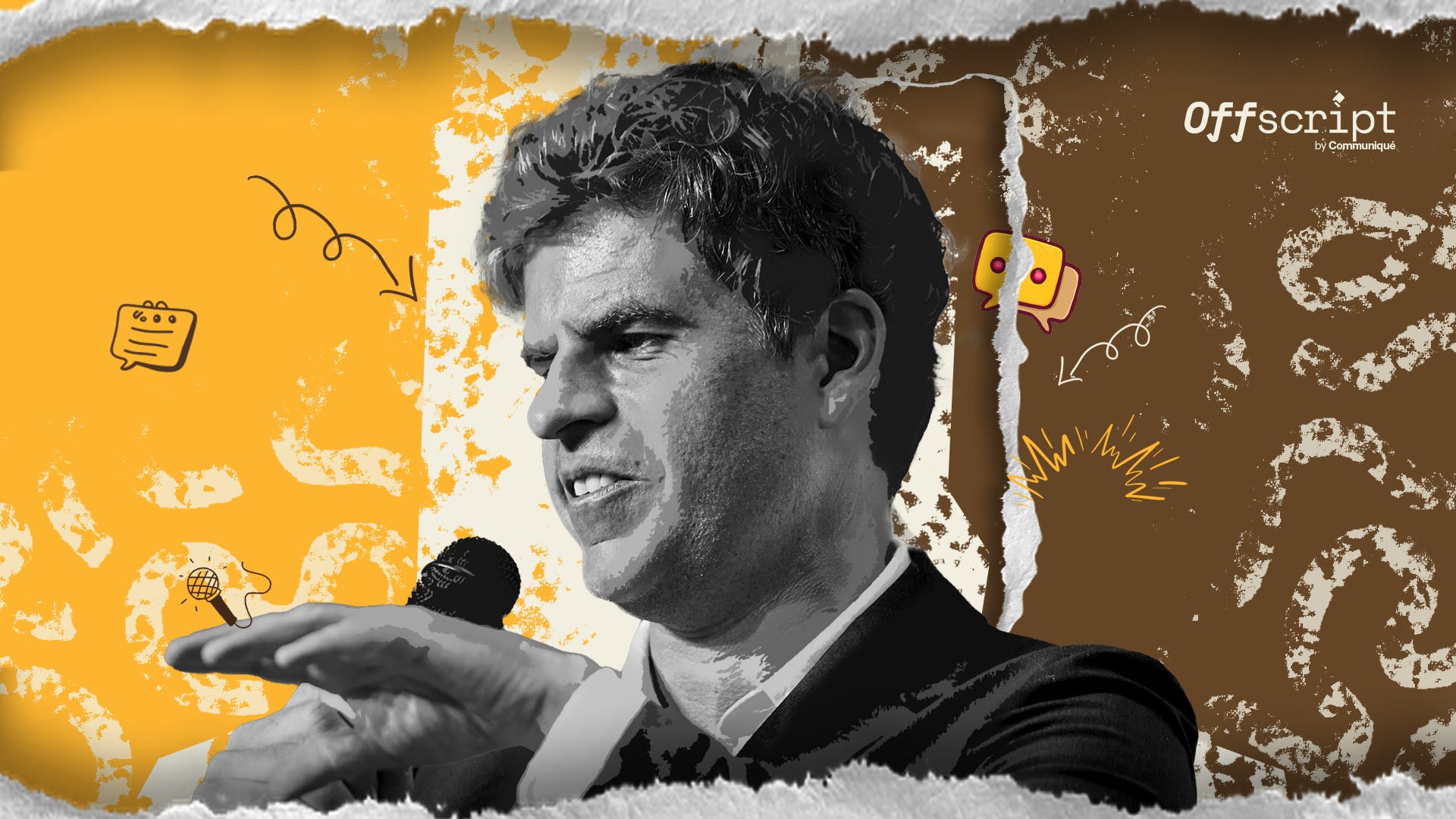
“Always start small, never overinvest. Once I’m confident that this thing is working, it’s making money, then I invest a bit more”
This has been the principle behind Jaco Maritz’s approach to building media businesses. It sounds straightforward, but it is harder to practise in an industry where founders are often under pressure to grow audiences, expand newsrooms and compete with established publications before they have figured out how to pay for any of it. In more than two decades, he has helped establish at least three media businesses, including How We Made It In Africa, a publication he founded in 2010. Today, it reaches more than 30,000 subscribers, publishes books and produces long-form video interviews with founders and investors.
Maritz’s career has largely revolved around what he describes as “information distribution.” This interest in gathering and sharing information began long before he entered a newsroom. As a teenager, he was drawn to skateboarding and photography. He and his friends read American skateboarding magazines and tried to recreate the photos they saw. At 14, he began taking pictures to recreate these moments. “I started with a very old film camera that my parents used to have”
You’re reading Communiqué because someone in the Inner Circle paid for it. Pay it forward. Your contribution funds: Original reporting, data licensing, and a small editorial team that actually answers your replies. No ads, no paywalls.
He taught himself by borrowing photography books from the library and gradually improving his equipment. In high school, he photographed for the school magazine and on school holidays he worked at local newspapers. His parents didn’t mind his interest in photography until after high school, when he decided to study it at university. “I can’t overstate how unhappy my parents were with this photography thing. It was like a big deal for them.”
Maritz eventually changed his mind after speaking with one of the photojournalists he worked with during his holiday job that year at the local newspaper. The journalist argued that studying something else would expose Maritz to more people and opportunities while still allowing him to pursue photography. Maritz took the advice and studied Information Science at Stellenbosch University. “Looking back, I think that was the right decision. I met many people at university. Working at a student newspaper opened a lot of doors for me and gave me a lot of experience.”
After University, Maritz took advantage of a work-and-travel scheme that allowed young South Africans to live and work in the United Kingdom for two years, and moved to London. There, he spent a lot of time trying to break into the photography industry. He took freelance assignments for small newspapers and worked at a local photography studio. His interest in photography gave way to an interest in the media industry itself. “A big inspiration for me at that time was just the British media industry in general. I was just fascinated by the industry and how it worked. I even did a short journalism course when I was in London.”
Upon his return, he applied for jobs in the media industry. He later met the photojournalist who had advised him about his university troubles five years earlier; he was now head of Media24’s digital department, which ran the online editions of the group’s newspapers. At the time, the company was looking to grow its digital operations. He joined Media24’s digital department, uploading newspaper stories online at night. It was a junior job, but he loved being in a newsroom.
The night shifts left his days free, allowing him to work with Global Africa Network (GAN), a South African company that made investment brochures for provincial and local governments. Maritz was brought in on contract to set up a website for a new publication they wanted to launch in Nigeria, TradeInvest Nigeria. Later, his job expanded to creating the content for the website.
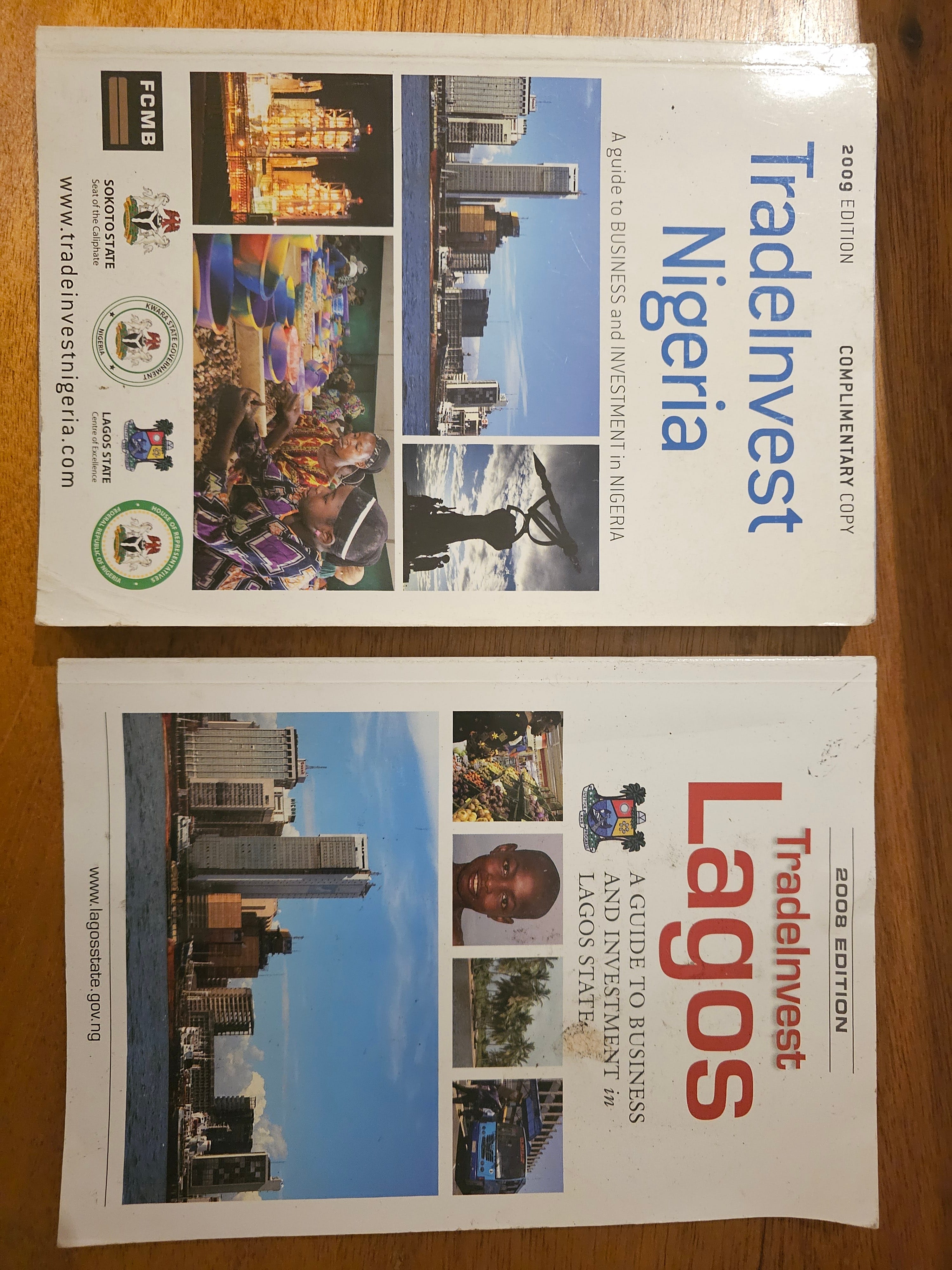
When the contract ended, GAN offered him the editorship of the publication. He accepted, partly because the work had introduced him to a part of the continent he knew relatively little about. “I became very fascinated with what is going on in the rest of Africa.”He particularly enjoyed documenting businesses and people whose stories rarely reached audiences outside their immediate markets. “It was amazing for me to go to a place like Sokoto State, speak to a local businessman there, and have the world see it. None of these stories was really told, especially for people in South Africa.” The experience also gave him an early education in the economics of a small media business, unlike Media24, where advertising and editorial staff worked separately. At TradeInvest he sat near salespeople and saw how publications made money. But the guides were effectively promotional publications. “It was all advertorial in a way, which was a bit boring for me.”
After two and a half years, he decided to build something of his own. Interest in Africa as an investment destination was growing, and he believed readers wanted to hear directly from entrepreneurs doing business across the continent. His ambition was to create something like a Fortune magazine for Africa. Maritz took a bet that launching a publication that told the stories of those already making waves and building on the continent would sell. This led him to start How We Made It In Africa on April 1, 2010, from his apartment in Cape Town.
Around that period, Maritz’s share of funds from his grandfather’s estate became available to him. The fund gave him roughly a year of runway. He coded much of the website himself, and got a commission-only salesman to work with him from the flat. “In the morning I would turn my bed up against the wall so it looks more like an office.” The lean setup was not simply a consequence of limited resources; it was central to how he approached the business. Rather than trying to cover every industry, How We Made It In Africa concentrated on areas he found interesting: consumer businesses and agribusiness. The publication also grew through relationships rather than a large reporting operation. A journalist based in Kenya approached Maritz about writing for the publication. He brought her on, initially paying modest fees that increased as the business developed. She helped build its East African coverage by finding and interviewing businesspeople in the region.
This allowed the publication to expand its reach without immediately taking on the costs of a large newsroom. But growing an audience and building a sustainable media business are different challenges. For its first decade, advertising was the publication’s main source of revenue. At first, it was difficult to rely on it because the publication’s audience was somewhat generalised and the advertisers they could book often wanted small, focused, short-lived campaigns. However, in 2015, the shipping and logistics company DHL became the publication’s main sponsor and paid two years upfront. The deal gave Maritz some breathing room to experiment with other revenue streams.
One of those experiments was SVW Communications. Maritz identified that the publication could create another revenue stream by helping the advertisers they already work with promote their services on the continent. But his team didn’t have the capabilities or expertise to do it effectively. So Maritz approached a communications professional about starting the company that operated separately from the publication. When they agreed, he provided some initial funding and introduced them to potential clients. “It was basically more of an investment for me, not as something I was operationally involved with.” The business turned out quite well, and Maritz sold his stake a few years later for significant returns.
Another of those experiments led to publishing a book in 2018. The book, which shares the same name as the publication, took the interviews and stories they told over time and turned them into a comprehensive, bound collection. While the team drew inspiration from British journalist Jeremy Clarkson’s The World According to Clarkson, a collection of the journalist’s columns published over twelve months, the real drive to pursue the project came from a desire for extra revenue. “I was also looking for our own product that we can sell on the website so that we’re advertising; you’re basically convincing other people to sell their products through your website. I was looking for something of my own that I can sell on the website in addition to subscriptions, etc.” The first book was released as an ebook, but by the second edition, which came out earlier this year after many delays due to the COVID pandemic, Maritz was able to get sponsors for a print edition.


The pandemic also forced a more fundamental change to the publication’s business model. DHL had withdrawn its advertising contract shortly before COVID-19, and Maritz, not wanting to return to relying on smaller, seasonal advertising budgets, introduced a paywall. Subscribers got two free articles a month and had to pay to access the rest. This solved the revenue problem partially but also shifted the publication toward deeper journalism. Video interviews and podcasts became part of the offering.
The move reinforced another conviction of his about building media businesses: a niche publication serving a clearly defined audience can be more commercially viable than a general-interest one. His work with Africa Private Equity News is perhaps the strongest example. It began as an internal app for a South African private equity firm but eventually outgrew that purpose. Maritz was brought in to help turn it into a standalone business. He has since led its expansion from an internal app to a full website while maintaining its focus on serving a specific community with information relevant to its work.
For media entrepreneurs, he argues, the lesson is to build focused publications for clearly defined audiences. That also means questioning the assumption that a successful media business must have a large newsroom. “If the New York Times, which operates in the richest country in the world, needs to subsidise its journalism through Wordle and games, who do you think you are to start something better in Africa, where there’s much less disposable income?”
Maritz believes the question is not simply how to produce good journalism, but how to build a business that can afford to keep producing it. Maritz is applying the same thinking to his next projects. At Africa Private Equity News, he wants to develop Dealmakers Log, a database of private equity transactions, and is exploring events. At How We Made It in Africa, he wants more interviewers so the publication depends less on him. After sixteen years, he is still working from the principle he learned with an old camera: use what is available, find out what works, and grow from there. “It’s just more of the same,” he says, “and doing it better.”
