



“It was never part of my plan. I thought I was going to practise [law] all the days of my life.”
A twenty-something Ify Mogekwu could never have imagined that her love of food and the quiet pleasure she got from figuring out how to make it would one day become her life’s work. Today, she is the face behind Ify’s Kitchen, a food storytelling brand with 2.1 million Instagram followers, a combined 3.6 million followers across all major platforms, two YouTube shows, and a thriving digital store, with some products selling for as high as $750.
But she didn’t get there in a straight line. For nearly a decade, that path ran underneath a legal career.
Mogekwu was born in Lagos into a typical Nigerian household where education came first, and discipline was non-negotiable. She was an outspoken child who read everything she could get her hands on and expressed herself with unusual clarity. As a result, the adults around her had already decided that law suited her. She doesn’t remember if that was exactly what she wanted; she only remembers hearing it often enough that, by the time she left primary school, she believed it too. “There was no confusion,” she says. “I knew I was going to be a lawyer, and every part of my life just took me towards that step.”
She studied law at the University of Ibadan and attended the Nigerian Law School. After she was called to the bar and completed her mandatory National Youth Service year, she worked briefly at a private company before joining ACCAS, now Denton ACCAS, one of Nigeria’s most prominent law firms. She would stay for the better part of a decade. Law was familiar, respected, and secure. She expected to remain in it.

Running quietly beside her legal career, however, was another interest. Mogekwu had always loved food. From a young age, she was drawn to food television — MasterChef and Food Network. At university, where students had to fend for themselves, her food became something of a fixture for her roommates. Later, at work, colleagues came to her with the same question: “What should I cook tonight? What should I order?” She became, within her circle, the person you asked about food.
The first sign that this interest might amount to more came in 2013. Mogekwu was on leave when she heard a radio advert for Knorr Taste Quest, a televised cooking competition. For years, she had watched shows like MasterChef and wondered what it would feel like to be inside one of those kitchens. She applied almost immediately, even though she had no professional culinary training. She was selected from thousands of applicants and finished in the top three. The experience changed how people around her saw her relationship with food. “This is more than she just loves food,” she recalls people saying. “She’s onto something.”
You’re reading Communiqué because someone in the Inner Circle paid for it. Pay it forward with as little as $5
Still, she returned to law. She did not yet see how cooking could replace her legal career. That began to change after a friend opened an Instagram account for her on New Year’s Eve in 2015. Mogekwu had resisted joining because she could not imagine what she would post. Once she looked around the platform and noticed people sharing their hobbies, the answer became obvious: she would share food. So she started posting food pictures. Nothing more than that, at first.
But as she studied Nigerian food content, she noticed that recipes were often presented as though one missed step could destroy everything. Mogekwu thought it was wrong. Cooking was not that hard. “I was going to demystify the art of cooking,” she says. She wanted to show that anyone could put a pan on the fire and make good food for themselves and their family.
One evening after work, she held her phone in one hand and filmed herself preparing dinner. The response was far bigger than she expected. Recipe videos were common on YouTube but still unusual in Nigeria’s Instagram sphere, and her simple approach found an audience. So she did it again—late nights, weekends, her kitchen as a set and her phone as a camera. At first, she outsourced the editing. Eventually, she learnt to do it herself.
The early growth was scrappy. She went around her office at ACCAS telling colleagues to open their phones and follow her right then and there. But as the videos found their footing, people started coming on their own. She remembers hitting 5,000 followers and being genuinely stunned, running to tell her husband, barely able to believe that strangers were choosing to follow her. “Five thousand people. Are they okay? Are they normal?”
The numbers were exciting, but the messages mattered more. People told her she had given them confidence in the kitchen. Some said her recipes had helped their marriages. Others used what they learned from her to start food businesses. Then the brand deals started coming.
Her first paid brand opportunity came through Dumchi Foods. When she was asked how much she would charge to create content with the company’s products, Mogekwu offered to do it for free. She genuinely didn’t know it was something people paid for. The client refused. Mogekwu’s time, energy and ideas deserved payment. That conversation was the first time Mogekwu understood that what she was building had real market value. After that, the offers kept coming.
Meanwhile, her responsibilities at the law firm kept growing. She tried to manage both careers. But as her audience grew, the arrangement became harder to sustain. The page required daily attention. Brand work, recipe development, and production were squeezed into whatever hours her law career left behind. Something had to give. She had known it for a while. “It was inevitable that I had to make a decision. You can’t give your 100% unless you’re focused. It was one of the hardest decisions of my life, and I didn’t make it lightly.”
What finally moved her was a combination of timing and a particular kind of fear — not fear of leaving, but fear of staying too long. The COVID pandemic had already prompted her firm to move to remote work. Then her twins were born, and she went on maternity leave. For the first time, there was enough distance from the firm’s daily rhythm to consider the life she was building outside it.
Your contribution funds: Original reporting, data licensing, and a small editorial team that actually answers your replies. No ads, no paywalls.
Law was all she had ever known professionally, and she didn’t know how to walk away from it. But by the end of her leave, she understood that if she didn’t do it then, she probably never would. What tipped her over the edge, in the end, was imagining herself older and full of regret. “I just didn’t want to start thinking about what would have been. I’ve spent over a decade in the legal industry. Maybe it’s time to find out what would happen in the creator economy.”
Her family didn’t immediately understand. The creator economy in Nigeria was still finding its shape, and from the outside, what she was describing looked a lot like leaving a serious career to cook food online. She chose not to spend too much time arguing. “The vision was mine and mine to run with. I spent less time trying to explain to them than trying to prove to them that this will work.”
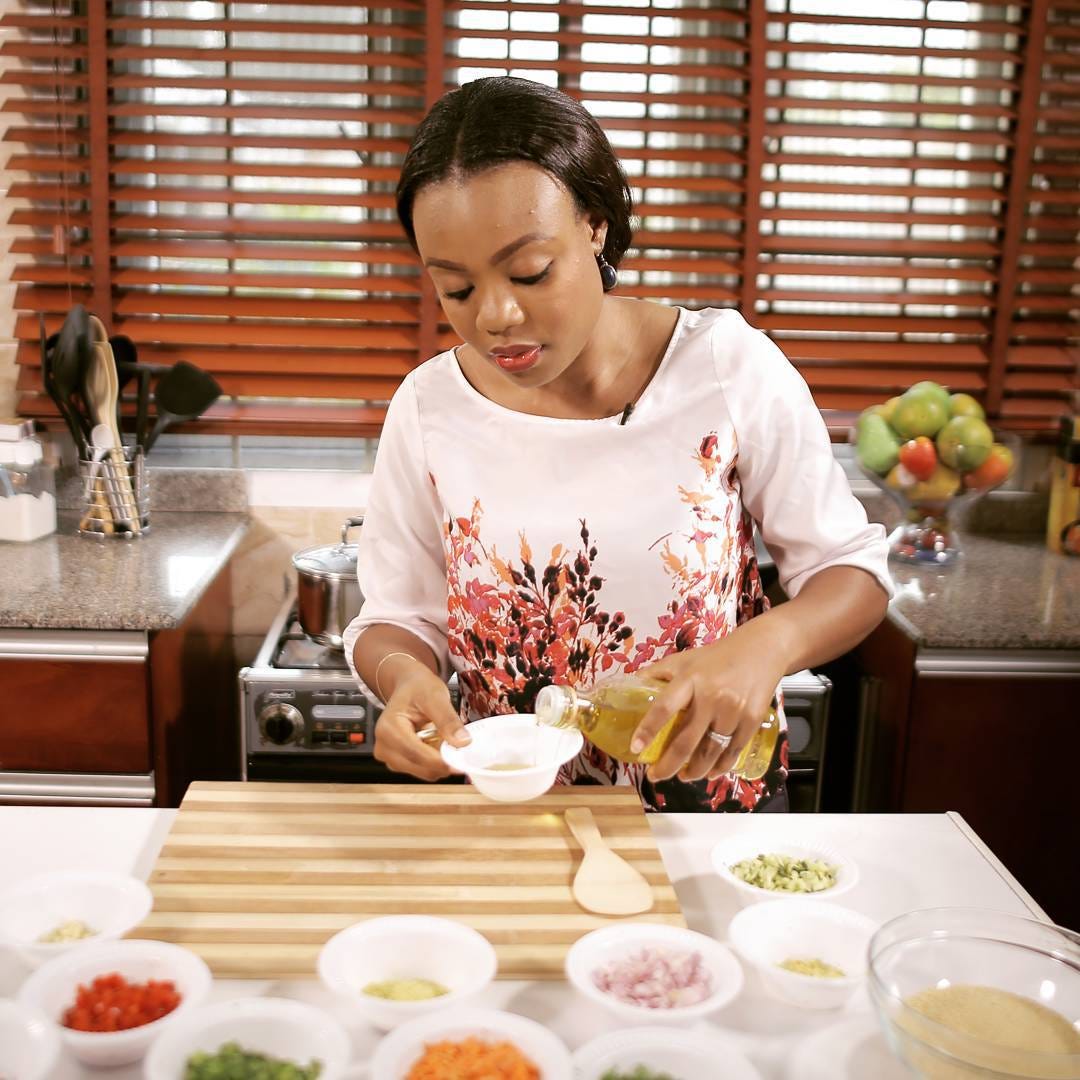
Leaving the salary behind forced a different kind of clarity. She had to treat what she had built as a business. She built systems, brought on a management team to handle negotiations, contracts and brand strategy, and freed herself to focus on being the talent. From there, she developed products: meal plans, online cookery classes, and personalised menus for restaurants. These weren’t ideas she had dreamed up alone; her audience had asked for them, and she listened.
Television followed. Producers approached her about creating Ify’s Kitchen for Multichoice, taking her work to audiences across Africa. She also produced two YouTube shows, Unfiltered & Extra Spicy and Food Therapy, which allowed her to move beyond the recipe format.
Those shows are her refusal to be reduced to one skill. “There’s a whole lot more to me,” she says. “I can be a host. I can do more. Don’t just put me in a box.” That is why Mogekwu prefers “food storyteller” to “food creator”. Recipes are the format, but African life is the larger subject: how people cook, eat, gather, and care for one another.
What she is building towards now is something that outlasts any single video: more products, more experiences, and a business with staying power. “I want to be remembered as someone who has helped redefine how African food is experienced, how it’s appreciated, and also celebrated both at home and around the world.”
So inspiring to read. Thank you Communique team