


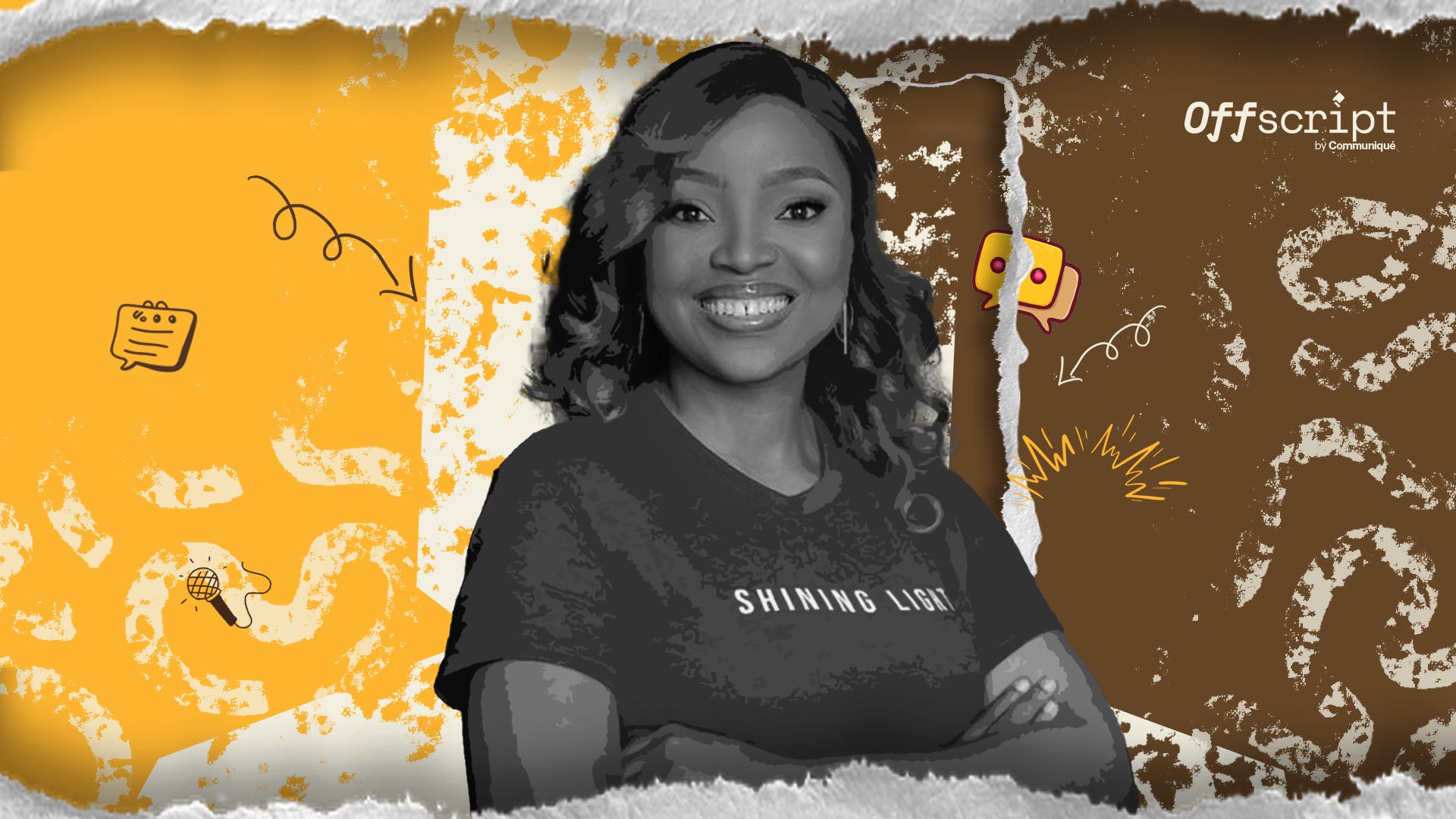
“When it came to me, I was like, I want to have my own Christian show.”
Flourish Ubanyi still remembers that classroom at Syracuse University. It was the first day of her master’s programme in broadcast and digital journalism. The professor had asked a simple question: why was everyone there? Some students wanted to become sports journalists. Others wanted careers in television or digital media. When it got to her turn, she said she wanted a Christian show.
At the time, she had no audience, no platform, and no real roadmap for how something like that would work, especially coming from Nigeria, where the biggest YouTube successes were mostly comedy skits and entertainment content. Today, that idea has become The Shining Light Show, a faith-based interview platform with more than 100,000 YouTube subscribers, millions of short-form views across social media, and a growing audience stretching from Nigeria to Ghana and the diaspora.
In one sense, her trajectory makes sense because Ubanyi’s life has never existed in separate, neat boxes of faith and work. Everything has stemmed from her faith. “My story is wrapped in faith. There’s no way I can tell you about my journey without mentioning God, or God told me this and all of that — that’s just my story.” In another sense, it makes you wonder how someone with no particular love for media, no childhood dream of being on camera, ended up where she is.
Ubanyi grew up in a religious household, but the faith that would come to organise her life was forged away from home. At ten years old, she was sent to boarding school for her secondary education. Being alone at that age, far from family, did something to her. It forced a reckoning. “I found myself praying every night before I slept, just for my family, praying that God should protect them,” she recalls. “I believe that was when I started to encounter God.”
However, what began as the prayers of a homesick child deepened into something more. When a classmate scored the highest in one of her school’s fiercely competitive assessment cycles, Ubanyi walked up to her to ask her secret. “She told me that it is God, because she used to pray a lot.” That response was convincing.
Ubanyi went to her empty classroom at 5:30 the next morning and got on her knees, too, and even more regularly. By the end of the year, she scored much higher than she did in previous years. But the more significant shift was internal. “Once I showed interest in God and really started genuinely seeking Him, I now started to desire Him very much, more than just academics.”
When it was time to choose what to study at university, she picked Mass Communication. “In my heart, I just had a green light that it was meant to be my course.” The irony is that she had no particular ambition towards that line of work. What she really wanted was to go into ministry. “Even when I was in university, I did not want to do anything in the media. I used to see them carrying laptops and editing videos. I just wanted to be a pastor. Going into ministry, I just like to follow God, do what He will have me do. That was my path, really.”
Her master’s programme in broadcast and digital journalism at Syracuse University changed her relationship with the media. Unlike the more theoretical approach she had experienced before, the programme was deeply practical. Students learned video production, editing, storytelling, website creation, and emerging media technologies. It was also where she first encountered virtual reality filmmaking.
At the time, VR felt like the future. Media companies and universities were heavily investing in immersive storytelling technology. Ubanyi became fascinated by the possibilities. She experimented with VR cameras, 360-degree filmmaking, and immersive visual experiences. “I felt like that was going to be the next big thing.”
After graduating, she returned to Nigeria, hoping to work in television. She applied to stations like TVC and Channels Television but didn’t get hired. Then a former professor sent her a message about CNN opening a bureau in Lagos.


Ubanyi reached out to Stephanie Busari, who was the CNN bureau head at the time, and secured an internship. At CNN, she worked across digital reporting, video production, social media, and event coverage. But even then, her mind was elsewhere. “I wanted to actually leave and do virtual reality,” she says.
After leaving CNN, she began freelancing and fully leaned into VR storytelling. Her father bought her a 360-degree camera, and she started producing immersive documentaries for YouTube.
She also contributed to the New York Times’ NYT360 project, a year-long initiative commissioning daily 360-degree videos from countries around the world. “They were taking videos from different countries, and I did not see any content from Nigeria.” She had cold-emailed the project’s editor to point out that Nigeria was conspicuously absent. Her observation was acknowledged, and she became their point of contact for content. She also worked on multimedia reporting projects around maternal health and trained journalists transitioning into video storytelling.
Then came Deutsche Welle (DW). One of the projects she worked on at that time was a German media exchange programme that brought 10 media entrepreneurs from Germany and 10 from Nigeria to Lagos for training. One of the people running the training was from the DW Academy. A month later, they reached out to say they were expanding in Nigeria and were looking for journalists. Ubanyi became one of the pioneer team members.


But through all of this, the idea of building her own Christian platform never fully disappeared.
The idea for the show had been circling for years. She had first felt it while watching a Christian programme called Turning Point on television during the period she was preparing her master’s application. There was something about the intimacy of the programme — the testimonies, the sense that faith ran underneath ordinary lives — that stayed with her, without her quite knowing why.
Over the years, the idea kept returning in different forms. At one point, she imagined an online radio station. At another time, she thought about building a network in which multiple hosts could run different faith-centred shows. Each time, it came close and receded. “The idea had been on my heart for at least seven years before I eventually took action.”
The first episode of The Shining Light Show went live on YouTube in November 2022, while she was still at DW. Ubanyi knew she was essentially beginning from zero, with no name recognition. “So I asked myself, what will my leverage be? What do I have that other people don’t have?” The answer was production quality.
She filmed the show herself, using 4K cameras, with a three-angle setup and deliberate lighting. The production quality was unusual by Nigerian podcast standards at the time.
Her approach to hosting, she admits, is counterintuitive. “I realised that it’s not about me. People don’t want to know about me. As long as you’re giving them value — so much value that you cannot be ignored — that’s when they will start thinking, who is this person? But initially, I knew that, nah, it’s not about me. It’s about what they want to get from me.”
The same ethos also shaped how she thought about short-form content. Where many shows treat Instagram clips as trailers designed to funnel viewers to the full video, Ubanyi decided each clip had to be complete in itself: a beginning, a middle, an end — a full arc in sixty seconds. “My goal is that people leave any interaction with Shining Light with impact. There’s no way you watch anything from Shining Light and not get something. Even if it’s thirty seconds.”
The growth came faster than she had expected. In March 2023, a full-length interview crossed 10,000 views. The channel hit 10,000 subscribers not long after. Then, in January 2026, the YouTube plaque arrived: 100,000 subscribers in just over two years from a standing start. TikTok, which she had only opened to claim the handle before anyone else could, reached 100,000 followers without a single piece of content created specifically for the platform.
Meanwhile, the show has never run on a consistent schedule. There have been gaps of two and three months between episodes, driven by the realities of a full-time job at the time and, even now, personal and family responsibilities.
“People know that no matter how long it takes, they are going to get value,” she says. “That is why Shining Light will not post for two or three months, and then we come out, and the video still goes viral.”
After leaving DW, Ubanyi formalised the passion project into Shining Light Studios, a company built to house not just the show but an eventual network of values-driven content.
“The dream is to have other kinds of content, not just The Shining Light Show,” she says. “A network. A lot of people are actually looking for wholesome, pure content that they can actually watch, that they can actually consume.”
The more immediate work is less glamorous: building systems, stabilising production rhythms, and getting to a point where the show can run without the host carrying every element on their own.
Ubanyi has found a way to combine her training, her desire, and her passion into one thing. And maybe, in the end, that’s what really matters.
But despite everything she is building, her ambitions remain surprisingly simple. “I’m an indoor person. I just want to take care of my family, be a good mother, be a good wife, love God, and do meaningful work.”
If Communiqué has shaped how you see the industry, return the favour. One-time or recurring: every contribution keeps us accountable to readers.
Flourish is an inspiration 🎉 I loved reading this