



“I have insane ambitions. I feel like everybody says they have serious ambitions, but if you can see what’s in my notes and in my head, it’s like, yeah, actually crazy. There’s no way this can happen.”
Demilade Ademuson knows how improbable his ambitions sound. He’s building GEMS, an investment company that owns businesses and intellectual property across Africa’s media, entertainment, gaming and sports industries. His model is Berkshire Hathaway, the American conglomerate Warren Buffett built. For now, GEMS makes minority investments and advises creative businesses on raising money. But Ademuson imagines a future in which it acquires companies, owns valuable entertainment assets and uses the income they generate to buy even more.
One of the media properties he owns is Daily Bread. Inspired by the American business newsletter Morning Brew, Daily Bread tells the stories of Nigerian companies and entrepreneurs, using newsletters, videos and humour to help readers understand how businesses operate and how the economy works. Ademuson runs the publication alongside his full-time job at Netflix.
It is a lot for one person to take on, especially someone who has spent much of his career trying to figure out where he belongs. Before Netflix, Daily Bread and GEMS, Ademuson had tried building a fashion business, running a tech startup and becoming a filmmaker. Most of these ventures failed. By 2019, he was unemployed, struggling with depression and questioning the decisions that had brought him there. His ambition to build GEMS is not entirely new. At thirteen, Ademuson had already decided that he wanted to become an investor like Warren Buffett.
You’re reading Communiqué because someone in the Inner Circle paid for it. Pay it forward.
Growing up in Ikeja, Lagos, Ademuson was academically gifted. But he also had a creative side. He staged one-man plays for his mother, built imaginary scenes using stones and played basketball well enough to nearly represent Nigeria at the under-17 level. At the time, people rarely treated academics and creativity as equal pursuits. His academic abilities drew the most attention, while he explored his interest in the arts privately. “I always felt like there were two sides of myself,” he recalls.
His fascination with business began when an uncle gave him a comic book about Warren Buffett. The uncle also taught him to read the stock market pages of newspapers. Ademuson began collecting newspapers daily, studying share prices movements. When the now-defunct Oceanic Bank was preparing for an IPO, he presented his father with an investment proposal, supported by thirty newspaper cutouts. He explained the bank’s prospects and why buying its shares made sense. His father agreed and bought small amounts for him and other family members. Ademuson had found his calling. He wanted to become an investment banker, make a fortune and return to Nigeria to invest in its development. At thirteen, he believed wealth offered a better route to changing society than politics or activism. But his plans changed after secondary school.
Ademuson moved to the United Kingdom for his A levels, and subsequently studied economics at the University of Birmingham. Several of his closest friends gained admission to more prestigious universities, while his applications to Cambridge and the London School of Economics were unsuccessful. For someone accustomed to academic recognition, the experience was unsettling. He felt he was falling behind and began looking for another way to distinguish himself.
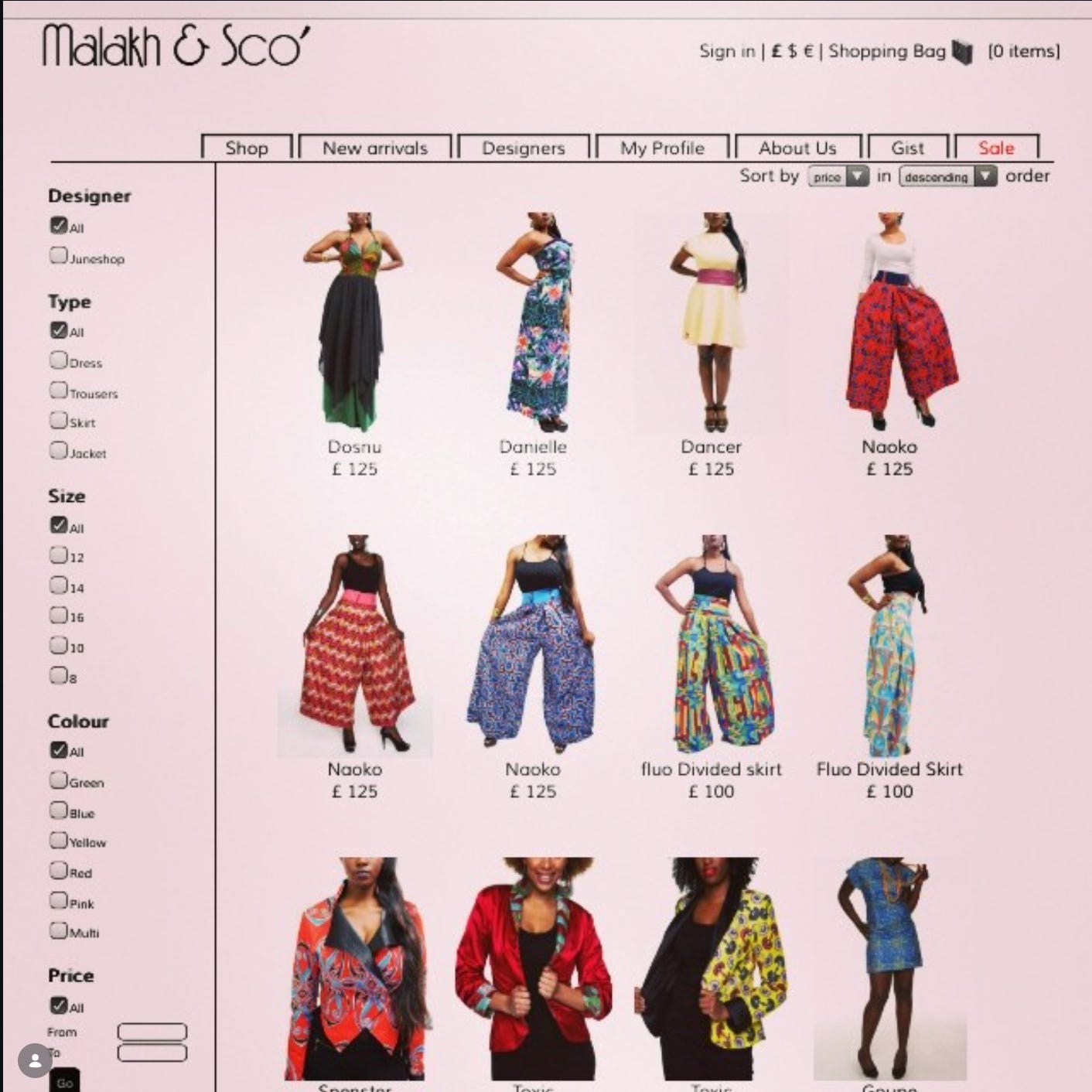
Technology offered Ademuson an alternative route to achievement. With a friend, he started Malakh&Sco, an online fashion retailer selling Nigerian designer clothing in Britain. He envisioned a site where people could browse clothes with friends, try outfits on digitally and recreate the social experience of shopping in a physical store. Ademuson believed the world would buy Nigerian fashion if more people could see it. “I’ve always been a super patriot. I’m like, ‘Nigeria is the coolest thing.’ So I was like, ‘If only the world could see what we’re making, they would definitely buy it.’” But Ademuson and his friend learnt that exposure was not enough. The economics had to align too. Importing the dresses and running the business made them expensive for buyers with little exposure to the brands. Eventually, they shut it down. By then, he had abandoned his childhood dream of investment banking. The global financial crisis had made the industry lose its allure.
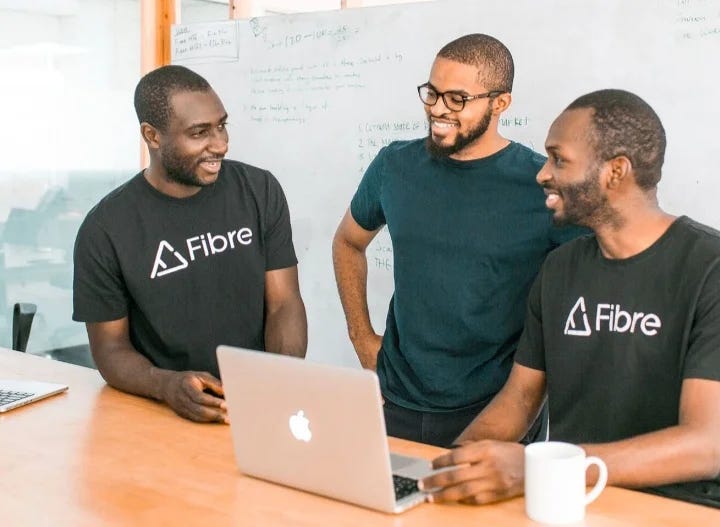
He returned to Nigeria for his compulsory national service, after which he joined a friend to build Fibre, a shared-housing platform that lets young people rent monthly rather than shoulder the large upfront rent costs typical of Nigeria’s housing market. The company raised venture capital, acquired buildings and attracted thousands of prospective tenants. But running Fibre proved far more difficult than attracting customers. Before the company launched, Ademuson’s uncle warned that its polished, Airbnb-inspired website would create expectations the business could struggle to meet. Landlords, electricity providers and other parts of Nigeria’s housing system would undermine the premium experience it promised.
Ademuson ignored the advice, but his uncle was right. Transformers failed, tenants complained, and buildings developed problems outside the company’s control. Some customers sued Fibre. On one occasion, security officers entered one of its shared apartments looking for a tenant suspected of internet fraud. As the co-founder responsible for product and customer experience, Ademuson had to deal with the complaints. Eventually, he became so exhausted that the prospect of acquiring another building filled him with dread. “At some point, I actually didn’t want the business to progress because I was already anticipating the wahala that’s going to come on my plate.”
He eventually left Fibre, but the decision troubled him. His co-founder was also a close friend, and walking away meant leaving him to deal with the problems they had created together. For a long time, Ademuson felt he had failed him. With his enthusiasm for technology fading, he decided to pursue the creative interests he had carried since childhood. He took an online filmmaking course at New York University, wrote a screenplay, submitted work to Sundance and produced a fifteen-minute short film about depression, It Is Not Yet My Turn Today. He also helped establish Irin Journal, a culture magazine intended to document African cities through their history and contemporary creative life. But these projects offered neither a stable income nor a clear career direction.
By 2019, the gap between the life Ademuson had imagined and the one he was living had become too difficult to ignore. Ten years earlier, he had been a gifted teenager preparing for a career in finance. Now he had left a startup and had no steady employment. Meanwhile, the friends he had once compared himself with were progressing in their careers. On New Year’s Eve in 2019, feeling overwhelmed, he wrote a note to God asking for a chance to pause and reconsider his life. 2020 gave him that opportunity.
In early 2020, he talked his way into a job at Bolanle Austin-Peters’s BAP Productions to write film scripts. He started out editing scripts, but his previous technology experience quickly became useful. He helped improve the company’s operations, introduced digital tools and supported the launch of its YouTube channel. During that period, Austin-Peters told him in a conversation that she didn’t think he belonged on the creative side of the film industry. She encouraged him to build an entertainment company rather than become a writer or director. Then his uncle, the same one who gave him the Buffett comic, also echoed similar advice. Ademuson had told him about the film work, and the conversation went almost the same way. “He said, ‘This is interesting, but why are you trying to be the talent when everything I know about you is strategy? Why don’t you go to the business side?’”
Your contribution funds: Original reporting, data licensing, and a small editorial team that actually answers your replies. No ads, no paywalls.
He started applying for business and strategy roles at entertainment companies. A promising Disney+ opportunity in New York ended abruptly when the company learnt he was Nigerian. Another application to Netflix in Amsterdam ended unsuccessfully after numerous interviews. Six months later, he received an unexpected LinkedIn message about another Netflix opportunity. The company had retained his details from the earlier interviews. This time, he got the job. At Netflix, Ademuson initially joined Creative Labs, where he analysed how images, trailers and other promotional materials influenced what subscribers chose to watch.
Working at Netflix brought Ademuson closer to the business of entertainment. It also sharpened an idea he had long held about Nigeria: that better access to information could change how people understood and engaged with the country. “I’ve always had this idea that the more Nigerians know about our country, the more we can blow up Nigeria,” he says. He believed that knowing more about what was happening beyond their immediate surroundings could help Nigerians engage with the country and contribute to its development.
Inspired by the business newsletter Morning Brew, Ademuson set out to make business and economic news more accessible and entertaining. Nigeria already had publications doing this for pop culture and technology, but he felt there was room for a similar approach to business. The result was Daily Bread.
Distribution, however, proved difficult. Unlike media founders who could rely on an established social media following to attract readers, Ademuson had to find other ways to reach an audience. Inspired by the Acquired podcast, the team experimented with weekly video deep dives on Nigerian companies. A few videos later, Daily Bread’s social media following had grown from just under 300 to more than 1,000.
For Ademuson, the lesson was tone: information didn’t have to feel like a lecture to be useful. “Why are we trying to make people geeks? They don’t want to be geeks. They want to laugh. They want to listen to Layi Wasabi and enjoy themselves. So let’s meet people where they are.”
The business remains a work in progress. Ademuson has largely financed it through his Netflix income and hopes to develop a model in which brands sponsor individual programmes. His experience at Fibre has also made him wary of venture capital, which he believes places unrealistic growth expectations on media businesses.
Daily Bread is connected to his larger ambition, GEMS, the umbrella organisation for all his creative pursuits. The company has already made small minority investments in sports, hardware technology and internet gaming businesses. It also advises creative companies seeking capital. But Ademuson wants to move beyond investing to outright acquisitions of businesses and intellectual property. His interests include film catalogues, podcasts, YouTube channels and other media properties that can generate income over time. He hopes to bring outside investors and experienced partners into individual acquisitions, eventually building a portfolio of African entertainment assets.
GEMS is still far from the company he imagines. Its investments are small, its acquisition plans remain largely unrealised, and the scale of what Ademuson wants to build will require far more capital and expertise.
For much of his life, Ademuson treated his interest in business and his love of creativity as separate pursuits, moving between them as he tried to find his place. Now he wants to bring them together. He believes African creativity can generate enormous wealth. He is now dedicating his career to proving that thesis.
