


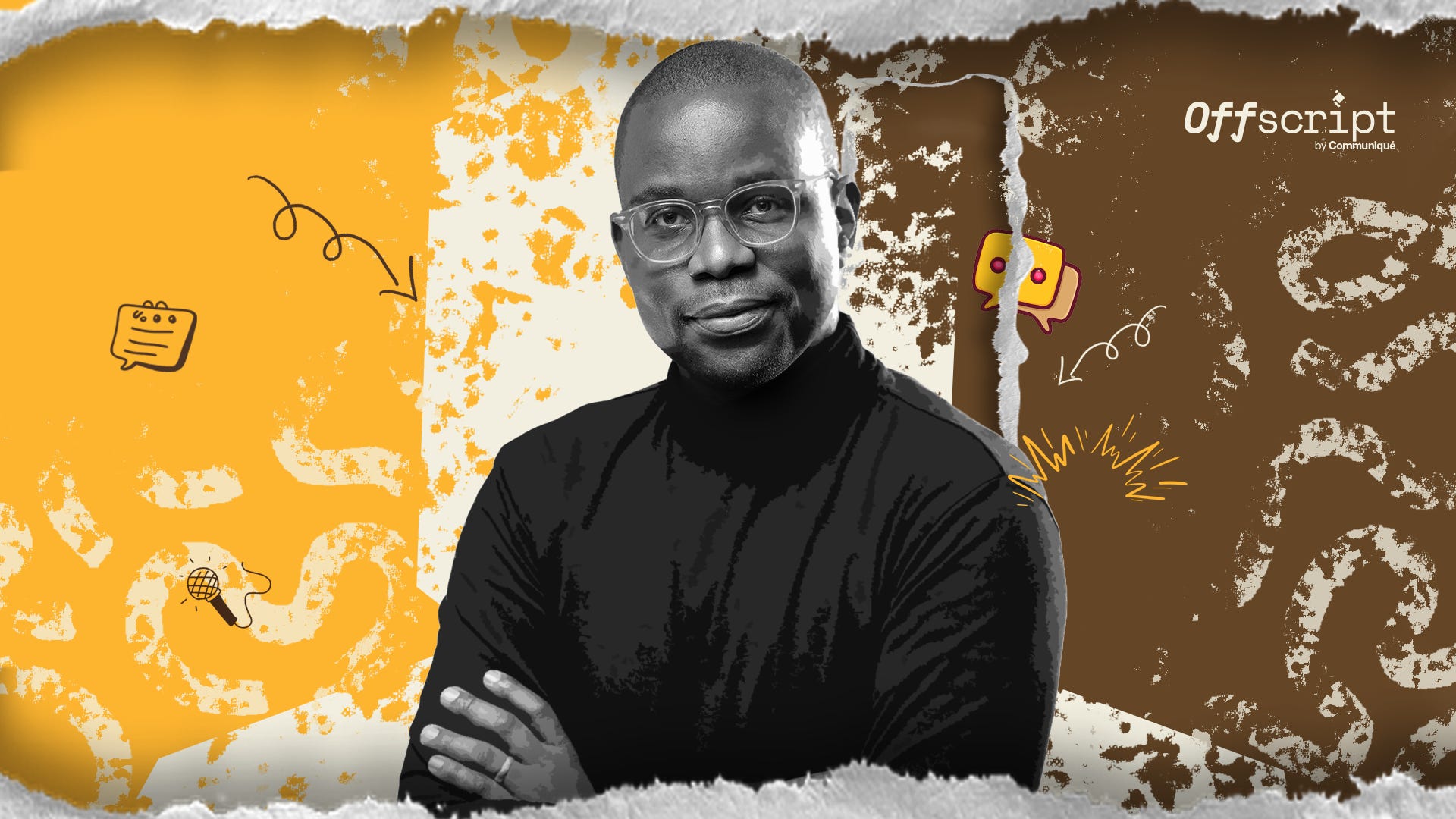
“I’d come home broken, covered in dirt, my uniform ruined. But I remember how it felt to make money. I got my first taste of financial independence through that, but also I had a taste of real life.”
Andile Masuku doesn’t fit into neat boxes, which makes his story hard to write. Maybe it’s because he never sits around waiting for opportunities; he hunts them down. At 17, while waiting for his O-level results, he was already pestering his mother to find him work.
She delivered. A family friend owned a large Spar supermarket and agreed to hire him, but warned he’d get no special treatment. He didn’t. Masuku worked 7 am to 7 pm shifts in the butchery, making sausages, packing bags, and hauling stock. He came home exhausted, uniform dirty, body aching. “It was beautiful work. It was honest work,” he says now.
That first taste of financial independence taught him lessons that still guide how he moves through the world. Today, he juggles journalism, publishing, consulting, and strategy. He’s a podcaster, editor, and advisor. But to him, these aren’t separate identities; they’re all pieces of the same puzzle. Before all that, though, there was just a curious kid who wanted to explore.
Masuku was born in Zimbabwe four years after independence to parents who were both educators. His father was a pastor and theologian; his mother started as a primary school teacher and eventually became a headmistress. “Both of whom, by the time they retired, were academics. They both retired as faculty deans,” he said to Communique.
His childhood was comfortable. He credits his Montessori preschool education with shaping his approach to learning and entrepreneurship. “Montessori preschool is unstructured learning and play that really sets you up to become an independent explorer in the world.” That independence got tested early. When Masuku was in Grade 3, his parents decided to advance their studies and moved the family to the Philippines. His father was pursuing a PhD in theology; his mother was earning her first degree after years of teaching with just a teaching diploma. Those three years were rough. According to local records, they were the only Zimbabwean family legally registered in the country. Masuku and his brother were the only Africans in their international school. “This is before the internet,” he points out. “People just think Africa is one big jungle, or one big desert. People tease you about your skin, and they’re touching your hair. The weather is different, the food is different, everything’s different.”
Masuku remembers those years as the most traumatic three years of his childhood. But they also taught him something valuable: how to be the only one in the room and still function. When the family returned to Zimbabwe, Masuku finished his secondary education at a church school. That’s where his relationship with performance took root. He sang, led a choir, took music lessons, and regularly spoke at church activities. “Speaking publicly was a very big part of school life in that school. And I took to it very well.”
This is remarkable, considering Masuku was born with what he describes as “a debilitating speech impediment.”
For university, Masuku enrolled at Helderberg College in South Africa’s Western Cape to study business management, a compromise with his father, who had initially pushed for accounting. “If I had been left to my own devices, I would have studied either music, advertising, or marketing,” Masuku says. But his father had concerns about all three. Music? “You’ll never make a livelihood.” Advertising? It had a reputation for loose morals. Marketing? “The marketer never rests.” Accounting was Masuku’s worst subject in high school; it was the only C on his report card. Still, his father insisted on business studies.
Helderberg ran on the American credit system, which meant Masuku could supplement his required business courses with electives from other departments. “I was able to supplement the stuff I hated, which is the business stuff, with media evaluation, psychology, sociology, history of earth and life. I was able to take theology courses.” He befriended the media studies lecturers and would skip his own classes (with permission) to join their field trips. One trip to the South African Broadcasting Corporation changed everything. He got a few moments on air with a famous DJ, and something clicked.
“I [needed] to get into voiceover work. Somehow, I was going to make my way into radio and broadcasting.” He spent the rest of that visit collecting phone numbers, then called them all from the payphone back at his dormitory. Everyone said no, except for one receptionist who, just before hanging up, mentioned two agents starting their own agency. She thought they should hear him. “I told her, I will not leave this phone until you call me back,” Masuku recalls. She called back and made the introduction. They asked Masuku to come for an audition.
He scraped together money from his student job at Subway to record a demo tape, wrote his own scripts for fictional bank ads, and showed up with nothing but raw talent. They played the first seconds of his clips. He braced for rejection. “And then they’re like, all right, cool. We’ll work with you.”
His first voiceover job came a few months later.
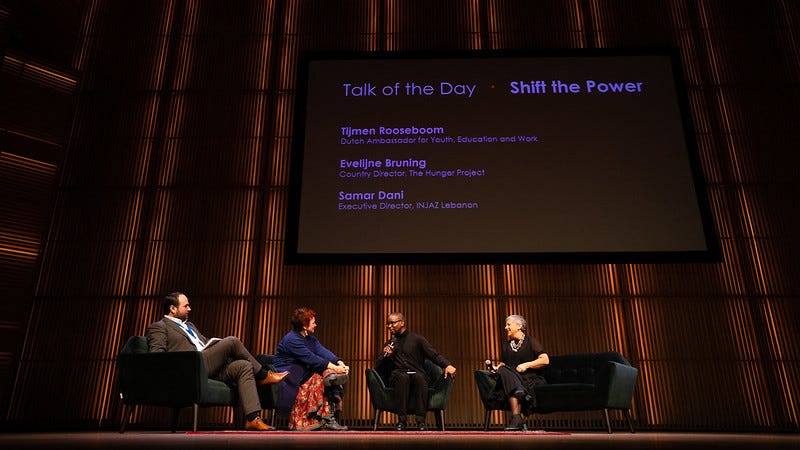
By graduation, Masuku had a small voiceover portfolio and some TV presenting experience from a Christian station that had set up on campus. But his path after university wasn’t straight. He taught briefly at a private school that had promised to help with his work permit, but then changed its mind. Next, he talked his way into a job at a high-fashion brand, literally approaching the founders at an airport after recognising them from a university economics paper he’d written about their export success. That job got him a work permit and taught him about retail, brand management, and working with international partners. But when the relationship with his employers soured, no new job materialised.
“If you spoke to me, then I would have told you that I chose entrepreneurship, but that’s not true. I stumbled into it,” Masuku admits. “If I didn’t figure something out, I’d have to go back to Zimbabwe.” With Zimbabwe’s economy already declining, that wasn’t appealing. So he registered his company and started putting himself out there for freelance gigs. Eventually, he landed representation with one of Johannesburg’s top talent agencies.
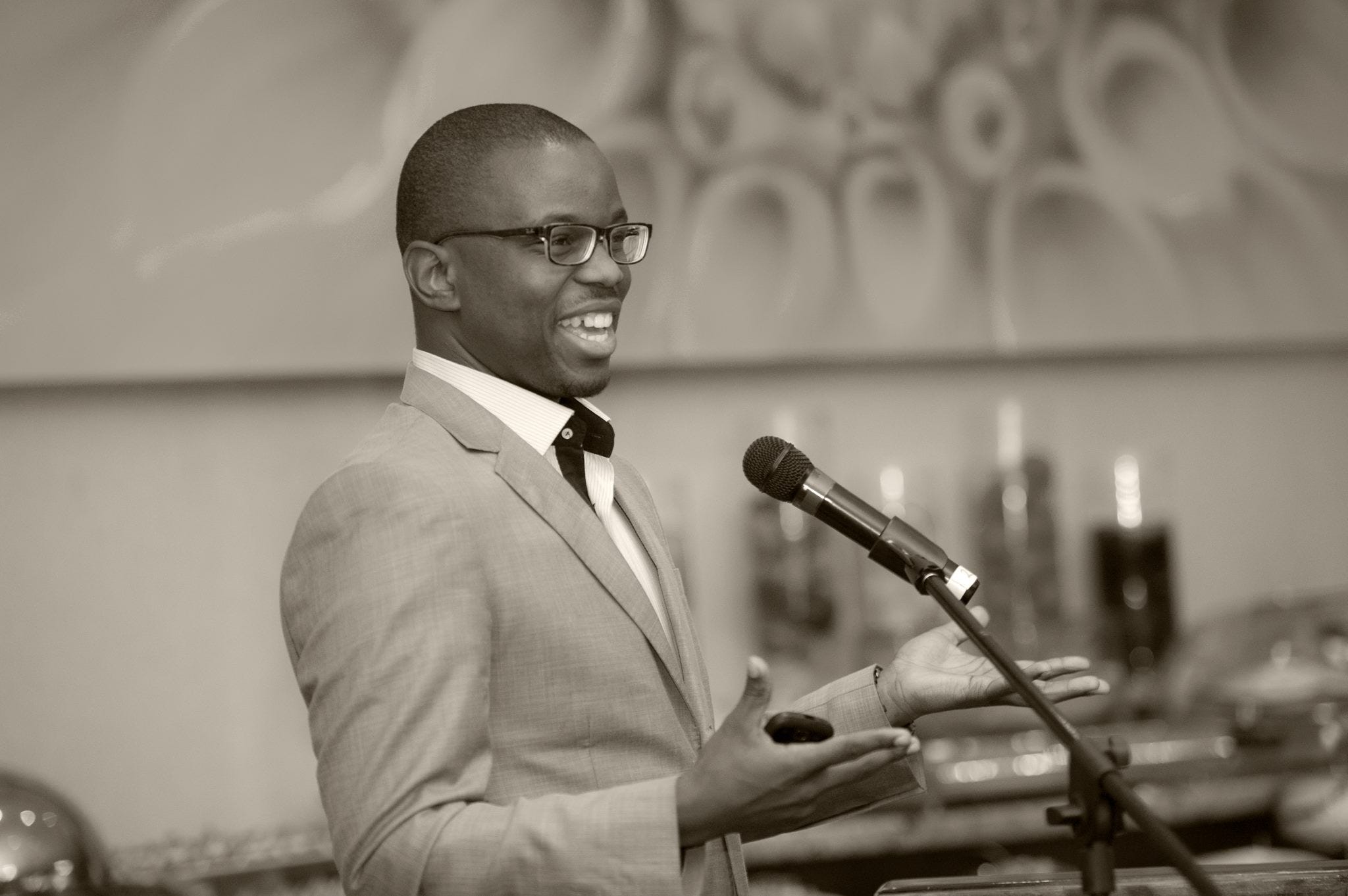
His voiceover career took off. At its peak, he was doing three to six recording sessions per week and became one of the early voices of Showmax’s ads. He also landed a TV presenting gig for a business advice show that ran for four years. Then the show got cancelled abruptly. He assumed other opportunities would follow. “I felt like such a big deal. I thought there’d be a line out the door waiting to work with me. Nobody was waiting for me.”

Humbled, Masuku ended up volunteering at a new community radio station. That’s where DJ Ian Fraser lent him a broadcast-quality Sennheiser microphone and introduced him to NPR-style storytelling. Inspired, Masuku started creating his own 15-minute audio stories, mostly business case studies. He published them on SoundCloud, but they didn’t gain traction. After running out of money, he stopped.
Five years later, BBC Outlook editor Munazza Khan discovered those old podcasts and started asking colleagues if they knew who made them. One person she asked was Kim Chakanetsa, a Zimbabwean broadcaster at the BBC who already knew Masuku from his tech writing for BBC Africa.
When Masuku later travelled to London, Chakanetsa met him in the BBC lobby and gave him a full tour, introducing him to colleagues as someone they’d be working with—before he even signed any deal. Khan called shortly after and offered him work. Masuku spent roughly a year as a near-permanent freelancer for Outlook, which reaches up to 100 million listeners globally. One of his most memorable pieces was about a Syrian refugee love story that started with a resume.
Around this same period, Masuku was four years into building African Tech Roundup. It started as a podcast partnership with the late Tefo Mohapi, who ran iAfrican, a tech publication popular among ICT professionals. The pitch was simple: Mohapi would provide the audience and technical infrastructure; Masuku would handle the broadcasting. About 100 episodes in, consulting inquiries started coming, the first from a Dutch venture capital firm. As the platform’s ambitions grew, Mohapi grew uncomfortable with the expansion beyond podcasting. The partners split, and per their agreement, the property went entirely to Masuku. His second co-founder, Musa Kalenga, joined about a year later.


More than a decade later, African Tech Roundup continues. Masuku’s Spar experience shows up here: he’s interested in the intersection between Africa’s digital economy and what he calls the “real economy”, where people “work, play, subsist, build lives, raise families.” “There’s a lot of aspects of that [digital] economy that are also imaginary—projections of what people want the future to be, or what they want their valuation to be,” he explains.
Today, Masuku splits his time between what he calls “creator journalism” and independent consulting. His newest venture is Future in the Humanities, a digital publication linked to the University of the Witwatersrand’s Digital Humanities Chair, where he serves as both executive editor and strategic advisor.
As part of that role, he coaches academics to translate complex research into public-facing writing, connecting specialists with live newsrooms. Recently, he helped an AI governance expert publish an op-ed in Business Day, South Africa’s equivalent of the Wall Street Journal.
Despite his apparent strategic thinking, Masuku resists taking credit for his career trajectory. He points back to that speech impediment that mysteriously disappeared, the chance encounters, the timing of opportunities. “I can’t sit here and say, I’m making it, I did it, no, I can’t do that,” he reflects. “I’m cooperating with providence and trying to steward the gifts and opportunities I’ve been given.”
For someone like me who is currently at an impasse in media, looking to carve a new path, this was a very inspiring read.
In other news… God is kind. Soli Deo Gloria. 🙏🏾
Grateful to Favour Olaiya for the call-up, the conversation, and the thoughtful write-up—and to David Adeleke and the wider Team Communiqué for doing the hard things that matter. 👊🏾