


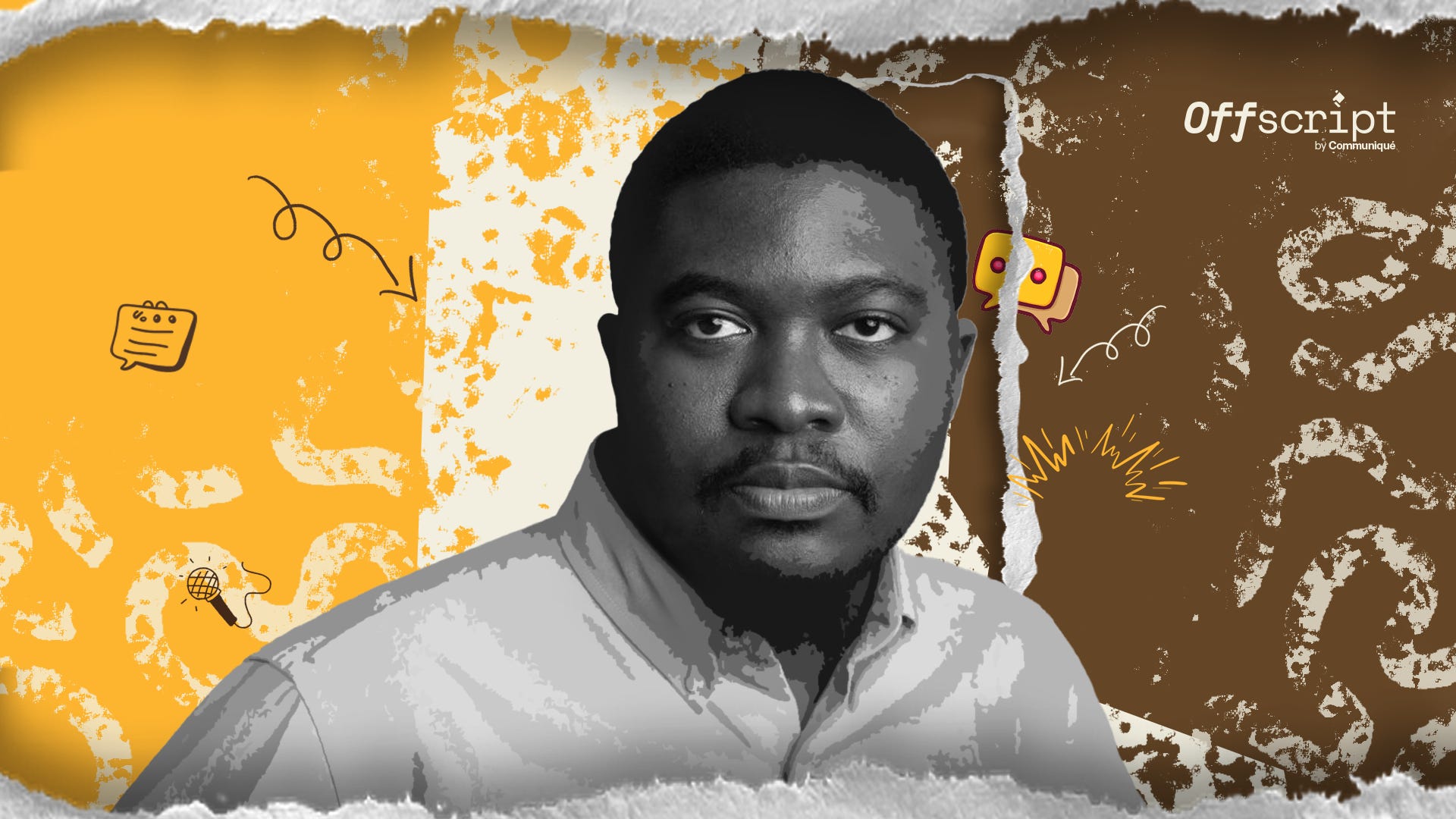
“I dreamt of starting my own TV station, so I drew up a seven-day schedule of what programmes it would show. I was thinking about it a few days ago, and I was like, damn, that’s a funny thing for a kid to do.”
Long before Aanu Adeoye became a reporter whose byline would appear in some of the world’s most influential publications, he was a bored secondary school student filling an empty notebook with an imaginary broadcast schedule. Educational shows. Wrestling in the mornings. Carefully planned programming for a station that existed only in his head.
The childhood dream to work in media would eventually come to pass, just not in the way he imagined. Adeoye never grew up to own a TV station. Instead, he became a journalist, working as a reporter and editor for publications including CNN, TechCabal, Rest of World, The Continent, and, now, the Financial Times. His career has taken him from Ibadan to Lagos, Johannesburg, and London. Along the way, he has covered football, elections, startups, oil and gas, geopolitics, and global business.
At the centre of it all is one constant: curiosity. And that curiosity, Adeoye says, began at home.
Adeoye grew up in Ibadan with his mother and older brother. Newspapers arrived at their house almost every day. There was also a family friend who worked with the Oyo State government and received newspapers regularly. During holidays, Adeoye would spend time at their house and read those too.
Football pulled him in first. Growing up during Nwankwo Kanu’s time at Arsenal made him an Arsenal fan for life. The back sports pages became familiar territory. From there, it was a short step to the front pages and everything else the newspapers had to offer.
By the time he got to boarding school, that interest had hardened into obsession. Phones were banned, but transistor radios were allowed. Adeoye carried one everywhere. On weekends, he and his friends would gather around to listen to football commentary—often from the BBC World Service—through crackling signals and fading reception. It wasn’t only football. He listened to the news too, both morning and evening broadcasts.
Academically, everything pointed in one direction. Adeoye was consistently top of his class. In Nigeria, that meant being a science student, and everyone expected him to become a doctor. Reading Ben Carson’s “Gifted Hands” helped reinforce the message.
“At the time, I wanted to be a doctor, but now that I think about it, I didn’t really want to be a doctor. It was just a thing that I felt I had to do.”
At the beginning of senior secondary school, his principal introduced Literature in English for all students, including those in science classes. Most students complained. Adeoye loved it.
“We’d read Wole Soyinka books. We read Athol Fugard’s ‘Sizwe Banzi is Dead.’ We read poems as well. My favourite poem is ‘To an Athlete Dying Young’, and I read it when I was in secondary school.”
Literature gave him a different way of thinking about writing, language, and structure. Still, he stayed on the science track.
When the time came to go to university, Adeoye finally admitted to himself that Medicine was not what he wanted. He switched to Geology against his mother’s expectations. He didn’t really know what Geology entailed, but he knew he could not study Medicine.
University was a shock. Being brilliant in secondary school did not translate into success in a science-heavy course at Obafemi Awolowo University. He began to struggle. It was obvious he was forcing himself through something that did not fit. Eventually, he switched to Consumer Sciences, not out of passion, but survival. He just wanted to graduate.
After giving up on the education the university could offer, his real education began online. Adeoye started blogging about his first love: football. Blogging was still new in Nigeria, and popular blogs like BellaNaija and Linda Ikeji’s were beginning to take off. “There wasn’t a clear path for you to follow”
He wrote anyway. For free at first. Then, in 2014, he got his first paid journalism gig: a story for Vice about Equatorial Guinea’s long-serving president using the continental sports tournament to launder his reputation as a dictator. He continued to freelance for international publications, including The Guardian and FourFourTwo. By the time he graduated, he had built a small portfolio and growing confidence that he could turn journalism into a full-time career.
His first real newsroom experience came almost by accident. After his compulsory national youth service, Adeoye cold emailed, Lolade Adewuyi, the Nigerian editor of Goal.com, asking for a job. There was no vacancy, but impressed by Adeoye’s portfolio, Adewuyi went out on a limb for him and secured extra funds to pay Adeoye a stipend.
At Goal.com, Adeoye learned how a newsroom worked from the inside. The difference between freelancing and being on staff was stark. “Before I’d just send the copy and it was edited and you would find it on the website. Now I was writing, doing stuff on social media, choosing what images went with the story, involved with the whole story production process.”
From Goal.com he moved to CNN in Lagos. The work expanded his horizons. He covered elections, tech stories, and regional reporting assignments. CNN gave him scale and structure. It also taught him how global news organisations think. When CNN did not renew his one-year contract, he applied for the managing editor role at TechCabal. He was 25. He had never formally managed a newsroom. But he got the job anyway.
At TechCabal, Adeoye arrived with a clear idea of what needed to change. Nigeria’s tech ecosystem had grown up, he felt, but coverage had not fully caught up. “When I came in, my sense was, this industry is mature now. We need to cover them with a critical lens. We cannot be cheerleaders.”
He believed that founders raising millions of dollars were power brokers and should be treated as such. Journalism, in his view, was not PR. It helped that Adeoye was not from a traditional tech background, so he wasn’t worried about being punished for his reporting. “Before TechCabal, I didn’t have any friends in tech. So, I didn’t care if they did not invite me to their parties.”
During his short tenure, he helped professionalise the TechCabal newsroom, adding team members like Alex Onukwe, who would later become Semafor’s Africa correspondent, and Muyiwa Olowogoyega, who would go on to become TechCabal’s editor-in-chief. He also introduced columns like My Life in Tech. Again, as he did when he started blogging, he was figuring things out in real time. “When I left, people would tell me I did a really great job. And I would think, well, you didn’t know that half the time I was screaming internally. Because I was making things up as I went.”
After five months, Adeoye left TechCabal for a journalism fellowship in South Africa. In Johannesburg, he wrote for Rest Of World and joined South Africa-based publication The Continent just as it was launching, eventually becoming its news editor. He later moved to London for a fellowship at Chatham House, where his focus shifted toward geopolitics and international relations.
Then came the Financial Times (FT). Moving back to Nigeria to cover the wider West African region wasn’t in Adeoye’s immediate plans, and he wasn’t sure he would get the job because he had applied unsuccessfully to a similar job at another publication.“I don’t have the appropriate level of arrogance or confidence to think that if I apply for something, I will get it. But it was the FT.”
Adeoye applied anyway, and after a rigorous screening process, he got the job. At the FT, he covered West Africa in all its complexity: politics, business, oil and gas, elections, culture. The role demanded range, speed, and constant learning.
“When you join the FT, there’s this expectation that you’re curious about the world.” That curiosity became the skill that tied everything together—helping him translate complex topics into simple terms.
After almost four years covering West Africa for the FT, Adeoye transitioned into a new beat: global pharmaceuticals. The move came through an internal opportunity while a colleague was on leave, and it allowed him to apply the same curiosity and rigorous reporting he had honed over the years to an entirely new field.
Curiosity has now led him to his next project: a book on African geopolitics. “Last year, I turned 30, and I thought maybe I should do something. Most normal people just get married. I decided to write a book.” The book focuses on the shifting geopolitical landscape in West Africa, particularly the decline of French influence and the rise of new players like Russia.
Looking back, Adeoye’s career feels improbably large for something that started with a transistor radio and a pile of newspapers. It may not be the TV station his younger self imagined, but what he has now is just as good.
“I’m a 31-year-old guy from Ibadan. I’ve interviewed presidents, prime ministers, Dangote, Elumelu and the likes. I’m sitting with these people because I have this tiny badge that says I’m a journalist from this or that publication, and I wouldn’t trade that for anything else.”
definitely has two heads.
What a colourful career Adeoye has had in a short span of time. Looking forward to the release of his book once it's published. Great profile write-up.