


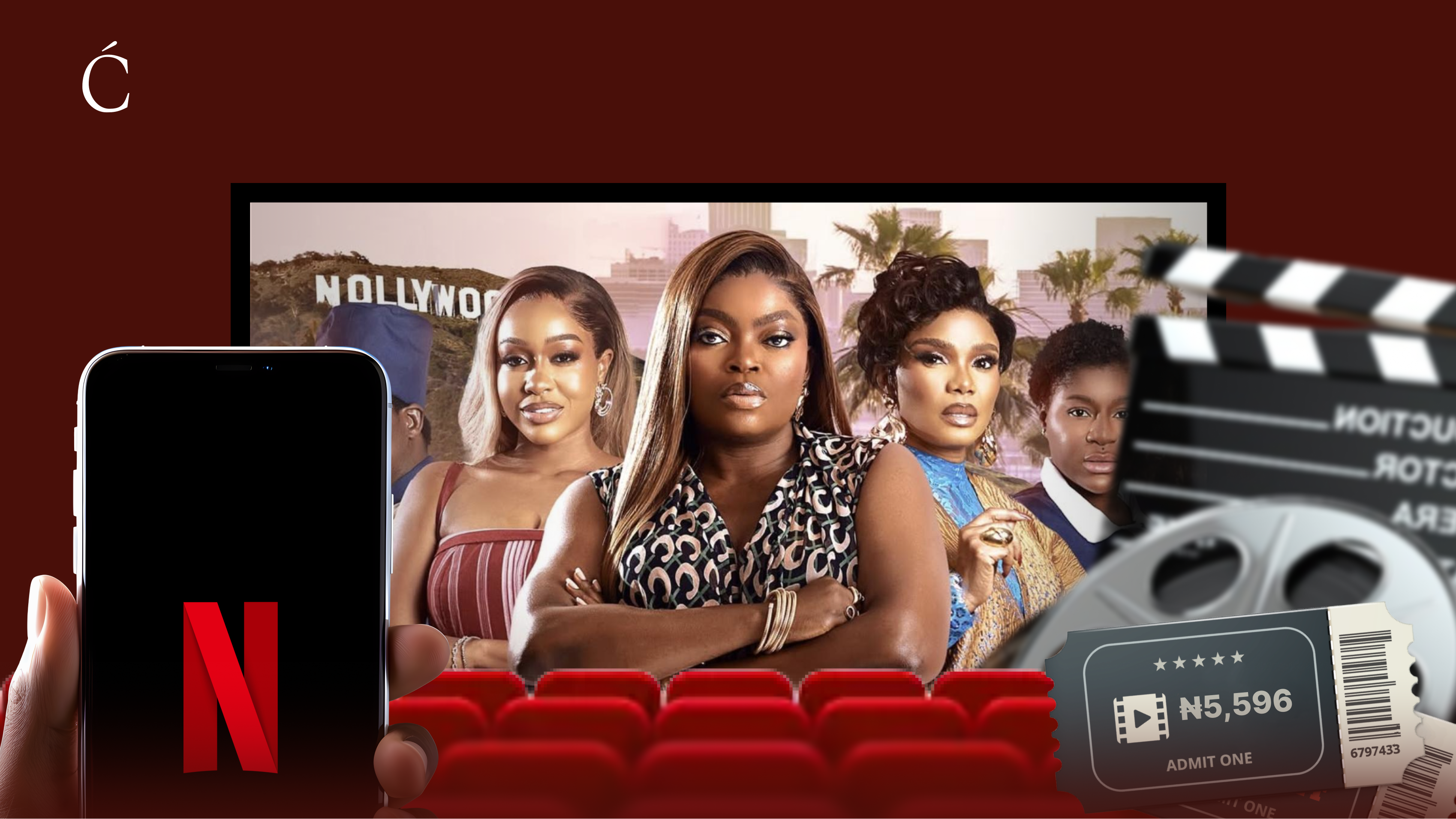
In August 2022, we published an essay by Anita Eboigbe titled “Netflix is eating Nollywood’s lunch.” Netflix went big on Nigeria in 2020; the pandemic kept everyone at home, and Nollywood’s share of cinema tickets dropped from about 40% to 25.8% in a year. Anita’s worry, and ours, was that streaming would take the cinema audience Nollywood had spent the better part of a decade building.
Four years later, that worry looks outdated. Amazon Prime Video stopped commissioning African originals. Netflix scaled back its Nigerian originals at the end of 2024. Showmax, which paid for mid-budget local shows the global platforms rarely commissioned, shut down on April 30. Netflix still licenses Nigerian films, but most of its African money now goes to South Africa.
The streamers pulling back meant Nollywood lost something that it hasn’t been able to replace: guaranteed buyers. Many producers were only paid once their films were finished, but a signed deal meant they knew who would buy and roughly for how much. Folajimi Alli-Balogun, who runs the film desk at the Lagos private equity firm MBO Capital, put it more simply when we spoke to him last year. “To us, the presence of that streaming contract significantly de-risked the transaction,” he told Communiqué in May 2025. With a contract in hand, he said, “All you were facing was execution risk.”
Cinemas, community screenings, and YouTube can’t offer that certainty, and Made in Africa, Watched Globally?, a new study the consultancy Dalberg produced for Germany’s development agency GIZ and Afreximbank’s Creative Africa Nexus (CANEX) programme, shows why. Its findings convinced me that Nollywood needs Netflix, or at least buyers like it, on better terms than before.
