


1. The kids are alright
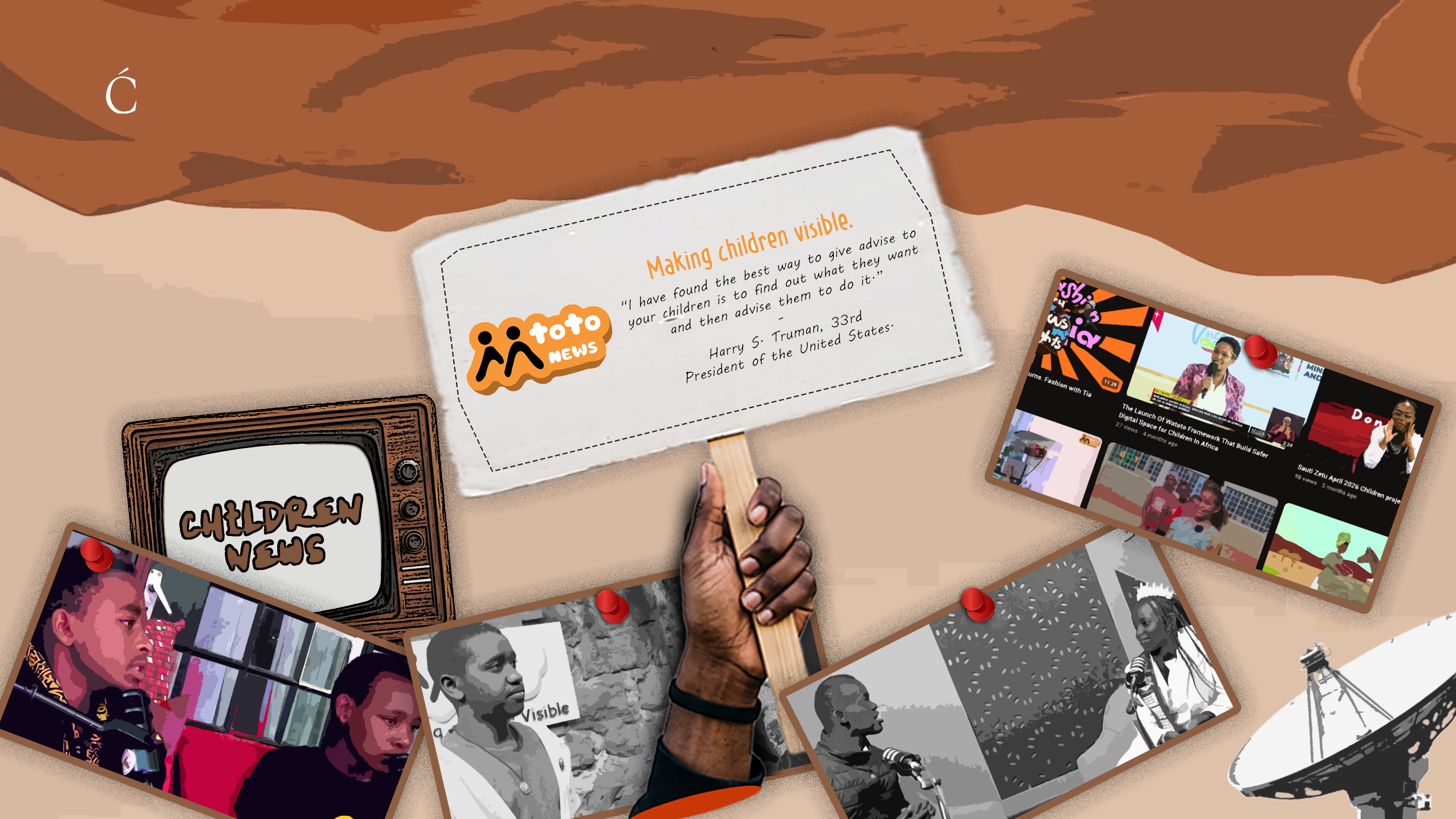
In October, Kenyan media platform Mtoto News plans to bring a children’s news bulletin to NTV, one of the country’s largest television stations. Mtoto News helps children report on the world around them: they propose programmes, choose subjects and conduct interviews, while adults provide training, production, and editorial support.
The partnership represents a bigger commitment to television. Last year, Mtoto partnered with Akili TV to broadcast two of its programmes. One, Mission Accomplished, featured two 12-year-olds interviewing people about their careers, giving other children a window into adults’ working lives. The other was a legal-literacy programme in which children questioned lawyers and policymakers about the laws meant to protect them.
The aim was to introduce these programmes, which began on YouTube and have attracted audiences across East Africa, to more viewers and learn how families responded. That family audience is central to Mtoto’s interest in NTV. In its view, it is doubling down on what already works: giving children space to tell their stories and bringing those stories into family homes. Mtoto hopes the bulletin will make children’s concerns part of the wider national conversation as Kenya’s elections draw nearer, while giving young viewers the chance to see children like them asking questions and explaining the world.
You’re reading Communiqué because someone in the Inner Circle paid for it. Pay it forward.
Children’s media is usually understood as content made for children, with adults deciding what they should know and what will hold their attention. Mtoto News gives children a role in those decisions.
With its expansion into television, Mtoto also sees a commercial opportunity. It currently relies on grants and consultancy work, and much of its media output generates no income. A programme families watch could attract advertisers. The NTV partnership will test whether programmes shaped by children’s interests can generate enough revenue to keep running. But as broadcasters and advertisers get involved, Mtoto must figure out how to operate sustainably while keeping children’s participation meaningful.
2. Origin story
Mtoto News launched in 2017 when Jennifer Kaberi, a child development specialist in Nairobi, noticed a problem with the media her daughter consumed. Many of the characters did not look like her, so Kaberi decided to fix it. Mtoto, the Swahili word for “child”, was the result.
Mtoto News started as an X (formerly Twitter) account sharing child-friendly content. Its first programme was News Insights. A child would come into Mtoto’s Nairobi office to present news items, while the team gathered footage around the city. The segments were packaged as a show: news made by children for other children. X was not the best place for this, so YouTube became the main distribution platform, alongside TikTok, Instagram, and Facebook.
Growth came through training. Mtoto began hosting digital-literacy sessions that attracted children who wanted to write, host podcasts, or present shows, and the organisation developed outlets for those interests. Alongside its YouTube shows, it began publishing two quarterly magazines, one for 13- to 17-year-olds and another for children under 12, alongside storybooks. Children submit stories, which staff edit and design. Copies are sold through an online shop or printed with partner funding for distribution to schools.
Mtoto also produces around ten shows and podcasts led by children. Its Student Press Action Network establishes journalism clubs in Kenyan schools. It has also expanded into events. Children working with Mtoto proposed a gathering where young people from across the continent could compare experiences. Mtoto’s first African Children’s Summit brought between 300 and 400 children to Nairobi in 2023. Participants voted to hold the next gathering in South Africa, and a third is planned for Sierra Leone in 2027.
$10 covers a reader. $100 covers a story. $1,000 covers a month. Communiqué is built on direct support from people who believe Africa’s creative economy deserves serious coverage.
3. Who pays the piper?
The global children’s media market is worth billions of dollars, but much of that value is captured by organisations that make media for children, not children making media for themselves. The latter has a basic problem: the content is hard to monetise. Advertisers want to reach children, because children shape much of what their parents buy. But that money goes to whatever holds children’s attention longest, which is usually cartoons and entertainment, not shows in which a 12-year-old questions a lawyer. On YouTube, videos marked as made for children cannot carry personalised ads, so they earn less. Organisations that have tried to live off the content alone have struggled.
Recognition is not enough. Children’s Express, the American news organisation staffed by young reporters, won Emmy and Peabody awards but closed in 2001. At its closure, the Kellogg Foundation provided 95% of its income. YR Media in Oakland won two Peabodys and placed stories on NPR. It shut down in 2024. Prestige did not translate into income. Mtoto already has this problem: its Akili partnership did not generate revenue and only provided access to a wider audience. If the NTV deal follows the same pattern, the broadcaster gets the programme and the goodwill, while Mtoto carries the cost.
Mtoto has built relationships with children, parents, and schools. Those relationships, combined with its production skills, could become its strongest commercial assets. Helping children create journalism generates several kinds of value: children learn, schools gain teaching programmes, broadcasters receive content, and institutions gain a better understanding of young people’s experiences. The challenge is finding buyers for each without auctioning off the children’s freedom to speak.
A solution is to charge for teaching the skills that make production possible. IndyKids in the United States offers an example. Founded in 2005, it publishes journalism produced by children and runs workshops where participants pitch, report, write, and edit with professional mentors. Its advertised autumn workshop costs $240, with scholarships available. IndyKids’s content pipeline gives the training a clear path: children make something that people beyond their classroom can read. The organisation can charge for that learning experience without requiring the newspaper itself to cover every cost. But it exists in a market with a more robust media ecosystem and audiences with significant ability to pay for content.
Grants and consultancy work provide most of Mtoto’s income. Its services include child-friendly materials on subjects such as cyberbullying and climate change, training for journalists who report on children, and, through Kutunga, a sister design academy co-founded by Kaberi, training for developers, designers, and other technologists to build digital products with children’s safety in mind. Mtoto has also run workshops in which children advised TikTok on safety and content. However, this work comes one project at a time, mostly from development organisations whose budgets rise and fall. Mtoto could turn it into repeat services with set prices. These could include a trained panel of children that companies consult before launching products, regular research on how Kenyan children use media, and safety reviews for platforms and edtech firms under growing pressure to show they protect young users. Those clients have bigger and steadier budgets.
Mtoto has a plausible path to sustainability. Its strongest prospect is a business in which training and consultancy help pay for journalism made by children. It already earns money from those services. What remains unclear is whether customers will pay regularly, and enough to cover both the services they buy and the editorial work that generates little income. In recent years, the answer has been: not likely.
The international funding environment that supports organisations like Mtoto is shrinking. That brings greater pressure to find commercial income just as development organisations, which make up a large part of its likely consultancy customers, face tighter budgets themselves. More television exposure will not resolve that question unless broadcasters or advertisers contribute to production costs.
Mtoto also faces limits on what it can sell. A consultancy client must be able to hear criticism of its product. An advertiser must accept that children’s concerns will not always make comfortable television. If winning contracts requires Mtoto to narrow who participates or what they can say, it risks weakening the very work that makes it useful.
Diversification therefore matters, but several unreliable income streams do not automatically make a sustainable business. Mtoto needs repeat customers, contracts that cover the full cost of delivery, and enough income left over to support its journalism. It has created a way for children to participate in media. Its next task is to prove that enough institutions will consistently pay to keep that participation possible.
