


1. A hidden gem
Over the weekend, I saw a stage play with a twist. The storyline was simple: a wealthy merchant must decide who inherits his business empire. Rather than choose between his two sons, he gives them a challenge. Somewhere in the ‘Valley of Hidden Treasures’ lies a fortune lost over two decades ago. The son who finds it first will inherit the business. But this is not your typical tale of sibling rivalry.
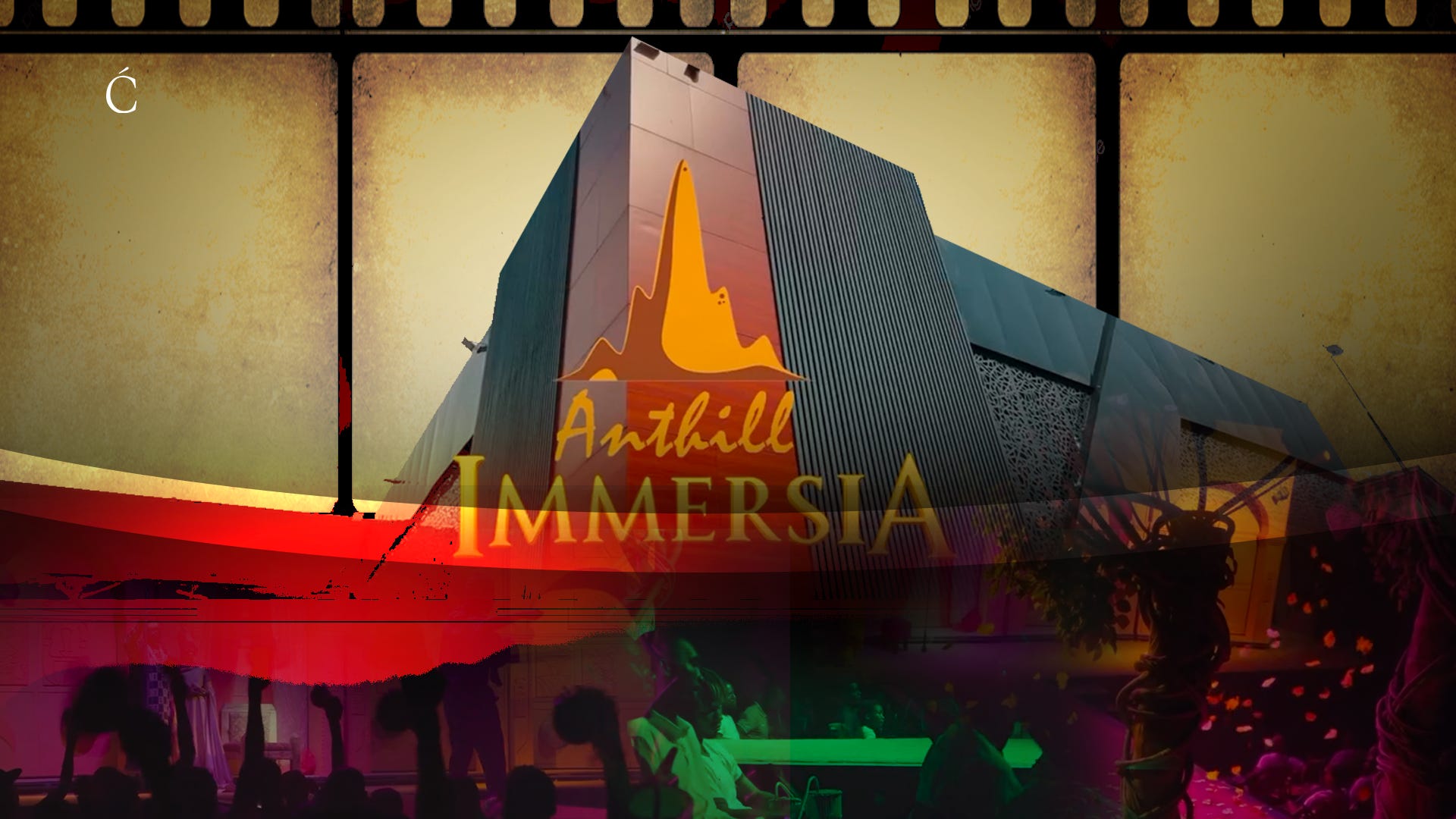
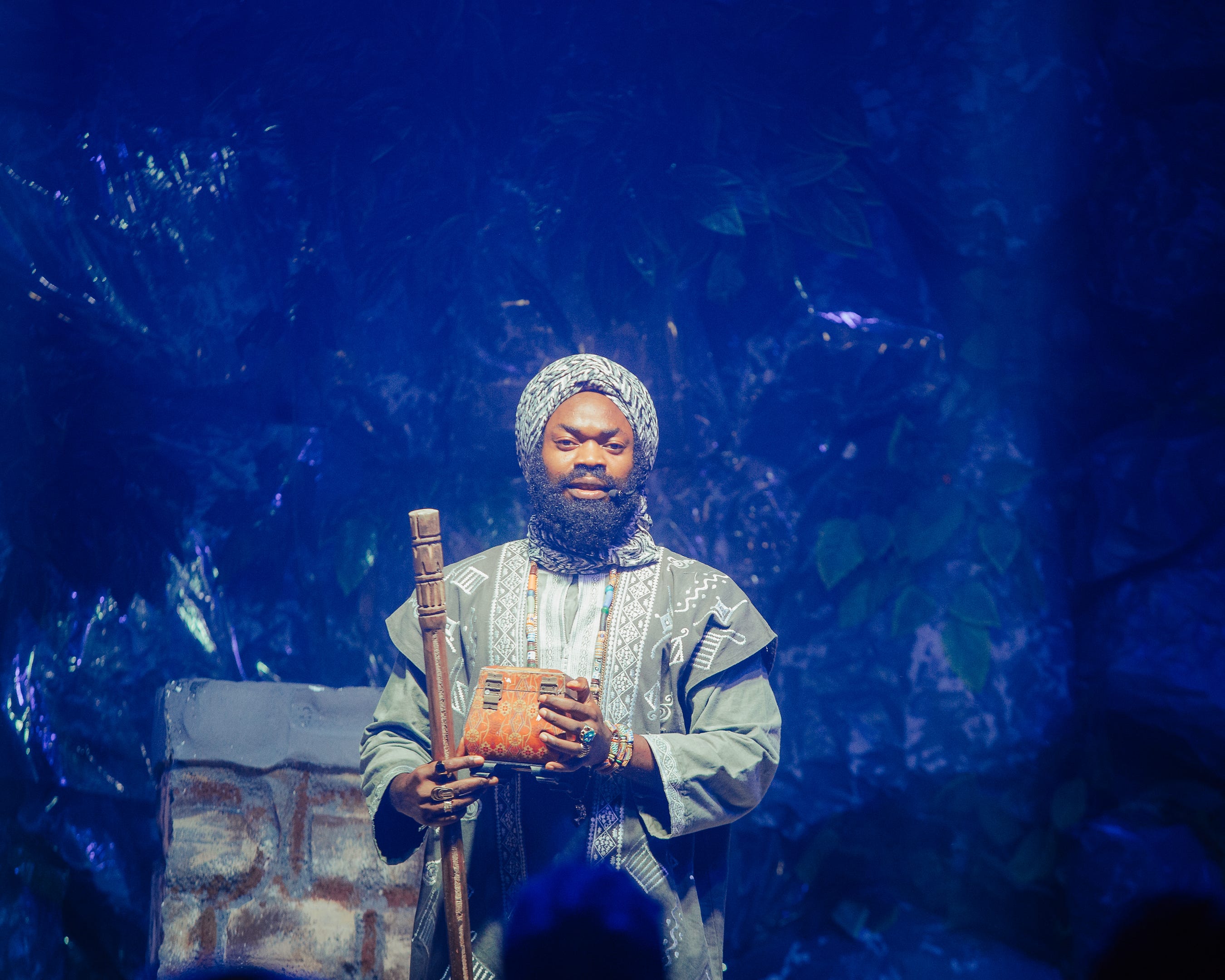
What follows is a live musical performance that collapses the distance between the audience and the stage. It unfolds inside a converted film studio in Ikeja, Lagos, reimagined as a rocky valley, where water cascades down artificial stone walls and wind-blown leaves sweep across the auditorium. The audience does not sit still or stay silent. At key moments, they strike predetermined notes on xylophones to move the story forward. They haggle in a live marketplace, trading with gold pouches purchased with real cash. They pick sides and influence outcomes. By the end of the show, one lucky audience member walks away with an actual treasure.
This is Valley of Hidden Treasures, the latest production from Immersia, Anthill Studios’ ambitious bet on immersive storytelling. Through Immersia, one of Nollywood’s most important production houses is experimenting with live entertainment, a wager that, beyond traditional film, it can build a business on live experiences that audiences engage with and pay for repeatedly.
2. Roots
Driving this experiment is Niyi Akinmolayan, one of Nollywood’s most commercially successful directors and the creative force behind some of Nigeria’s most recognisable films, including Prophetess, The Wedding Party 2, Lisabi: The Uprising, and Chief Daddy. When Amazon’s Prime Video launched in Nigeria in 2022, Anthill Studios, Akinmolayan’s production house, was among the first to strike a licensing deal with the streamer.
But somewhere between streaming deals and box office returns, Akinmolayan grew restless. The mechanics of traditional filmmaking; producing a story, distributing it, and with the advent of streaming, watching audiences consume it passively on mobile phones, began to feel insufficient. “Most of the storytelling we do currently, whether it’s in cinema or TV or the stuff you watch on your phone, is very one-dimensional,” Akinmolayan said to Communiqué.
That dissatisfaction sent him back to the roots of African storytelling. Long before cinema, storytelling here was communal, participatory, and immersive. “We’ve always been people who tell stories under a giant tree where everyone listening has to sing along and participate and play instruments,” he said. “I’ve always believed that an interactive form of entertainment is uniquely African.”
At the same time, he saw what he took to be a craft problem emerging in Nigerian theatre. Productions were becoming increasingly minimal, reduced to a screen, a chair, and a table, while audiences were still expected to pay a premium. He felt the artistry was suffering as a result. The solution, as he conceived it, would need to do two things simultaneously: honour the participatory traditions of African storytelling and raise the production bar high enough that audiences felt they were receiving genuine value. Immersia was his answer.
The idea began to take shape in January 2025, but it wasn’t until September that Akinmolayan developed detailed concept notes, production designs, and a creative framework for the first show. The debut production, The Forest of Talking Drums, opened in December 2025 with modest expectations. The team initially planned for 20 shows, but demand pushed that number to 28, with 26 of them selling out completely. Over a 14-day run (two shows per day), Immersia sold 4,634 tickets, generating about ₦75 million ($54,150) in revenue against production costs of ₦50 million ($36,000). That is ₦25 million in pure profit. More telling than the numbers was the audience behaviour. Guests returned with friends, parents, and colleagues to relive the experience.
3. The Cirque du Soleil playbook
The business of live, immersive entertainment has produced some of the most durable and lucrative franchises in the global entertainment industry. Their trajectories offer a blueprint for what Anthill Studios is attempting to build with Immersia.
The most visible example is Disney Experiences, the theme park and live entertainment division of The Walt Disney Company, which generated over $10 billion in revenue in 2025. Its consistent growth over the last few years helped its head, Josh D’Amaro, claim the coveted CEO role of the larger Disney group, succeeding Bob Iger. It was a signal of how central live experiences have become to the company’s long-term strategy. But Disney’s model comes with a built-in advantage: it draws from a century’s worth of beloved characters and stories.
A more instructive comparison is the Canadian circus company, Cirque du Soleil. Unlike Disney, Cirque built its entire business without preexisting IP, instead creating a new category of entertainment defined by spectacle.
Founded in Quebec in 1984 by a group of street performers, Cirque spent its early years touring with distinctive shows that blended acrobatics, theatre, and music. By the late 1980s, the company had generated enough attention to attract Las Vegas casino operators. Those relationships proved transformative.
Cirque’s arrival in Las Vegas helped reposition the city from solely a gambling den into a destination for premium live entertainment. In 1993, Cirque du Soleil founder Guy Laliberté partnered with casino magnate Steve Wynn to create Mystère, a permanent show at The Mirage. Five years later, another show, La Nouba, opened at Disney World in Orlando. The shift from touring productions to permanent residencies transformed Cirque from a travelling act into a scalable business with predictable revenues and long-term venue partnerships.
International expansion followed into Europe and Asia, and by 2023, Cirque du Soleil sold 10 million tickets across 40 shows worldwide, effectively making a comeback after the COVID-19 pandemic nearly shuttered the business for good.
4. Immersia’s endgame
This is the trajectory Immersia is trying to replicate, but with a uniquely African flavour. However, the path to building a sustainable business runs through uncomfortable terrain.
The most immediate challenge is structural. Nigeria’s live entertainment industry is, by and large, a seasonal business. The Detty December period—when the Nigerian diaspora returns en masse, with discretionary spending spikes, and the country briefly transforming into one of the world’s most concentrated entertainment markets—accounts for a disproportionate share of annual ticket revenue.
Immersia’s Forest of Talking Drums benefited directly from this dynamic. For many attendees, it offered a compelling alternative to the overpriced Afrobeats concerts that dominated the December calendar. The timing was as much a strategic advantage as the product itself.
Outside that window, however, the calculus changes. Valley of Hidden Treasures, which opened in March, sold less than 50% of available tickets on its opening weekend, a significant drop from the frenzy of December. Ticket sales have since picked up. The numbers do not necessarily indicate a flawed product, but they do raise a pointed question: can Immersia build a year-round audience, or is it, for now, a December phenomenon with premium production values?
Answering that question will require Akinmolayan to think less like a filmmaker and more like an entertainment executive building a scalable business, and to develop a multi-pronged monetisation strategy.
The first lever is touring. Rather than anchoring every production to a single Lagos venue, Immersia could take its shows on the road—to Abuja, Port Harcourt, Johannesburg, and Accra—reaching new audiences. Touring also smooths the seasonal revenue problem by distributing shows across the calendar year.
The second lever is corporate and private performances. Nigeria’s corporate entertainment market is chronically underserved. Companies spending millions on end-of-year parties and client events represent a natural audience for bespoke Immersia experiences—productions that could be customised around a brand’s identity while retaining the core immersive format.
The third lever is residencies. Permanent or semi-permanent venues in high-footfall locations, potentially including partnerships with institutions such as the National Theatre and European embassies across the continent, could give Immersia a predictable revenue base.
The fourth, and perhaps most underestimated, lever is merchandising. When The Forest of Talking Drums closed in December, audiences did not just leave with memories; they also tried to take with them the drums they had been given as props to participate in the show. The instinct to possess a piece of the experience is a powerful commercial signal. A deliberate merchandise strategy, built around each production’s signature instruments and artefacts, could add another meaningful and recurring revenue stream.
Immersia is still early—just two productions in. But it has proven that there is demand for a different kind of entertainment. That said, demand alone does not build a business. The harder task is turning that demand into a system: repeatable productions, predictable revenues, and an audience that shows up beyond the seasonal spikes of December.
That transition will define whether Immersia remains an interesting experiment or becomes something more durable. Because what Anthill is attempting is not just to stage better shows, but to build an entirely new model for live entertainment. If it works, the implications would be far-reaching for Africa’s creative economy.