


1. Under the hood
Last week, African defence startup Terra Industries announced its $11.75 million seed round. It was the kind of news that immediately began to spin multiple narratives.
For some, it was a signal that a sector long considered too complex for founders to innovate in or too politically entangled for venture capital was finally becoming visible to investors. To others, the focus was on the people behind the company: founders not yet 25, cast as proof of a new generation building infrastructure-grade companies in spaces traditionally dominated by states, multinationals, and established industrial players. Still others chose to emphasise that local investors had not first spotted the opportunity Terra Industries presented.
But if you were only focused on the narratives being spun, the size of the check, or the sector, you would have missed something equally important: the person leading the communications effort for the fundraising announcement. Terra Industries’ new Director of Communications is Tage Kene-Okafor, who, until a few days ago, was TechCrunch’s Africa reporter.
Tage is not the only high-profile tech journalist to move client-side in recent times. In September last year, Ngozi Chukwu, a reporter at TechCabal, also made a similar move to the web3 startup Polytope Labs to lead its communications efforts. All these moves are reminiscent of a time in the not-too-distant past when startups hiring traditional media talent was the rage. If that era is indeed making a comeback, what could be different this time around?
2. Paystack’s media threat, revisited
In 2021, buoyed by the abundance of ZIRP-era capital, startups went looking for new levers of growth and found them, almost immediately, in the media. The logic was to use journalists to build content engines that would help drive growth. An earlier edition of Communiqué described the moment:
“Paystack has been producing the kind of content you’d expect from an actual media company for nearly two years, but on a minor scale. It publishes Decode Fintech, a newsletter and podcast that curates news and provides commentary on the fintech ecosystem in Africa.
“On the surface, this seems like a noble cause. First, Paystack will use its platform to provide practical business insights for its customers and, in the process, help them solve problems they encounter while running their businesses. (The textbook definition of content marketing.) Then it will gradually develop its capabilities to the point where it can go toe-to-toe with any digital business publication on the continent. And herein lies both the genius and the threat.”
A few startups, like Piggyvest, succeeded with this content strategy, but others were not as successful. As the funding winter set in, those content engines slowed or disappeared, and some journalists began to return to the publications they had left. Meanwhile, something else was happening quietly in the background: the centre of gravity of global technology coverage was shifting. International media attention, which had once treated Sub-Saharan Africa as one of the next great frontiers of venture capital, started to thin and then drift elsewhere. The Middle East and North Africa, buoyed by sovereign wealth fund capital, state-backed innovation programmes, and a new generation of regionally ambitious startups, became a more consistent source of large, compelling stories for global newsrooms.
This was not an abstract change; it showed up in the day-to-day mechanics of reporting. In his final year at TechCrunch, Kene-Okafor’s coverage increasingly stretched beyond the familiar terrain of Lagos, Nairobi, and Cape Town to include the corridors of the Gulf and North Africa. Around the same time, Rest of World made a similar adjustment. When its Africa editor, David Adeleke, founder of Communiqué, left, the role did not remain “Africa Editor.” It was redefined as “Middle East and Africa Editor,” and the publication hired a replacement based in the UAE. The new title suggested a broader shift in how sub-Saharan tech startups interact with international media. The region was no longer seen as a standalone centre of global technology, but as part of a larger regional bloc whose most visible momentum was now anchored in the Middle East.
For African startups, this shift has subtle but far-reaching consequences. International attention is no longer something to be assumed or engineered through volume. The old logic of building content engines to stay constantly visible makes less sense in a world where the primary arbiters of legitimacy—media, investors, and policy institutions—are looking in fewer, more strategically chosen directions.
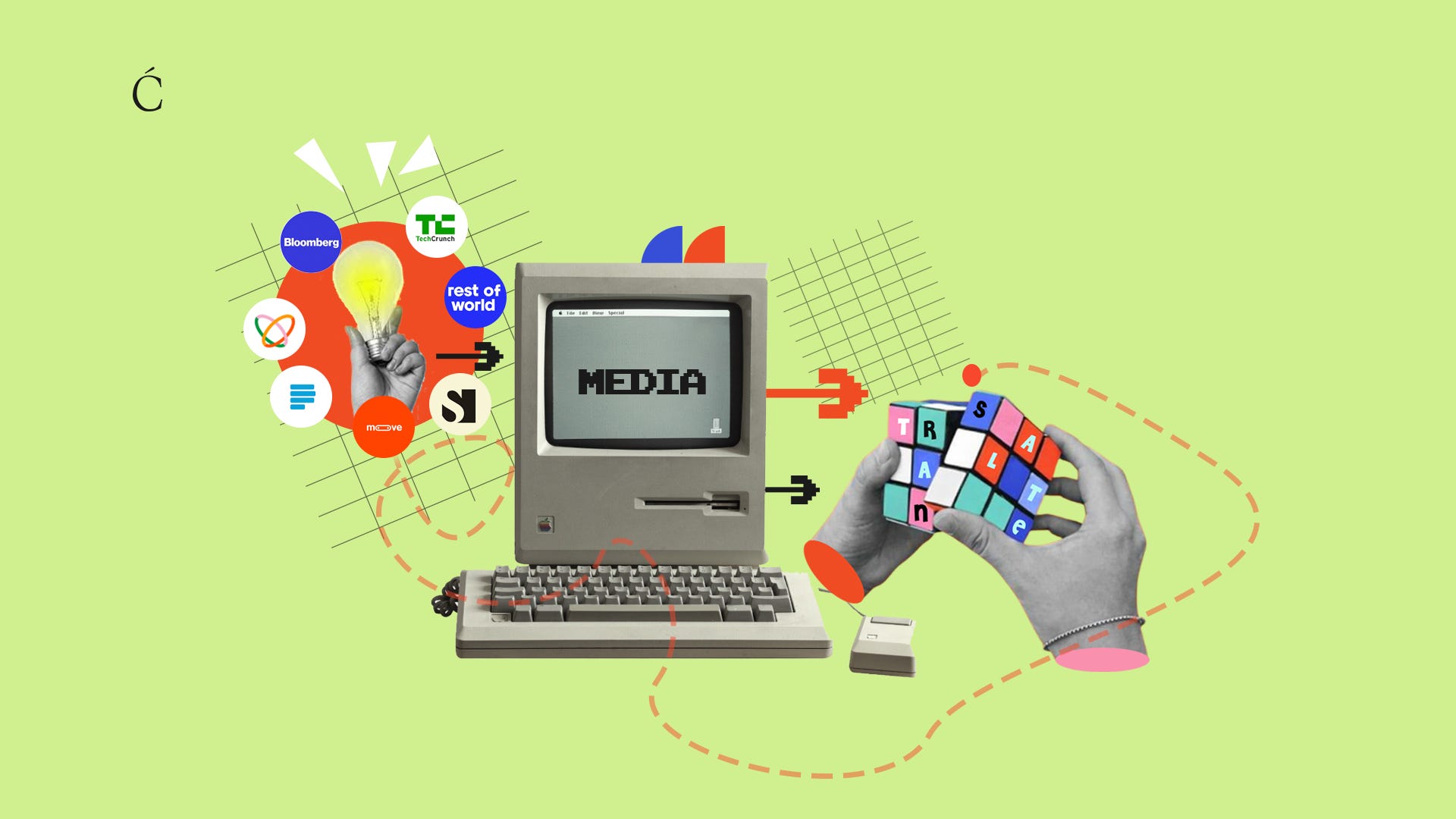
This is the context in which the return of media talent to startups begins to look fundamentally different. If the first wave was about building megaphones, the emerging one is about building translators. Startups should no longer just try to speak to their customers or even to their local ecosystems; instead, they should aim to be intelligible to a global audience whose reference points, priorities, and anxieties have shifted. Communication becomes less about promotion and more about explaining why a company, a market, or a category matters in a world that is paying attention elsewhere.
3. The devil’s advocate
At the end of the day, it’s worth asking whether startups actually need the media attention. The answer isn’t automatic, but history offers some clues. In the early 2020s, increased international media focus on African startups did more than generate headlines. Coverage brought more funding into the ecosystem, attracting both local and foreign investors to previously underfunded sectors. Startups that were featured often found it easier to secure follow-on rounds, talent, and strategic partnerships.
Beyond funding, visibility carried other benefits. Startups could shape their narratives, positioning themselves as innovators in sectors that were often misunderstood. Media coverage amplified credibility: being featured in TechCrunch, Bloomberg, or Rest of World conferred a stamp of legitimacy that was hard to achieve through marketing alone.
But media attention is not an unalloyed good. Overexposure can create pressure to deliver results before a company is ready, inflating expectations among investors, entrepreneurs, and customers. It can also skew focus toward storytelling over substance, privileging narrative-driven startups over those quietly building infrastructure or solving deep, technical problems. Constant visibility can burn founders out and make them vulnerable to misrepresentation in the press. And in a market where international media attention is increasingly selective, chasing coverage indiscriminately can waste resources and dilute strategic focus. Startups chasing headlines risk prioritising optics over operational rigour, telling the story investors want to hear rather than building products that solve real problems.
The question at the heart of this piece—can African startups win back international media attention—has an answer: yes. Companies like Terra Industries show that with strategic storytelling, careful narrative framing, and media talent capable of translating complex markets for global audiences, Sub-Saharan startups can still capture the spotlight.
But the bigger question may be whether the ecosystem is ready for this attention again. The slowdown in coverage was a natural correction. Global newsrooms began filtering for stories that offered both scale and context, rewarding startups that could explain why their markets mattered and how they solved tangible problems, rather than simply the loudest or most photogenic.
For startups today, the opportunity lies in clarity, patience, and focus. By building products that solve real problems, framing their sectors with insight, and deploying communications strategically, African startups can not only reclaim international attention but also ensure that attention translates into real, sustainable growth.
Really insightful piece! The shift from 'building megaphones' to 'building translators' is such a smart way to frame it. I've worked with startups that got caught up chasing coverage without thinking about wether their story was actually landing with the right audience. The part about strategic storytelling over volume really resonated - especially now when everyone's fighting for attention. Feels like the companies that win will be the ones who can explain thier 'why' clearly, not just shout the loudest.